• portfolio
  • blog
  • about
Menu

Richard Bence

  • portfolio
  • blog
  • about
×

travel | architecture | style | culture

8F6152F1-996D-43A6-B5C8-475A143B9138.JPG

Postcard from Montreal

richard bence December 8, 2019

With its magnetic mix of rugged individualism and European flair, Montreal exudes an irresistible French-Canadian joie de vivre. A short jaunt from most U.S. cities, Montreal feels like a quick trip to Paris. The blend of Canadian and French cultures can be seen throughout the city’s design, art, and food. While the gastronomy scene has always leaned toward high-end French cuisine, a new influx of immigrants is bringing a variety of tastes and textures to the mix. Montreal is also embracing the modern age with the opening of sleek luxury hotels, and avant-garde art exhibits from Quebecois designers and creators.


In an increasingly globalized world, Montreal venerates its deep-seated local culture. French colonists settled Quebec in the early 1600s, and their descendants have never forgotten that intrepid foray, hence the province’s enduring separatist movement and its motto, Je me souviens—“I remember,” rendered pointedly en français, which may or may not be a jab at the British. This city of 1.75 million, set on an island at the confluence of the St. Lawrence and Ottawa rivers, is infused with a pioneer spirit and an unpretentious pride in the homegrown. Here, what to do and where to stay in Montreal now.


Stay:

Discerning travelers will love Hotel William Gray, located in Old Montreal, with elegant rooms that look down on the fairytale rooftops and cobbled streets below. Meanwhile, the grand dame of Montreal’s hotel scene—the Fairmont Queen Elizabeth—reopened in 2017 after a $140 million facelift, with a new look that hearkens back to the middle of last century (think lots of gold and chrome), fitting given its 1958 debut. Make sure you visit the room where John Lennon and Yoko Ono had their 1969 bed-in.


Do:

For a reminder of Expo 67, check out Habitat 67, pictured, one of the first examples in North America of an eco-friendly and affordable apartment building. Designed by Moshe Safdie, the edifice is primarily occupied by renters and owners but it opens up for 90-minute guided tours from May 1 to October 31.

IMG_6799.jpg

Postcard from Michigan

richard bence November 3, 2019

Back in its heyday, House of David was considered to be “Michigan’s finest summer resort.” The religious colony in Benton Harbor, Michigan consisted of an amusement park, zoo and baseball empire. Members abstained from all vices, celibacy was enforced and profanity was outlawed. Another tenet of their faith was that they must neither shave nor cut their hair. Co-founded by Benjamin and Mary Purnell in 1903, thousands of acolytes flocked to the colony until it all came crashing down in the 1920’s when the group’s leader, Benjamin “King Ben” Purnell, was accused of having sexual relations with minors. The colony split in two and slowly died off over the years. The policy of celibacy among followers resulted in a notable lack of new generations of acolytes to keep the commune going. There are only a few members left now, waiting for the day when Jesus returns and establishes the Garden of Eden on Lake Michigan.

With their utopian goals, messianic movements like House of David are seen by some as models of progressive communitarianism, in ideals if not in execution. But it’s worth remembering that America was shaped by religious renegades seeking a strategic retreat from society. “America began as a fever dream by those who abandoned everything because of their beliefs, dreams and fantasies,” says Kurt Andersen in “Fantasyland.” Every November, we celebrate the seventeenth-century Puritans who arrived at our shore with the desire to build set-apart communities in the American wilderness. The group that set out from Plymouth, in southwestern England, in 1620 included 35 members of a radical Puritan faction known as the English Separatist Church. America represented a fresh page. Throughout American history, religious groups have walled themselves off from the rhythms and mores of society. A hunger for the magic and drama of Holy Roller theatricality combined with the tendency to withdraw into small, private societies is, perhaps, as American as apple pie. And baseball.

IMG_5836.jpg

Postcard from Roanoke

richard bence September 3, 2019

Tucked into the unspoiled beauty of North Carolina’s Outer Banks, Roanoke Island is steeped in history. In 1587, it became the first English settlement in America. Within three years, the settlers had vanished without a trace. The only thing the Lost Colony left behind was the word “Croatoan” etched into a post. These days it’s a vacation hotspot with paradise beaches and dramatic sand dunes. Sure, most people come here for the beachfront retreats, but I opted for the more tranquil Cypress Moon Inn on the shores of Albemarle Sound. Authenticity is a term that gets bandied around a lot these days, but this place is the real deal, located in one of the few remaining maritime forests in the world. It had an untamed, jungle-like quality which I loved.

Taking a dip from the Inn’s dock, I chose the water noodles over a paddleboard or canoe, which made for a pleasantly refreshing float. Drifting in the cooling water was like taking an aquatic safari through a lush paradise. Floating in between forest, sea and sky, I got a unique glimpse of the spirit and soul of this otherworldly place, with its ancient coastal rhythms. Submerged in the primordial waters, brimming with frogs and dragonflies, I felt connected to a primal energy. My dream state was soon disrupted when I remembered that alligators, water moccasins (cotton mouth snakes) and sharks could be lurking; should I be worried? “I’ve been swimming here all my life, and so far so good,” said North Carolina native Linda, one half of the husband and wife team that runs the Cypress Moon.

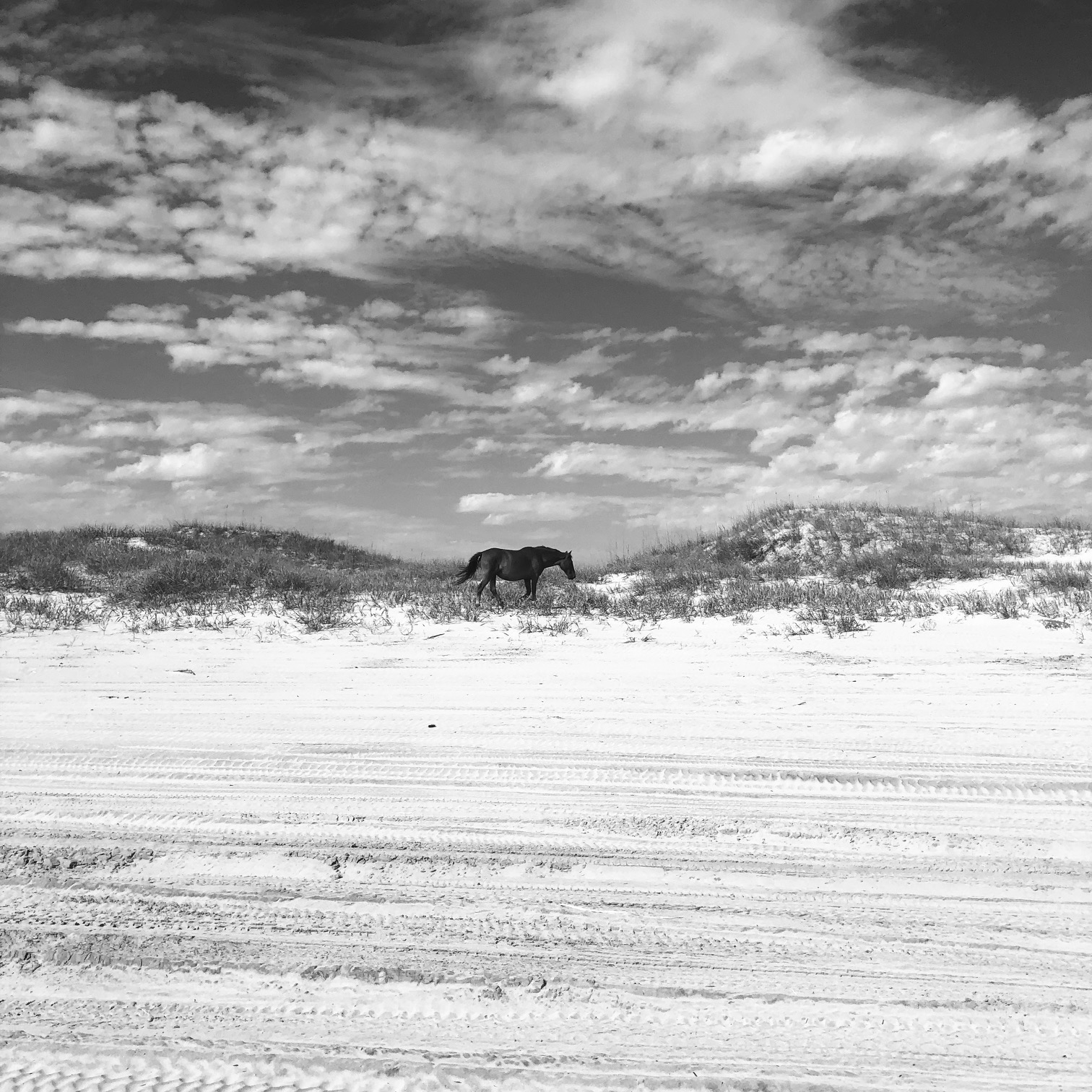
The Outer Banks is a 200-mile-long string of barrier islands that support a diverse ecosystem. Visitors are strongly encouraged to admire but not feed the wild horses of Corolla wandering near the beaches of Currituck. The story goes that these magnificent Spanish mustangs are descendants of shipwrecked horses from hundreds of years ago. With Dorian looming, the horses will gather under sturdy oak trees to shelter from the storm. Currituck comes from the Native American word carotank or “land of the wild goose.” The area remains synonymous with waterfowl. Situated on the Atlantic Flyway, Currituck Sound is an ideal stopover for migrating ducks, geese and swans. With sea-level rise and increasingly severe storms, North Carolina’s coastline is under threat. Long may this little slice of heaven remain not only a vacation wonderland, but also a habitat for vulnerable wildlife.

portland.jpg

Postcard from Portland

richard bence August 10, 2019

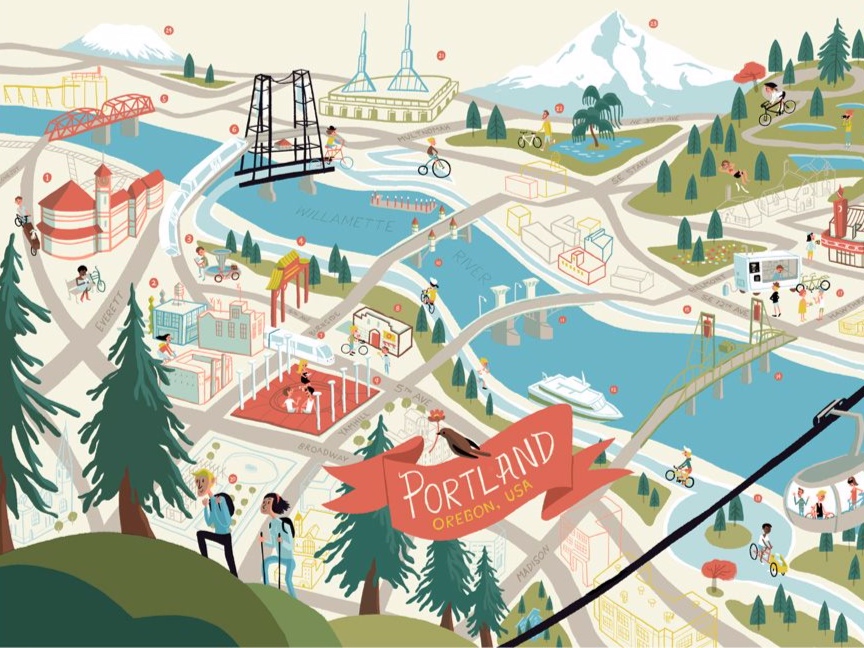
Portland is widely seen as a redoubt of crunchy creatives and nonconformists, the place that the popular comedy Portlandia famously deemed ”the city where young people go to retire.” For some, Old Portland died on January 21, 2011 — the day Portlandia debuted. It tapped into the cultural Obama-era zeitgeist, highlighting contrived lifestyles, emerging technology, DIY mentality, and the organic movement. It poked fun at privileged, white, artsy liberals (“we can pickle that!”) in much the same way Absolutely Fabulous did in 1992 with a pair of selfish, self-indulgent, middle-aged women named Edina and Patsy. Like all of the great shows built on self-mockery, there was a good-spirited intention behind Portlandia that made us care.


But things aren’t quite as ambrosial as they may seem in the Rose City. In recent years, deeply blue Portland has become known for heated clashes between the militant left-wing group antifa and out-of-town, right-wing groups such as the Proud Boys and Patriot Prayer. While Portland itself is politically progressive, Oregon is not, and a white nationalist ideology remains prominent in neighboring Vancouver, WA (or “Vantucky” as it is not so affectionately known), which is just across the bridge. Anti-California sentiment also runs high in Portland. A lot of the time it gets a pass because it's usually leveraged by white liberals against other white liberals. But there is good reason for the resentment. The Portland metro area has been growing by 30 to 40,000 people annually since 2015 and a lot of that is Bay Area refugees. Portland is a dramatic example of a nationwide problem: white “urban pioneers” displacing black communities.

Nature surrounds you in Portland. The Columbia River Gorge, which separates Oregon and the state of Washington, is the crown jewel of the region, filled with tree-topped bluffs and thundering waterfalls including the popular Multnomah Falls. Mount Hood, home to the historic Timberline Lodge which became The Overlook in Stanley Kubrick’s The Shining, is a 1hr 30 drive through the Douglas fir-filled forest. In another direction, the Oregon Coast is home to the sweeping vistas and misty ferns of Ecola State Park with spectacular views of the iconic Haystack Rock. On North Oregon’s shores, towns like Astoria are the stuff of movie legend. When filming began on The Goonies in 1984, Astoria’s fishing economy was in crisis - and houses were indeed being sold back to the bank. The biggest industry today is tourism but Astoria, while embracing change, is careful not to be hipsterfied. It still has grit. It's a town that welcomes visitors but understands its sole purpose isn't to attract them. "We like to say, ‘Astoria for Astorians,’" said Brett Estes, the city of Astoria's community development director. "Do things that are right for the community, and people will come visit."

450C7CB2-1276-4380-B2DA-0C262C46522A.JPG

Postcard from Seattle

richard bence August 5, 2019

Before 1991, Seattle lingered in the shadows, known to few outside the Pacific Northwest. That year, Nirvana erupted onto the global stage, and Kurt Cobain became the reluctant voice of a generation, heralding the Grunge Gold Rush. This vibrant era, spanning from 1992 to 1995, was a whirlwind of roaring, anti-establishment bands that sparked a seismic shift in youth culture, making Seattle the epicenter of the zeitgeist.


Hollywood quickly caught on, weaving the city into its narrative fabric with hits like Frasier and Sleepless in Seattle in 1993, solidifying its status in the pantheon of pop culture. By the time the first Ace Hotel opened its doors in 1999, Seattle had unwittingly crafted an entire industry echoing the counterculture ethos of its grunge progenitors. Today, the echoes of this movement linger—can plaid flannel ever truly go out of style?


Nestled among the breathtaking vistas of Mount Rainier, Olympic National Park, and Puget Sound, Seattle offers a cradle of natural beauty. Yet, there's a lingering notion that Seattleites—often accused of their reticent demeanor—have also endured significant growing pains since the halcyon days of grunge. With the third highest homeless population in the US, trailing only New York and LA, and soaring gentrification rates, the city's landscape is shifting beneath its residents' feet.


The specter of Amazon, which took its first steps in 1994, looms large. A chorus of skepticism surrounds its influence as Seattle grapples with stark inequalities. A fly poster proclaiming “Make Seattle Shitty Again” encapsulates the growing discontent. Tesla-driving techies and freshly minted millionaires populate the streets, while the city boasts the tenth highest household net worth in the nation—yet this prosperity remains elusive for many.


As Amazon ascends to become the world’s most valuable company, Jeff Bezos's staggering wealth—over $160 billion—symbolizes a paradox of modernity. Seattle has undeniably transformed, but this evolution comes at a price. With job security waning and inequality on the rise, the city’s vibrant spirit is challenged. One thing is clear: Seattle has changed the world. Starbucks, anyone?


jaws.jpeg

Postcard from Martha's Vineyard

richard bence July 9, 2019

"Martin, it's all psychological. You yell barracuda, everybody says, "Huh? What?" You yell shark, we've got a panic on our hands on the Fourth of July,” says the mayor to Chief Brody in one of the many iconic scenes of Jaws (1975), the original summer blockbuster.

Martha’s Vineyard, the white-picket idyll which became “Amity” through Tinseltown transfusion, is as much the star as the Hollywood celebrities (or shark). Shooting took three months longer than expected, and the film more than doubled its budget. Director Steven Spielberg has called it the hardest shoot of his career, but as the crew began filming in the spring of 1974, Jaws changed people’s lives.

Spielberg hired a lot of locals including Al Wilde (Harry in the swimming hat), estuary artist Carla Hogendyk (“Shark in the pond!”), Peggy Scott (Brody’s secretary) and the grieving Mrs Kintner (Lee Fierro) along with scores of extras. My heart always breaks when a young man (Stephen Potter) calls out for his dog “Pipet! Pipet!” the only sign of which is the animal’s stick, bobbing in the waves. Little did they know then that Pipet of Chappaquiddick would doggy-paddle her way into the annals of movie history.

vintage-gay-provincetown-george-chapin-scott-and-edward-f-bernier-collection.png

Postcard from Provincetown

richard bence July 2, 2019

The dream of utopia is part of Provincetown’s allure. Located at the tip of a peninsula in the magical beauty of the outer Cape, surrounded by dunes and far from prying eyes, it has long been a haven for artists and writers. It is here, in a barn atop a sandy bluff, that Charles Webster Hawthorne started the Cape Cod School of Art in 1898. Norman Rockwell studied here. Norman Mailer, renting a house next door, attended parties in the space. Tennessee Williams danced and Jackson Pollock got drunk in the barn.


But it’s not just America’s oldest continuous art colony. “P-town”, as it’s affectionately known, has long been a queer enclave where an otherwise ironclad rule of life gets flipped to glorious effect. Instead of figuring that everyone is straight, you can figure that everyone isn’t. Fifty years after a police raid on the Stonewall Inn catalyzed the mainstream LGBTQ movement, gay people still maintain spheres of separation from the wider world: nightclubs, vacation spots, and dating apps where like can meet like. In Provincetown, folks who otherwise might edit themselves for the straight world find the miraculous-seeming freedom to directly pursue their desires. This pursuit can take forms as mild as dinner and a movie or walking down the street hand in hand with your new friend.


Provincetown is as much a refuge today as it was in 1620, when the pilgrims, fleeing religious persecution in Holland, landed first in Provincetown where they signed the 'Mayflower Compact' in Provincetown harbor, before fleeing the sandy, hostile environment for the more fertile environs across the bay in Plymouth. Yup, that’s right. The gayest place in America is in fact the birthplace of the nation. You don’t get greater than that.

920x920.jpg

Telling tales

richard bence June 9, 2019

My love affair with California started in 1994 when I discovered Armistead Maupin’s Tales of the City. The story about a group of friends who live at the top of some wooden steps at 28 Barbary Lane in 70’s San Francisco opened up a portal to a magical land of possibilities, a gay utopia. Aged 18, I had never seen a depiction of a happy gay life. It touched my soul and gave me hope when I first watched (and then read) it.


A self-confessed nostalgia nut, I was nervous about the next chapter of TOTC which picks up 20 years after its last installment. Instagram references and knowing jokes aside, how could the magic of the original, itself a joyride through pre-AIDS halcyon days, created in the Golden Age of gay tv, ever be recaptured? Back in the 90s there was a real need for queer programming (thank you PBS and Channel 4). Shows like Special demonstrate there is still a need to tell nuanced gay stories, but my hypersensitive hackles were up for Tales 2019.

I had a bit of a meta moment when I realized I now live in the place where Mary Ann first escaped from in 1976 - the year I was born. Much as she once left her ho hum life in Ohio for greener pastures in San Francisco in the original, we learn that Mary Ann now lives in Connecticut. Her journalism ambitions have stalled giving way to hosting informercials. Finding a new way to earn a living is a professional reality for many recovering journalists these days, myself included.


Murray Bartlett is perfect casting for the role of Michael “Mouse” Tolliver. For me, Michael is just a more enjoyable character through a nostalgic lens. Watching the episodes with him and his younger boyfriend Ben was uncomfortable. As I get older I feel more invisible when I am with other gay men who put such a high value on the sexual attractiveness of youth. Intergenerational dating is less interesting to me than cross-generational conversation as a way of transmitting and preserving our history. What saved it for me was the stunning flashback episode (Days of Small Surrenders), which introduces trans actor Jen Richards as a young Anna in the 1960s. It is so good it could almost be a stand-alone movie. It highlighted how shallow some of the new characters are.


A recurring theme for Maupin is the lineage he invents between San Francisco and the magical civilization of Atlantis. Myth-making is baked into the Tales dna. If Maupin is our chief dream dispenser, the kooky commune of Barbary Lane represents the ultimate LGBT fantasy. A fictional realm purpose-built for those with an overdeveloped appetite for immersive make-believe. It was the first fairytale designed for our people in which we weren’t the tragic friend or sad uncle. It was also one of the first literary writings to deal with the AIDS epidemic.


A focus on family, both biological and logical, is central to Maupin’s work. With so much emphasis put on marriage, it is always refreshing to see other types of relationships being celebrated: deep friendships, roommates, chosen families and wider networks of kin that include anonymous hookups. The LGBTQ+ community depicted in the Tales universe of 2019 continues to provide a model for intimacy and care beyond the bounds of institutional marriage.

On the eve of the fiftieth anniversary of Stonewall, will this reboot feel like a romance gone awry for OG loyalists? Will a romantic portrait of togetherness resonate with a new generation of app-addicted woke gays/queers/whatevs?  Maybe then, as now, Tales serves a greater community purpose to soothe a group of individuals who never felt celebrated in their family/hometown/body of origin. Fantasy and entertainment certainly helped this perpetually questing kid who still longs to belong.

kahikiexterior.jpg

Postcard from Kahiki

richard bence June 4, 2019

Built in 1961, the Kahiki in Columbus wasn't the first tiki restaurant in the nation (that honor goes to Don the Beachcomber's, in Hollywood, which opened in 1934), but it may have been the most elaborate. The New York Times dubbed the Kahiki "the grandest and best-preserved of a nearly extinct form of culinary recreation."

Placed in its socio-historical context, the Kahiki vividly recalled a time when America inhabited a sort of South Seas Camelot. Songs from the movie musical South Pacific (1958) were on everyone's lips, Hawaii had joined the union as the fiftieth state just two years before (1959), and Elvis was starring in Blue Hawaii (1961).

Tiki bars were among the original theme restaurants, dating from a time when Americans began to evince an apparently lasting appetite for the artificial over the real. If historic buildings serve as cairns that mark our path as we march resolutely forward through time, we should preserve places like the Kahiki in the event we ever want to go back. Alas, the time-worn relic was knocked down in 2000.

Screen-Shot-2013-01-23-at-9.01.30-PM.png

Postcard from Honolulu

richard bence May 23, 2019

Built in 1937 as the Honolulu home of American heiress and philanthropist Doris Duke (1912-1993), Shangri La was inspired by Duke’s extensive travels throughout North Africa, the Middle East, and South Asia and reflects architectural traditions from India, Iran, Morocco and Syria. Today, Shangri La is a museum for Islamic arts and cultures, with the purpose of improving understanding of the Islamic world.


Duke’s passions varied wildly. Briefly a news correspondent in the 1940s, she also played jazz piano and learned to surf competitively. Needless to say this was rather unusual for an upper-class white women in the 1930’s. After the war, she moved to Paris and wrote for the magazine Harper's Bazaar.


Duke acquired a number of homes including "Falcon Lair" in Beverly Hills, once home of the seductive sheik of early Hollywood, Rudolph Valentino. Sometimes referred to as the “the richest girl in the world”, twice-divorced Duke enjoyed a legendary life while her philanthropic work in AIDS research continued into old age. The events surrounding her possible murder remain shrouded in mystery (did the butler do it?) making Duke one of the most interesting and controversial celebrities of the twentieth century. Her estimated $1.3 billion fortune was largely left to charity.

shangrilahawaii.org

1947356_1.jpg

Ohio horror

richard bence May 7, 2019

Cleveland's own Wes Craven would cement Ohio as the prime location for horror in A Nightmare on Elm Street. The iconic Freddy films are based in the fictional town of Springwood, Ohio but Freddy Krueger's roots are based in reality, inspired by an experience Craven had while living in Cleveland as a child. Other films took note and began treating Ohio as the perfect location for trouble in American paradise.


The darkly comedic Heathers and sci-fi monster flick The Faculty use Ohio as a means to dissect the horrors of the American high school experience. “This is a football town, let me remind you,” says the principle to her forlorn colleague at Herrington High (home to the hornets!); “you’re not getting out of Ohio.” A PTSD-inducing line for all the geeks in the audience who managed to escape the anti-intellectual jock culture of the Midwest. And the presumed safety of a fictional university in Ohio during Scream 2 fails to offer any sense of relief for the characters retreating from California. Turns out Ohio ain’t so safe after all.


While most of these films set in Ohio aren't actually shot here, (see previous post) Ohio serves as a more relatable location for someone in a state like Iowa or Oklahoma. To anyone in the Heartland, Indiana appears too rural, Michigan's reputation is plagued with grittiness from places like Detroit and Flint, and given that Illinois is often associated with Chicago (despite the state being predominately rural), it makes perfect sense that Ohio would take the crown for fictional horror settings. To anyone outside the US, Ohio is anonymous enough to provide a unifying viewing experience. You can project whatever you want onto Ohio.


Ohio is not only the heart of American horror, figuratively speaking, it’s also the birthplace of fantasy and science fiction. Growing up feeling like an alien in Cincinnati, Ohio served as the springboard that would catapult Steven Spielberg to becoming the most successful Hollywood director of all time. Laced with escapist fantasy, Super 8, set in a small town in Ohio, represents the transportive power of movie making for a kid with a camera who didn’t belong.

GettyImages_515392532.0.jpg

Manson murders

richard bence May 6, 2019

1969 is widely considered to mark the end of innocence for Los Angeles's bucolic canyons, Topanga, Laurel, Benedict and Coldwater, when beauty turned to brutality with The Manson Family murders. These mini Edens have a particularly macabre underbelly having served as the location for at least two other gruesome crimes including the unsolved 1981 Wonderland murders in Laurel Canyon and the 2000 Benedict Canyon execution-style shooting by New York real estate scion Robert A. Durst, as seen on HBO’s The Jinx.


Banked by steep ravines and narrow winding roads, it’s not uncommon to hear cayotes howling at night in the mist-filled, semi-wilderness of the canyons. Far away from prying eyes, the remoteness usually provides protection for the Hollywood elite. But in the early hours of August 9, 1969, that remoteness provided camouflage for a home invasion that would become one of the definitive cases of the late 20th century.

For true crime fanatics, the chilling event that took place at Sharon Tate’s Cielo Drive home in Benedict Canyon, is the holy grail of horror. Tate, who was pregnant and married to film director Roman Polanski at the time, was one of five people savagely murdered at the behest of cult leader Charlie Manson. He became synonymous with the darkness that lurks beneath the showbiz veneer of Tinseltown, but his story began in Ohio.

Born in Cincinnati on Nov. 11, 1934 to a teenage prostitute named Kathleen Maddox, Manson was renting his own room and supporting himself with odd jobs and petty thievery by the age of 14. In a world of sock hops, bake sales and kids knowing each other since they were born, Manson was an outsider. He ended up at a maximum security reformatory in Chillicothe. In 1955, he arrived in Los Angeles in a car he’d stolen in Ohio.

Popular culture in 2019 is heaving with tales of male killers, abusers, and psychopaths. Katrina Longworth’s podcast You Must Remember This refocuses our attention on the lives of the female victims, examining the culture and industry that made it so easy for a smooth-talking white supremacist to start a cult in one of the most tumultuous times in Hollywood history.


A father comforts his son on his deathbed. The photo that changed the face of AIDS. 1989 (4).jpg

The photo that changed the face of AIDS

richard bence May 5, 2019

David Kirby (Dec 6, 1957-May 5, 1990) was 32 when he died at Pater Noster House, an AIDS hospice in Columbus, Ohio. This photo was taken by Theresa Frare, a journalism student at Ohio University. Peta, the half-Sioux, half-white, transgendered volunteer who cared for Kirby, is standing on the left. The gender rebel continued working with dying AIDS patients until his own condition worsened in 1991. Peta died of AIDS-related illness in 1992.


Kirby was born and raised in a small town in Ohio. As a gay teenager in the 1970s, he found life in the Midwest difficult. A gay activist in the 1980s, he learned in the late Eighties — while he was living in California and estranged from his family — that he had contracted HIV. He got in touch with his parents and asked if he could come home; he wanted, he said, to die with his family around him.

In November 1990 LIFE Magazine published Frare’s image. That year, Bush signed two pieces of legislation that helped people with AIDS — including the Ryan White Comprehensive AIDS Resources Emergency Act, which provided funding for AIDS treatment. But during Bush's time in office, the AIDS epidemic grew dramatically. By 1992, the disease had become the number one cause of death for US men aged 25 to 44. That same year, the Kirby family allowed Frare’s photo to be used in an ad campaign by Benetton.

Despite a backlash by many AIDS activists, Kirby’s father Bill stated, “If that photograph helps someone…then it’s worth whatever pressure we have to go through.” That angels like Peta exist, sent to us in our time of need, fills me with hope. It resonates with me today on an even deeper level because I now live in Columbus, Ohio. I am grateful to Kirby and other AIDS activists who fought to demystify the illness in a climate of fear and superstition. To me, Peta and David are heroes. They may be gone, but thanks to Frare, their stories live on.

ftown.JPG

Postcard from Fishtown

richard bence April 13, 2019

Are there any affordable boho enclaves left to be discovered? Where is the next Silverlake, East Austin or Williamsburg? Can Columbus or Charleston ever truly compete? Artists aren't just leaving New York for LA – they're also flocking to places like Fishtown in Philadelphia.


Fishtown’s warp-speed transformation, and the demographics fueling America’s new urban revolution, is magnetizing a new generation of young professionals who are rejecting suburbia, car culture and food deserts in favor of independently-owned retailers and farm-to-table restaurants, to move back downtown again.


Fishtown’s connectedness is the envy of every American neighborhood trying to reinvent itself thanks in large part to “the El­”—one of America’s oldest elevated subways and Philly’s transportation crown jewel. Linking Fishtown with downtown Philadelphia in less than nine minutes, the El is the reason why home values here have nearly tripled since the Great Recession. At the rate things are going there won’t be an empty lots left by 2020.


Fishtown is now Philadelphia’s most energetic and innovative foodie neighborhood. Furthermore, it’s incubating dozens of other small-scale start-ups and retailers—like craft distilleries, brewers, organic markets, apparel and graphic designers—who are in turn attracting new talent, fresh ideas, and investing back into the neighborhood’s intellectual life.


For other cities seeking to re-imagine their own historic downtowns, Fishtown’s comeback is instructive. Sustainable development can leverage a community’s existing, working fabric without tearing the old-school threads apart. Of course the problem with gentrification, and the inevitable Airbnb rental properties bringing in tourists like me, is the impact “artwashing” can have on displacing diverse and working-class communities. The neighborhood's new vibrancy and allure are good things, as long as it doesn’t lose its character, which is why people want to move there in the first place.

bucks.png

Postcard from Bucks County

richard bence April 8, 2019

Bucks County, Pennsylvania—Walking down the streets of Doylestown or New Hope in the 1930s or 40s, you might have glimpsed humorist Dorothy Parker at a lunch counter or satirist S. J. Perelman hanging at the hardware store with a bunch of Pulitzer-Prize-winning writers. Bucks County became such a well-known haven for creativity that the New York media began to call it "the genius belt."

The Pennsylvania Art Impressionist movement was born in New Hope in 1900 and made Bucks County internationally famous. It remains a haven for creativity. And it has the Bucks County Playhouse, a former mill first turned into a theater in 1939. It was this playhouse that helped lay the foundation for the city's gay scene in the 1950s.

In the mid-century, New Hope, conveniently located at the midpoint between Philadelphia and New York City, became a destination for LGBT travelers. While many LGBT visitors were passers-through, others fell in love with New Hope and made it a permanent home. In 1979, the popular Raven opened in an already-established LGBT destination, La Camp at the Brookmore Motel. The Raven appears to be on hiatus following management issues, but the New Hope Lodge located across the street is a cute alternative. Each May, New Hope hosts one of the East Coast’s biggest and best Pride festivals (New Hope Celebrates), with a parade that crosses the bridge into Lambertville, New Jersey.

Screen Shot 2019-04-05 at 9.20.02 PM.png

Postcard from North Adams

richard bence April 7, 2019

The former industrial town of North Adams in far northwestern Massachusetts rivals Marfa, Texas as an incubator for avant-garde art. With long-term installations by the artists Jenny Holzer, Laurie Anderson and light magician James Turrell, MASS MoCA is the largest contemporary art museum in the country. Music icon Annie Lennox will share stories and perform songs to kick off a day-long celebration of MASS MoCA’s 20-year anniversary on May 25.

Former roadside motel Tourists has been reborn as a chic bolthole catering to those making the art pilgrimage. Located on the banks of the Hoosic River, landscape architecture firm Reed Hildebrand has filled the grounds with apple trees, sugar maples, and sumac, and built a wooden suspension bridge that crosses the river. It snowed when I stayed in early April, but I imagine the pool comes into its own in the summer months.

My room ('Ramble') had an outdoor deck and a window nook daybed for tree gazing. I loved the stylish knickknacks and being able to place your breakfast order by text was a nice touch. Tourists is dog-friendly, and only a three-and-a-half-hour drive from NYC through the pines and elms of Upstate New York and Massachusetts.

touristswelcome.com; massmoca.org

IMG_3479.jpg

Postcard from Buffalo

richard bence April 6, 2019

Buffalo, New York, the easternmost Midwestern city, is blessed by masterpieces from some of the biggest names in American architecture including Louis Sullivan, Frank Lloyd Wright and Henry Hobson Richardson. Highlights include:

Darwin Martin House

Frank Lloyd Wright once called it a “well-nigh perfect composition” and he might be right. Designed in 1903 for a Buffalo businessman who was, at the time, the highest-paid executive in corporate America, this multi-building estate is as stunning as its creator suggests.

Guaranty Building

Louis Sullivan’s Guaranty Building (1895), an early skyscraper design that shows the father of American modernism at his peak, is the city’s crown jewel. The interior lobby, lined with tile mosaics, elevator cages, and intricate staircases, is sublime.

Hotel Henry

Stephen Brockman, senior principal at New York-based Deborah Berke Partners, led the rehabilitation of this castle-like compound into a stunning hotel. Spread across 93 acres, the former psychiatric hospital was built in 1870 and designed by a young Henry Hobson Richardson (whom the hotel is named after), with grounds by Frederick Law Olmsted (Central Park). hotel henry.com

gary.jpg

Postcard from Gary

richard bence February 18, 2019

It all began with a vision in 1905 by Elbert H. Gary, founder of U.S. Steel. The industrial colossus, then the largest corporation in the world, footed the bill for Gary’s magnificent civic structures. When the plant went into decline, so did the rest of the town. The palace theater, one of the glories of Gary’s golden age, shut down entirely in 1972.

Gordon Keith, the owner of Steeltown Records in Gary, Indiana, discovered the Jackson Five and signed them to their first contract in November 1967. In March 1969, they signed to Motown. In August of 1969 Motown Records moved Joe, Michael, and the rest of the Jackson 5 out to Los Angeles.


To give some historical context, in April 1968, the greatest wave of social unrest since the Civil War was sweeping the nation following the assassination of Martin Luther King. This was preceded by the 1967 riots in Detroit—fueled by widespread unemployment as the motor city’s famed automobile industry shed jobs.

There are still a few factories and a few neighborhoods with nice homes, but much like Detroit, some parts are overgrown, others burned-down or just rubble. To be among these abandoned buildings is to be in a place removed. A relic from another time that is still home for those who got left behind. Leaving was an option few blacks had. Unless you were Joe Jackson.


unnamed.jpg

Postcard from Chicago

richard bence February 11, 2019

Chicago is American history in microcosm. Andrew Diamond, the author of Chicago on the Make, has called Chicago “a combination of Manhattan smashed against Detroit.” The disappearance of industrial jobs and the businesses that supported them in the 1960s and 70s jump-started a downward spiral in many neighborhoods.

A few miles to the south, Pullman Village is a model for what a company town could aspire to be - in ideals if not in execution. Built between 1880-84, George Pullman created a utopian town for his workers, but he also supported the false economy of tipping, a way to get away with not paying black workers after slavery was abolished.

Many people credit Pullman porters as significant contributors to the development of America's black middle class, but they had to pay for their own food, do unpaid prep work and supply their own uniforms. And they did it all in railroad cars in which they themselves would not have been allowed to travel in during Jim Crow segregation.

Most Pullman porters lived in Chicago. “They took a menial job and made it something of substance and stature,” said Lyn Hughes, founder and president of the National A Philip Randolph/Pullman Porter Museum Gallery. Against all odds, Pullman porters formed a union in 1925: the Brotherhood of Sleeping Car Porters.


pullmanportermuseum.com

Cheryl & Griffith at Back in the Day, Savannah

Cheryl & Griffith at Back in the Day, Savannah

Postcard from Savannah

richard bence January 11, 2019

Georgia was named after King George II in 1733. Savannah was co-founded by James Oglethorpe as a bulwark between the thriving British metropolis of Charleston and the Spanish enemies. Considered America’s first planned city, the idea was to give debtors a new lease of life but the utopian plan wasn’t realized. By 1750, slavery arrived with a vengeance. Between 1761 and 1771 alone, some 10,000 slaves were sold in the markets near the wharfs, where boats loaded with suffering human cargo would arrive from the Caribbean and Africa. It was through this area that hundreds of thousands of slaves were brought through during the 1700 and 1800's. The enslaved were unloaded from the ships and marched into the buildings along River Street. The sorrow and helpless feelings of those enslaved men, women and children can still be felt in the catacombs on Factors Walk.


By 1810, some 44 percent of the workforce was enslaved. In 1860, the population of the city was 22,000, with some 17,000 enslaved people and 700 free blacks, many of whom owned slaves themselves. Then came the Civil War. Being a port city, making it an invaluable prize as a naval base and supply center, Savannah was spared from ignition by Union forces in 1865. But the New South was another form of misery for the freed slaves who suffered not only from terrorist organizations like the KKK but from political corruption, economic control and violent intimidation. In the 1890’s, lynching was at its barbaric height, and Jim Crow legalized what custom dictated. More than 4,000 African Americans were lynched in the U.S. between 1877 and 1950. Slavery didn’t end. It evolved.

***********

OK, so while the legacy of racial injustice and the trauma of these atrocities are all around you hanging thick in the air, that doesn’t mean you shouldn’t visit. In fact the South has long presented some of America’s most exciting and delicious food. Today, Savannah, famous for its shady oak-filled squares draped in dreamy Spanish Moss, is brimming with artisans and gourmands doing innovative things with Southern ingredients. By honouring the past without being overly wedded to it, transplants like Cheryl & Griffith at Back in the Day (Savannah, GA) are creating culinary alchemy.


← NewerOlder →