• portfolio
  • blog
  • about
Menu

Richard Bence

  • portfolio
  • blog
  • about
×

travel | architecture | style | culture

cahuenga freeway.png

The Cahuenga Pass Parkway

richard bence March 30, 2021

The first section of the Hollywood Freeway opened in 1940. It was then known as the Cahuenga Pass Parkway and trolleys ran down the center of it until 1952. The Parkway was designed by a team of engineers under the direction of Merrill Butler, the same team that had designed the Arroyo Seco Freeway/Parkway. Here in the Pass, they were able to incorporate lessons they had learned in their earlier work eg generous access ramps.

In spite of the fact that the on- and off-ramps of the former Cahuenga Pass Parkway have been modified by Caltrans since their original construction, the bridges have remained virtually intact. Although the detailing, methods of construction and structure of the three bridges are similar, and all manifest the *WPA-Heroic Streamline Moderne design influences, each has a slightly different appearance. The Pilgrimage Bridge is the low, arched one; the Mulholland Bridge, pictured, tall with a longer span over Cahuenga Blvd; and the Barham bridge wide and workman-like. These differences are most apparent in their streetlight/- luminaire designs, which are unique to each of these three bridges. However, they all share similar simple decorative concrete railings and a late Thirties sense of monumentality and civic presence. These bridges, walls, ramps, guard rails and tunnels represent an example of the late 1930’s civic social aspirations and grandeur. 

Where earlier roads once crossed open countryside, however, early planning maps showed the Hollywood Parkway (to use its original name) slicing through a densely populated area. Residents were understandably unsettled. As early as 1940, the Hollywood Anti-Parkway League denounced the Cahuenga Pass Parkway, then under construction, as “un-American.” Later, as planners moved to extend the parkway toward downtown, opposition became even louder. Movie stars worried about their Whitley Heights homes. Merchants fretted about a sweeping concrete viaduct over Franklin Avenue. The Hollywood Bowl Association feared noise pollution. Some critics suggested that the city build a rapid transit line instead. Most supported the general idea of a freeway but disagreed with its routing.


Ultimately, the state relented to local opposition and struck compromises with the mostly white, middle-class, and politically powerful Hollywood community. Construction claimed several historic structures, including Charlie Chaplin's and Rudolph Valentino’s former homes in Whitley Heights, but the state planted extensive landscaping near the Hollywood Bowl to dampen traffic noise, and highway engineers bent the freeway around local landmarks like the First Presbyterian Church, the Hollywood Tower apartments, and KTTV’s newly constructed television studio.


The more ethnically diverse and working-class communities southeast of Hollywood – as in Boyle Heights and East Lost Angeles, where seven superhighways were built over local objections – were not as lucky. There, the freeway took a more direct route. It bisected Echo Park, severing the recreational lake from its adjacent playgrounds. It carved a canyon through downtown, obliterating historic Fort Moore Hill and its 1873 high school building. And where it met the Arroyo Seco Parkway rose the Four-Level Interchange, a colossal structure that displaced some 4,000 people.


Construction lasted seven years (1947-54) and cost $55 million. Nearly half went toward right-of-way acquisition, which involved the relocation of 1,728 buildings and the demolition of another 90. When the final link of the ten-mile freeway opened in 1954, an ancient transportation corridor had entered modern times, but it had also opened urban wounds that have yet to heal.

*The Works Progress Administration (WPA; renamed in 1939 as the Work Projects Administration) was an American New Deal agency, employing millions of job-seekers (mostly unskilled men) to carry out public works projects, including the construction of public buildings and roads. It was established on May 6, 1935, by presidential order, as a key part of the Second New Deal.

arroyo seco.png

The Arroyo Seco Parkway

richard bence March 30, 2021

Originally started as a WPA flood control project, the Arroyo Seco Parkway—also known as the Pasadena Freeway—is considered one of the most important roads in American history. Built by the WPA and PWA (in conjunction with local agencies) and mostly completed by 1940, it was the first freeway west of the Mississippi. At the dedication, California Governor Culbert Olson stated, "It takes courage to do a thing the first time, no matter how simple and obvious it may appear after it is done. And this, fellow citizens, is the first Freeway in the West."


Designed in the parkway tradition, it features lush landscaping, windy curves and highlights the unique geographical features of Southern California, including views of the San Gabriel Mountains. It was also practical, becoming the initial stretch of road for the well-known (and, now, much maligned) Los Angeles freeway system. Today, it's still in nearly the same configuration it was in 1940 and is a American Society of Civil Engineers Historic Landmark.

martin-5004.jpg

Postcard from Pasadena

richard bence March 14, 2021

The Arroyo Seco cuts a steep canyon through the west side of Pasadena, separating it from the hilly neighborhoods of Northeast Los Angeles. As Pasadena grew, this canyon posed a daunting obstacle to accessing the neighborhoods to the west, one that would be bridged over many times to link both sides of the canyon. Although the stream of the Arroyo Seco itself is confined to a narrow concrete channel for most of its length through Pasadena, the adjoining landscape is far more natural than that along the Los Angeles River. Beneath the many bridges that span the canyon, the wooded canyon offers a lovely secluded bit of nature close to Old Pasadena.


As you walk through the park, you’ll find the aging remnants of old park infrastructure: a crumbling stone wall here, an old bench there. The cliff face on the west side of the canyon holds numerous staircases that seem to vanish into the overgrowth, while castle-like mansions poke out on the ridge above, aloof and disconnected from the nature beneath them. In contrast to Pasadena’s typically heavily-cultivated parks, such as the lush lawns surrounding the Rose Bowl just to the north, Lower Arroyo Park feels mostly forgotten by the city above.


Ironically, the Lower Arroyo was once home to a major tourist attraction. In the 1900s, Adolphus Busch (of the Anheuser-Busch brewing company) turned his summer home at the southern end of the park into an elaborate garden filled with statues, picturesque buildings, and waterfalls. This was the original “Busch Gardens,” long before it turned into a chain of amusement parks, and it stayed opened until the 1930s before it was closed and replaced with a residential neighborhood, with few traces of the gardens remaining.


But it’s the grace of the Colorado Street Bridge, proclaimed the highest concrete bridge in the world upon completion in 1913, which really draws your breath. With its majestic arches rising 150 feet into the sky, the Colorado Street Bridge is a historic Beaux Arts bridge that spreads over the Arroyo Seco to ease travel between Pasadena and Los Angeles. Before the bridge was built, people had to go down into the Arroyo Seco, cross the river and come back up the other side. Today it offers visitors picturesque views of the city and is featured in several television shows and movies. Most recently the Colorado Street Bridge was featured in the 2016 film "LA LA Land."

Highland_Park.jpg

Image by RAOUL DE LA SOTA

Postcard from Highland Park

richard bence March 10, 2021

The northeast Los Angeles neighborhood thrived throughout the prewar period, when many of the landmarks that now define Highland Park — including the Highland Theater and the Highland Park Masonic Temple — were built. In the 1950s, the rise of the suburbs saw the beginning of a period of transition for the neighborhood, with Highland Park becoming an important center of Latino life in Los Angeles. Though a cause for celebration when it opened in 1940, construction of the Arroyo Seco Parkway—America's first freeway—sped up Highland Park's gradual decline. Reduced to "drive-over" country connecting two distinct political powers—Pasadena and Los Angeles—the area struggled to retain its own identity. Channelization of the Arroyo Seco further accelerated the transformation of the area from suburban Eden to an inner-city enclave.


Paradoxically, Highland Park was fading as more and more people arrived to the city. The population of Los Angeles in 1900 was 100,000. By 1930 it was over one million and growing. Many of these new arrivals had come to California looking for a paradise that was advertised to them in newspapers, books and idyllic scenes from motion pictures. African-Americans from the South had come looking for opportunity and fair treatment. The civil war in Mexico drove a large number of immigrants north through the 1910s and 1920s, many settling near downtown to take advantage of available jobs and transportation. During the 1930s the number of Mexicans and Mexican-Americans in Los Angeles decreased due to mass deportations carried out by government authorities, all without due process. But Latinos were nonetheless establishing themselves in areas such as Chavez Ravine and neighborhoods east of the Los Angeles River.


As early as the 1920s, the predominantly white residents of Highland Park began looking to other areas of Los Angeles for housing. As new neighborhoods developed and transportation became more available to the west, residents began moving to areas such as the Mid-Wilshire district, which offered both new housing stock (humble and magnificent) and thriving commercial districts. After World War II, this westward drift became a full-on exodus of Anglo middle-class families out of communities like Highland Park and into the San Gabriel and San Fernando Valleys. This in turn left housing in Highland Park to Mexican-Americans and working-class whites.


Real estate developers and property owners eager to maximize cheap rentals in the area subdivided large Victorian and craftsman homes, or razed them completely in favor of multi-unit housing and commercial strip malls. The once-thriving Figueroa commercial corridor lost much of its prominence as the trolley and foot traffic that had once supported diminished due the opening of the Arroyo Seco Parkway. Traffic now moved up and down the Parkway between Los Angeles and Pasadena at 40mph, with Highland Park reduced to being an off-ramp sign.


During the 1950s and '60s, Mexican-American working-class families continued to increase in numbers while whites moved out to newer, homogenous communities. This white flight occurred not only in Highland Park, but was seen in many of Los Angeles' original and older neighborhoods. As white middle-class families moved to the suburbs, resources moved with them, leaving their old neighborhood in slow decline. After the advent of the freeways, waves of white flight enabled many Latino families to make what they regarded as a step up from East Los Angeles to Highland Park, for example.


Today, Highland Park is one of the epicenters of gentrification in Los Angeles. Not so long ago it was an unassuming, mildly depressed, Latino-majority suburb with a string of mom-and-pop style businesses along its two major thoroughfares — York Boulevard and Figueroa Street. Now, or certainly pre-pandemic, it is a place of spiraling rents, designer Craftsman cottage renovations, bars, restaurants and playfully curated boutiques catering not to anyone’s basic needs but to shopping as recreation. Highland Park is also home to a groundswell of anti-gentrification activism, emboldened by but predating BLM protests. Vandalization of hipster stores and restaurants in the rapidly gentrifying neighborhood is nothing new. Being named “The Hottest Neighborhood of 2013” by Redfin might well have been the death knell. Now, gentrification has become synonymous with white supremacy.

Like other fast-changing neighborhoods, Highland Park has not always been able to accommodate the new without displacing the established. As one blogger puts it: "Working-class communities are often built around interdependence on one another, gentrification redesigns the neighborhood around capital. Communal spaces are re-imagined into commercial spaces, homes which were once upheld as places for families are now upheld only by how much they can profit investors. As the demographic forcefully changes from proletarian to rich, brown or black to white, renter to homeowner, the sense of home starts to disappear as bourgeois newcomers seldom acknowledge the previous residents or the culture they’ve already established."


The Golden Age of L.A.'s 'Little Harlem'

richard bence March 1, 2021

During the 1920s, Los Angeles attracted more African Americans than any other city on the West Coast. Undoubtedly the epicenter of L.A.’s jazz scene, South Central's Dunbar Hotel was built in 1928 by Drs. John and Vada Sommerville – the power couple of progressive black Los Angeles – as a place where black travelers could stay in style and comfort. The luxurious hotel soon attracted the likes of Louis Armstrong, Ella Fitzgerald, Lena Horne, and Billie Holiday. During the '30s and '40s, Central Avenue was the peak of chic. The Dunbar was the sun around which the tight-knit neighborhood revolved. The black entertainment district on Central Avenue welcomed white viewers and listeners. Many racially-prejudiced middle-class whites in Los Angeles were reluctant to live amongst African Americans, but they were attracted to jazz music and African American entertainment. Indeed, the creative theft and cultural appropriation of black music by white jazz bands transformed mainstream music and pop culture in Los Angeles. Before the Dunbar stopped attracting upscale visitors and fell into disrepair it was a source of tremendous pride on Central Avenue, and the area became known by some as “Little Harlem” and “Brown Broadway.”

Lured by an expanding economy and the prospect of jobs, many black families who had come from the South during the Great Migration settled in Compton and South L.A. Before the courts struck down racially restrictive covenants--deeds that prohibited blacks and other races from living on a property--in 1948, Compton was white. By the 1950s, Compton was a largely middle-class black city. For a brief moment in time, blacks and whites coexisted quite peacefully in Compton from the early 1950s to the Watts Riots of 1965. After the riots, and again after the L.A. riots in 1992, which erupted after four police officers were acquitted of assault for the beating of Rodney King, Compton experienced a wave of violence that prompted middle-class families to leave.

Around the world, Compton is famous for producing musicians such as Kendrick Lamar and athletes like Serena and Venus Williams. But the city is also known for its history with gangs and police violence. When the crack epidemic first hit Los Angeles in 1983, it embedded itself into the city’s fabric. Ravaging neighborhoods and taking lives, crack exploited the conditions that society had allowed to fester and were unwilling to confront. Economic restructuring in the manufacturing sector and other changes in the economy had led to a decline in low-skilled and semi-skilled employment among blacks. These conditions contributed to the rise of the crack cocaine economy. Crack offered a quick fix with a high profit margin. Crack single-handedly set back African American progress 30 years; the trauma gets passed down. Whether you used it or not, it changed the dynamics of the black community forever. But before the horrors of the drug were as widely known, the day-to-day realities of the crack epidemic were mainly told through the emerging art form that we would come to know as hip-hop. In 1988, N.W.A. put the city of Compton in the national consciousness (and on the world stage) with the release of Straight Outta Compton, a chronicle of violent life on the streets and fury aimed at the police. The emerging genre of hip-hop in the mid-1980s served as a portal for mainstream America to see what was happening in the urban centers that the Reagan administration had left behind. It was stark, brutal, and unrelenting in their depiction of violence on the streets of South Central and Compton.

Crack was a scourge, but it got turned into a demon, which was then used to demonize the inner city. To discuss crack cocaine is to tackle a litany of bigger, intertwined American issues: racial and economic disparities; inner city poverty and crime; media reporting and sensationalism; political and legislative campaigning and action; mass incarceration and exploitation; and personal and communal responsibility. Many of those topics are present in Crack: Cocaine, Corruption & Conspiracy, Stanley Nelson’s documentary, which examines all the ways that the government and the media used the grim reality of crack, turning it against the very people who were being victimized by it. 

American-Horror-Story-The-Dark-History-of-the-Cecil-Hotel-3.jpg

Horror hotel

richard bence February 10, 2021

Built in 1924, the Hotel Cecil opened just a few years before the Great Depression (1929-1939). The hotel was intended as lodging for business people, but with the economic collapse, the Cecil’s clientele drifted toward the less affluent. The Cecil’s central location in Downtown Los Angeles and proximity to the Pacific Railroad made it an ideal spot for transients including actress Elizabeth Short (The Black Dahlia.) The 1947 murder is one of the great unsolved murders of history. Apparently, Short was seen at the Cecil’s bar in the days leading up to her death. It has yet to be proven or disproven. More recently, Elisa Lam, a Canadian student at the University of British Columbia in Vancouver, was recovered from a water tank on top of the hotel on February 19, 2013.


The Hotel itself was known to have “insanity within its walls,” as said in Netflix's Crime Scene: The Vanishing at the Cecil Hotel, with guests ranging from drug dealers to prostitutes and rapists. One interviewee in the documentary says the hotel is where “serial killers let their hair down,” perhaps in part because it was so cheap — in the mid-1970s and ’80s, rooms were about $14 per night. Killer Richard Ramirez, a.k.a. the Night Stalker, stayed at the hotel between his grizzly murders. One witness in the documentary said he would often see Ramirez take off his bloody clothes in the alley and walk up the Cecil stairs to his room.


Austrian serial killer Jack Unterweger stayed at the Cecil for a time in 1991 in a twisted homage to Ramirez. During that time he posed as a journalist and killed at least three sex workers, all while taking advantage of his rapport with the police that he garnered during ride-alongs. Unterweger was later convicted of the murders and hanged himself in Austria. Other incidents at the Cecil included someone trying to burn down the hallways, domestic abuse, assaults and stabbings, someone slashing their own throat with a razor and even an infamous leap by Pauline Otton, who jumped from the ninth-floor window, killing herself and an elderly passerby who was on the pavement below her.


Back in 2015, the Cecil inspired Ryan Murphy to create American Horror Story: Hotel, which focuses on the disturbing events at the fictional Hotel Cortez. The most-recent incident happened in 2015, when a 28 year-old man was found dead on the pavement outside the hotel in an apparent suicide. Los Angeles-based firm Marmol Radziner was to helm Hotel Cecil’s rehabilitation, but it remains to be seen if the long-in-the-works project will continue, given that the pandemic has severely hurt the hotel industry and effectively killed off travel. Once again, it seems like fate has dealt the storied hotel a heavy blow.

IMG_1360.JPG

Postcard from India

richard bence February 5, 2021

This was first published on the World Land Trust blog on February 28th, 2013, while I was in India.


If you want to see wildlife, then you must explore a forest on foot, and quietly. And that is exactly what Richard Bence did on a recent trip to the Western Ghat mountains in Kerala.


At the start of the year I joined a field biologist on a visit to the Tirunelli-Kudrakote elephant corridor project supported by World Land Trust (WLT). Mr Ramith is a biologist working for Wildlife Trust of India (WTI) and, as it turns out, he spends a lot of his time examining prodigious piles of poo. Elephants eat 200kg of vegetation a day and this results in 45kg of dung. Being a stressed out Londoner, I wanted my elephant hit – right now. Going on 14km treks was all well and good, but dung in itself had limited appeal and I could only find interest in the flora and fauna for so long.

MINIMISING CONFLICT
Apart from a few notable exceptions like my Mum, humans of any variety, shape or form are not my favourite species. As Yann Martel’s eponymous character says in the film Life of Pi: “What you don’t realise is that we are a strange and forbidding species to wild animals. We fill them with fear. They avoid us as much as possible.”

I too find humans far more frightening than wild animals – although I am mindful of the fact that living with the threat of elephants stampeding through my front room might be a rather stressful way to live. For that is the purpose of World Land Trust’s efforts: to minimise conflict between these magnificent beasts and rural communities. As the human population increases, the animals’ natural habitats become threatened. So, WLT takes a socio-holistic approach by helping to re-locate the village people to another plot thereby creating harmony for animal and human.

CLASH OF CULTURE
WLT’s efforts are paying off, but protecting wildlife is a big task in a country that‘s developing at lightning speed. Initially I had no interest in experiencing the brash modern face of commercial India. I wanted the exotic, eternal India, the one with elephants, tigers, flying giant squirrels, cobras and faded colonial grandeur (although not necessarily in that order or all at the same time). But halfway through my trip I found myself in a shopping mall in Mangalore. Seeing the locals being so easily seduced by distractions (an inflatable bucking bronco looked particularly tragic and incongruous in an Indian shopping mall) and dead-end promises made me sad. But it’s really none of my business – and in fact, as I was to find, spending a few hours in a temperature-controlled environment free of traffic noise has its appeal given the hot and horn-honking alternative out on the street.


CHAMPIONING NATURE CONSERVATION
Later, out in the field, a world apart from air conditioned shopping malls, we finally came across elephants, foraging happily in a conflict-free field where villagers once lived. I had much to learn from Mr Ramith’s quiet, patient observation skills. During my trip I came to realise that a butterfly could be just as impressive as an elephant if looked at in a less all-or-nothing light. The prospect of championing nature conservation in a country that is developing as rapidly as India is truly daunting. But while brave organisations like Wildlife Trust of India and World Land Trust are doing sterling work, elephants at least are in safe hands.


MORE INFORMATION
WLT’s Elephant Corridor Project is creating a network of forest corridors to enable Indian Elephants to move safely between protected areas. After the success of the Tirunelli-Kudrakote corridor, WLT is now fundraising for a corridor in northern India to link the Corbett National Park to the neighbouring Ramnagar forest.

Drive-2011.jpg

los angeles on film

richard bence February 4, 2021

The heart of Hollywood’s star-studded film industry for more than a century, Los Angeles and its abundant and ever-changing locales—from the Santa Monica Pier to the infamous and now-defunct Ambassador Hotel—have set the scene for a wide variety of cinematic treasures, from Chinatown to Forrest Gump, Falling Down to the coming-of-age classic Boyz n The Hood. Here are some of my favorite films shot on location in this birthplace of cinema. Some notable omissions: Postcards from the Edge (1990), Clueless (1995), and L.A. Confidential (1997).

Sunset Boulevard (1950)
Billy Wilder’s film noir masterpiece is a reflection of Hollywood through a glass, darkly. It pulls back the curtain on the business of show-business – the false smiles and threadbare adoration that operate to keep Norma Desmond living in exile at the edge of insanity. Like many of the post World War II classics, Sunset Boulevard is covered with a thick sheen of cynicism. For Wilder, Paramount symbolizes the shimmering Janus-faced dream-maker that continues to beckon hopefuls to the boulevard of broken dreams. Desmond (Gloria Swanson) epitomizes yesterday’s glamor queen, a forgotten star with a limping, sagging and fading career. And yet still she captivates. With Sunset Boulevard, Swanson, a real-life silent-screen star who once lived in a mansion on Sunset Boulevard, actually made a comeback, something her character is unable to achieve.

Chinatown (1974)
Roman Polanski’s neo-noir classic is a veritable tour of Los Angeles landmarks. Capturing the hidden sacrifices and backroom dealings behind the emergence of LA as one of the world’s great cities, Chinatown revels equally in Los Angeles’s classic Spanish Colonial architecture, the glamor of iconic Hollywood restaurants like The Brown Derby, and the urban backwash of the city’s aqueducts, bridges and barren riverbeds. Much like the city itself, there are more layers to this movie than possible to comprehend in one screening, but what we have is a glimpse beneath the surface to expose the squalor behind LA’s veneer of sophistication and charm.

Blade Runner (1984)
Ridley Scott's cyberpunk vision of the future is set in the Los Angeles of 2019, a perpetually rainy city permeated by smog where loneliness prevails. Featuring a run-down version of an iconic downtown location, The Bradbury Building, the dark, dank and dusty interior creates a dream-like quality where reality is lost and boundaries between human and replicant become blurred. Indeed, the film’s use of architectural treasures from the city’s “real past” that appear in the movie, including the Bradbury Building, Union Station, and Frank Lloyd Wright’s Ennis House, is what makes this dystopian masterpiece so arrestingly beautiful and might explain why Blade Runner continues to fascinate. "Perhaps it expresses a nostalgia for a dystopian vision of the future that has become outdated. This vision offered some consolation, because it was at least sublime. Now the future looks brighter, hotter, and blander. Buffalo will become Miami, and Los Angeles will become Death Valley, at least until the rising ocean tides wash it away," said Thom Andersen in Los Angeles Plays Itself. "Computers will get faster, and we will get slower. There will be plenty of progress, but few of us will be any better off or happier for it. Robots won’t be sexy and dangerous, they’ll be dull and efficient, and they’ll take our jobs."

Mulholland Drive (2001)
Like Sunset Boulevard, Mulholland Drive is a long east-west street in Los Angeles. They run roughly parallel, while Mulholland Dr. is at the top of the Hollywood Hills and Sunset Blvd. at the bottom. The similarity of the movie titles (Sunset Blvd. and Mulholland Dr.) right down to the use of the abbreviation of the titles, is another parallel. Not only do both films offer a critique of people who are ultimately destroyed by the film industry, but also the action starts with an incident involving a car accident. Released twenty years ago, David Lynch’s Mulholland Drive has come to be regarded as perhaps the most important film of the century so far. Essentially, it is a mystery film that never settles its own mystery. Even its greatest admirers are loathe to explain it or endure it being explained.

Crash (2005)
In 2005, there were many reasons to be excited about Crash. Don Cheadle is just one part of a remarkably talented cast including Thandie Newton, Ludacris, Matt Dillon, Terrence Howard, Sandra Bullock, and Brendan Fraser. And with Americans still lingering in some semblance of post-9/11 national solidarity, it seemed like everyone was ready to have a serious conversation about cultural harmony. Back then, an exploration of L.A.’s hyperspecific cultural enclaves felt relevant, brave even. Fifteen years on, the film gets criticized for being a white redemption story. Can a movie be retroactively chastised for not being woke enough? Critics and award committees adored Dillon's portrayal of a flawed cop at the time: things look different today through the filters of MeToo and Black Lives Matter. Director Paul Haggis said his ensemble drama, which also won him the best director Oscar, did not deserve to win best film. What do you think?

Drive (2011)
Mr. Winding Refn is a Danish-born director, some of whose earlier films have inspired ardent, almost cultish devotion in cinephile circles. Carey Mulligan plays the girl who lives down the hall from Ryan Gosling, the guy with no name, and a lack of dialogue. Her innocence is axiomatic and part of the reason the driver goes to such messianic lengths to protect her. The Driver, on the other hand, is characteristically clad in his now-iconic silver scorpion jacket, a modern version of shining armor. The car replaces the steed, while the nocturnal Los Angeles skyline creates a somber backdrop for this neo-noir thriller with an obvious stylistic nod to the 1980s. Making fine use of Los Angeles locations, particularly the lonely downtown streets around the L.A. River, Refn transforms Los Angeles into a modern-day fairytale world of chivalric romance.

Nightcrawler (2014)
Nightcrawler offers a fascinating look at a part of journalism that is rarely, if ever, explored in the media. With each crime scene that cameraman Louis Bloom (Jake Gyllenhaal) encounters, he continues to crave better material. He has a good eye for framing, and is even willing to contaminate a crime scene in order to get the best pieces of journalism for both the money and the reputation. He's cunning, creepy, and bold. Los Angeles is his cradle and his hunting ground. The whole thing is dangerously beautiful, set in the nocturnal underbelly of Los Angeles. Dan Gilroy successfully delivers a media satire in the spirit of "Network" and "To Die For" that critiques the way cable news can distort or misrepresent the truth by spraying its viewers with agitprop to boost ratings. Inaccurate coverage of protests, for example, has highlighted the problem of media bias. The fabrication and omitting of information to frame a narrative feeds the perception that news coverage is tainted and cannot be trusted. Indeed, a deeper understanding of what people read, listen to, and watch, could not be more poignant as it becomes increasingly difficult to agree on what just happened.

La La Land (2016)
Few movies have represented LA with such fawning reverence as La La Land. The filmmakers depict a clean, spare, elegant city, sluiced in midcentury technicolor, consisting almost exclusively of jazz clubs and studio backlots, dreamy piers and sodium lamps, starlight and cappuccinos. That a movie as guileless and nostalgic as La La Land – which draws as its inspiration from the classic musicals Singin’ in the Rain and The Umbrellas of Cherbourg – has provoked such ire, is perhaps not surprising given the cultural context of the time. April Reign’s hashtag #OscarsSoWhite had erupted like a big bang at the 2015 Oscars, causing a commotion by challenging the multicultural image the industry aspired to. When La La Land, the story of the rather easily attained success of two white seekers and strivers, played by Ryan Gosling and Emma Stone, was thrust into the spotlight, public opinion had begun to tilt in favor of increased diversity in front of and behind the camera. Damien Chazelle’s tribute to the golden age of musicals walked away with six wins at the 2017 Oscars. Moonlight won best picture. Here’s to the ones who dream.


ds_leffavinkit_single_man_4_ma-788f1f91-249c-46dd-ba8c-18b6f346a8f2_s1260x0_q80_noupscale.jpg

gay movies

richard bence January 29, 2021

My Beautiful Laundrette (1985)
From a screenplay by Hanif Kureishi, Stephen Frears’ My Beautiful Laundrette concerns the inter-ethnic relationship between Omar (Gordon Warnecke), a young South London Pakistani man, and his childhood friend Johnny (Daniel Day-Lewis), a white skinhead. Under Margaret Thatcher’s reign, Britain was a deeply divided nation. Omar’s rampant individualism tallies with Thatcherite doctrine in a way that the subversive power of homosexual attraction to traverse economic/class/racial lines does not. Frears dares to address racism, homophobia, and sociopolitical marginalization in an England that has echoes in today’s post-Brexit Britain.


Paris is Burning (1990)
Paris is Burning presents the lives of real people on the drag ball circuit, a safe haven for poor, black, Latin, queer ‘children’ in late 80s Harlem. With its mix of competitiveness, pageantry and raw talent, the drag ball was serious business for its contestants. Willi Ninja, the godfather of Voguing, made his first appearance here as the “mother” of the House of Ninja. Many of the contestants vying for trophies represent “Houses” which serve as surrogate families for those on the fringes of society with a desperate need to belong. ‘Reading’, ‘Shade’ and ‘Realness’ are all slang terms that have entered the mainstream(ish) vernacular, since popularized by RuPaul’s Drag Race, but they originated here. Tragically, most of the cast died young from AIDS-related illness and saw little of material benefit from their performances. Beautiful and sad.

Philadelphia (1993)
“Andy brought AIDS into our offices,” says the former boss of the law firm that fires Tom Hanks’ character, Andrew Beckett, when they discover he is gay and has AIDS. By 1993 AIDS had killed more than 200,000 Americans. Philadelphia put a subject that America didn’t want to acknowledge on the big screen with a major star. The Oscar-winning moment comes when Beckett translates opera lyrics for his reluctant attorney, Joe Miller (Denzel Washington), the only lawyer willing to help him fight his case. A deep bond develops between them. We watch Miller melt before our eyes as he starts to see Andy as a fellow human worthy of compassion and respect. In that moment, the national conversation about HIV-AIDS changed—although for many a decade too late.

The Adventures of Priscilla, Queen of the Desert (1994)
Thirty years ago, HIV treatments were a nightmare and the diagnosis was a death sentence. 1993-95 were the worst years of all for AIDS-related deaths in the US — over a decade after the first deaths in America — and just before the arrival of the cocktail therapy that turned everything around (death rates began to drop in 1995, with the introduction of effective anti-retroviral medications in 1996 fuelling this decline). The exuberant Priscilla, a film about two drag queens and a transgender woman from Sydney on a road trip through the unforgiving and unaccepting Australian outback, pivoted towards a joyful new dawn after a decade of death and shame. It was a time to reclaim the camp extravagance of the liberated 70s that the AIDS epidemic so brutally stole from the LGBTQ community. Priscilla functions as a glittering time capsule that enshrines the ebullient spirit of a community that had weathered an awful storm and marks a moment in gay history when queer folk could once again allow themselves to look to the future with hope.

Beautiful Thing (1996)
With a screenplay written by Jonathan Harvey based on his own original play first performed in 1993, this British film gives a rare glimpse of gay love crosshatched with working class realism—a quality often missing from portrayals of LGBTQ life. This tender coming-of-age tale of two teenagers—Jamie and Ste—set during a hot summer on a South-East London housing estate, is the crown jewel in the pantheon of rite-of-passage LGBTQ movie-viewing experiences. It speaks to a pre-internet age when reaching for your first gay magazine off the top shelf or going to your first gay pub were simply what you had to do in order to find your support system. It showed that gay people were just like everyone else, only without the same opportunities to safely express themselves.

Brokeback Mountain (2005)
Brokeback Mountain broke ground as a major motion picture portraying a love story about two men: a pair of young cowboys, Ennis and Jack, in the 1960s. They fall in love during a summer spent tending sheep in the isolation of a fictional mountain in Wyoming. They spend the rest of the film—and their lives—grappling with a love that they have to keep secret. Brokeback Mountain came at just the moment when attitudes were shifting, and mainstream audiences were ready to see two men coupling—particularly when those two men were Ledger and Gyllenhaal. Stories like Brokeback Mountain retain their potency because shame, fear, and prejudice have not vanished.

A Single Man (2009)
Based on the 1964 novel by ­Christopher Isherwood, this was the first foray into film by Tom Ford, one of the most famous names in fashion and luxury branding. George Falconer, played by Colin Firth, pictured, is a discrete Englishman whose partner, Jim (Matthew Goode), has just died in a car accident. Set in Los Angeles in 1962, he dresses impeccably and lives in a modernist house whose glass walls promise an openness that George can’t personally show. Julianne Moore plays George’s alcoholic best friend Charley, a ­fellow English expat and ­divorcee who lives across the street. Through flashback, we get to see what a domestic life shared by two men with dogs could look like, albeit a rather fabulous one. To observe a man’s heart break for another man is a thing of rare beauty. A Single Man is an aesthetic feast. The film was shot in John Lautner’s J.W. Schaffer Residence so it’s a wonderful opportunity to enjoy the house from within. Being a true perfectionist, every other aspect of Tom Ford’s opera prima is just as delightful, from the cinematography to the performances by Colin Firth and Julianne Moore.

Weekend (2011)
While London often hogs the limelight in British movies about gay people (see above), Andrew Haigh’s down-to-earth feature takes place in an unremarkable provincial town. This sets the tone for a frank, accurate portrayal of two young men who meet on a drunken night out. Weekend shines a light on the paradoxes of gay identity in an era when basic battles for legal recognition have been won, but more insidious forms of homophobia are still very much alive. The heckling that comes from off-camera in the finale, for example, serves as a reminder that public displays of affection can still be hazardous for gay people. A film fully of its time, their drug-fueled debate over gay marriage is sharply observed. Softly spoken Russell, who works as a lifeguard at the local leisure center, thinks marriage is to be celebrated, while Glen, a fired-up art student on his way to America, argues it’s a conformist capitulation to heteronormativity. John Grant’s melancholy music makes the perfect accompaniment to a profound piece of modern storytelling that leaves deep, seismic emotional aftershocks.

Stranger by the Lake (2013)
Mainstream movies often shy away from explicit sex scenes by presenting a castrated version of gay masculinity that panders to a straight audience. Not so with this French film, which takes place at a cruising ground and nudist beach by a lake, and makes no apology for its graphic depiction of what goes down in the bushes. Franck falls for Michel, who looks like an 80’s porn star, and it is exhilarating to see so much gay male flesh on display in such a blissful natural setting. But all is not well in this little patch of Eden: there is a serpent in the grass. When the cops get involved the detective is baffled by the indifferent nature of a clandestine culture that relies on anonymity asking “One of your own was murdered, and you don’t care? You guys have a strange way of loving each other sometimes”. Tense, intelligent thrillers don’t get darker than this.

Moonlight (2016)
Barry Jenkins’ honest and uncompromising drama about a gay black kid in an underprivileged, drug-ridden neighborhood of Miami, is a story that never gets told. By critiquing a culture that inherently devalues the stories, if not existences, of “non-normative” people, Moonlight takes the unsung narrative to a new level. Based on Tarell Alvin McCraney’s play “In Moonlight Black Boys Look Blue,” the film follows the stop-start relationship between the main character, Chiron, and his classmate Kevin with powerful restraint. Boys often lack permission or space to discuss their interior lives. Arrestingly beautiful, Moonlight breaks the mould by elevating black boyhood as something worthy of rooting for to succeed.

God’s Own Country (2017)
2017 was a banner year for LGBTQ filmmaking. The exquisite Call Me By Your Name took the lion’s share of mainstream attention, but a movie like God’s Own Country, a subdued yet visceral story about two men who find each other on the muddy hills of England, is in a league of its own. The sex on display isn’t pornographic, but it’s frank, aggressive, and unconcerned with showing its stars’ bits and pieces. Aggression-as-romance is the kind of story that feels uniquely gay — or at least presents far less problematically in a gay story — and Francis Lee explores that notion to some interesting ends. The farm life feels richly, sadly, but not condescendingly observed. Johnny and Gheorghe are unfairly limited by circumstance, but they’re not tragic. And in that way, this Bloke-back Mountain of a movie feels like progress.

Driving_through_Topanga_Canyon.jpg

Postcard from Topanga Canyon

richard bence January 10, 2021

Los Angeles is a city and county ringed by mountains where it doesn’t touch the ocean. With the mountains come canyons, including Topanga Canyon, a winding ravine descending from Woodland Hills in the San Fernando Valley to the ocean between Santa Monica and Malibu. Topanga Canyon has a checkered history combining bohemians, sensational crime, and environmental catastrophes such as fires and mudslides. No doubt the remoteness of the locale and relative inaccessibility contributed to all three. Through it all, folks come to Topanga for its natural beauty and breathtaking views.

The name Topanga comes from the local native people, generally called the Tongva, who originally occupied the area in close proximity to the Chumash. In the 1920s, Topanga attracted Hollywood stars looking for a quick getaway from the pressures of celebrity. Some, like Cecil B. DeMille and actress Pola Negri, built homes here. Like so many other canyons, Topanga came to be a mecca for artistic types in the 1950s and beyond. The remoteness and natural beauty attracted many musicians. Neil Young recorded his album “After the Gold Rush” in his Topanga Canyon basement. Canned Heat’s Alan Wilson was inspired to write the rock anthem “Going Up the Country” here. Linda Ronstadt and Jim Morrison were frequent visitors. Beach Boy Dennis Wilson had a home nearby.

Artists and fringe types still shape the culture of Topanga. But the canyon has a dark side. On July 26th, 1969, Charles Manson and his “family” murdered a gentle Buddhist musician, Gary Hinman, who had befriended the group. That act was the first in a murder spree that took the lives of at least seven people, including actress Sharon Tate and her friends. Family members tortured Hinman for three days at his Topanga Canyon home before killing him in a confused dispute over what was likely drugs or money. By all accounts, Gary was a welcoming, mild-mannered and warm-hearted man who was also gay.

Topanga Canyon is a geologist’s dream. Cliffsides contain fossils, everything from scallops to whales, left by retreating ocean waters millenia ago. Sandstone structures, part of what is called the Vaqueros Formation, make dramatic appearances on the hills. Remnants of indigenous culture are found in the many bedrock mortars, man-made holes used to grind food products. Wild fires are a perennial problem in the hills of Los Angeles. Topanga is no exception; spectacular and destructive fires have broken out many times. Where there are fires, flash floods are never far behind. Topanga has suffered from repeated cycles of floods and mudslides, sometimes trapping residents for days due to washed out roads. In recent years, mudslides have been an annual occurrence.

27156.jpg

Paul Landacre

richard bence December 12, 2020

Near the top of an impossibly steep and winding street in the hills of Echo Park, there sits a quietly fading house, its cracked gray shingles and worn brown siding dappled by the shadows of surrounding trees. It was once the home of one of Echo Park’s many notable artists: the groundbreaking printmaker, Paul Landacre, a highly regarded woodcut artist from the 1930s. His art captures the mood of the neighborhood and of California during his era. He lived in his hillside cabin from 1932 until his death in 1963. Born in Columbus, Ohio, he was an athlete as a youth. During his sophomore year at Ohio State University, he contracted a life-threatening illness that left him partially disabled. Landacre moved to California for his health. He eventually settled in Echo Park with his wife, Margaret McCreery. The Landacres’ rustic cabin now overlooks the Glendale Freeway. The Landacres purchased the property on El Moran Street in 1932, when he was just starting to earn renown for his work. L.A. was then one of the fastest-growing cities in the United States — but in Edendale, as it was then known, you could live amid native black walnut trees, possums and scrub jays. Weeds have swallowed up the staircase of the cabin, pictured, and its windows are either broken or boarded up. The big live oaks Landacre etched with such brio are still there, but the old curving street — the Landacres had a whole block to themselves — has been sealed off and is eroding away. This section of the neighborhood once was known as the Semi-tropics Spiritualist tract, and the Landacre home was declared a City of Los Angeles landmark (Historic Cultural Monument No. 839) in March 2006. Landacre’s name is still painted on the mailbox of the now-padlocked home.

la_city_hall_aerial_1928.jpg

The Brits who built Los Angeles

richard bence December 10, 2020

Los Angeles was a backwater with a population of barely 50,000 people when John Parkinson arrived in 1894. He had no formal education, no contacts, and just a few dollars and a tool box to call his own. By the time of his death he had designed many of the city's iconic buildings, including the city's first skyscraper, the first luxury hotel, the Homer Laughlin Building (now home to the Grand Central Market), high-end department store Bullocks Wilshire, the Memorial Coliseum, which hosted the 1932 and 1984 Olympics, and Los Angeles' City Hall. What City Hall may lack in iconic recognizability it makes up for with an almost subconscious symbolic power. Though few Angelenos could draw the building from memory, they have seen it over and over again, and so, at this point, has much of the rest of the world. Every LAPD badge has borne its image since 1940, and the building began playing its series of major roles in television shows like “Dragnet,” “Perry Mason,” and “The Adventures of Superman.” A 1953 adaptation of H.G. Wells' “The War of the Worlds” even blew it up, at least in scale model, setting off a cinematic tradition of felling the large buildings of Los Angeles. Parkinson’s story sounds like the classic American Dream, with a British twist - he was the son of a millworker and born in Scorton, Lancashire. He is virtually unknown in his native land, and all but forgotten in the city he came to call home. Others from the British Isles who left their mark in early Los Angeles history are better remembered - Belfast-born William Mulholland, whose life inspired the movie, Chinatown, oversaw the huge engineering project that controversially brought water to the city in 1913 and was memorialized with Mulholland Drive. And Welshman Griffith J Griffith (not to be confused with American film director D.W. Griffith) gave most of his vast lands to what became the 4,310-acre Griffith Park, which is home to the Griffith Observatory and Greek Theatre, projects he both funded. As for Parkinson's legacy, more than 50 of his buildings still stand in downtown alone, and the Coliseum will certainly feature again during the 2028 Olympics.

London-born architect Robert Stacy-Judd moved to Los Angeles in 1922. His most famous commission was not a residence but a commercial building—the Aztec Hotel, built in the city of Monrovia on a stretch of road that was once the famous Route 66. Designed in a Mayan Revival style, the 1925 hotel was built in the context of a generalized taste for architectural exoticism that flourished in Southern California at this time. The mid-to-late 1920s were the heyday of interest in Meso-American archeology and the idea that Native American styles could be the basis for a new all-American architecture. Proponents of the Meso-American (or pre-Columbian) style viewed it as a welcome return to the folk-like and primitive, and Stacy-Judd became a prominent exponent of the Meso-American idiom. A flamboyant publicist and showman as well as an architect, Stacy-Judd wrote and lectured about Mayan architecture and traveled to the Yucatan jungles to explore Mayan pyramids. By 1930, public interest in both Meso-American architecture and Stacy-Judd had waned. But his writings and lectures, and his Aztec Hotel in particular, had captured Dr. Atwater’s fancy, and the dentist commissioned him to build two Hopi-inspired homes perched atop a hill next to Elysian Park. Robert Stacy-Judd’s Atwater Bungalows combine the features of a Pueblo Indian kiva with the fantasy of a Hollywood stage set. The multiple contradictions of Stacy-Judd's cross-cultural transvestism–an Englishman in search of an "All-American" architectural style–reveals much about Pan-Americanism, appropriation, and the diverse contemporary uses of architectural styles lifted from Ancient America. Former architecture critic for the Los Angeles Times Christopher Hawthorne, now L.A.’s design tzar, has written that “To wander through Robert Stacy-Judd’s neo-adobe Atwater Bungalows …is to be convinced that you are, first, completely isolated from city life and, second, that you are in a place that could only be Los Angeles.”


Salkin House (1948) — the “Lost Lautner” of Elysian Heights

Salkin House (1948) — the “Lost Lautner” of Elysian Heights

Postcard from Elysian Heights

richard bence December 10, 2020

In the opening decades of the 20th century, in the era of silent movies, Edendale was widely known as the home of most major movie studios on the West Coast. The district’s heyday as the center of the motion picture industry was in the 1910s but by the 1920s the studios had moved elsewhere, mostly to Hollywood, which would come to supplant Edendale as the “movie capital of the world.” In the years prior to World War II, Edendale had a large artist community and a large communist community. Many of its residents were transplants from the Eastern United States or the Soviet Union. When the Edendale red car line ceased operations in 1940 and the Glendale Freeway was built, the neighborhood was essentially split into two distinct sections overnight. What to call this new neighborhood south of the 2? Well, because of the neighboring park below it, Elysian Heights seemed to make the most sense. Elysian Heights as we know it today began to develop in the early 1900s when the Semi-Tropic Spiritualist’s Association laid out their first tract in 1905. They left portions of land intentionally empty as a public space to hold their revivals and seances and drinking parties. The Spiritualists who lived on the hills surrounding the campground would come down and gather in the field to drink and dance the night away. Since the 1910s, Elysian Heights, along with what was once known as Edendale, have been home to many counter-culture, political radicals, artists, writers, architects and filmmakers in Los Angeles. Elysian Heights is also known for architecturally notable and historic homes such as the Paul Landacre House, the Klock House, the Judd-Atwater bungalows, the Ross House (Al Nozaki, the famed art director who designed the martian war machines in George Pal’s 1953 sci-fi classic “The War of the Worlds”, lived there during the 1950’s and 1960’s), and Rudolph Schindler’s Southall House. It is also home to Salkin House (1948), the “Lost Lautner” on Avon Terrace, pictured. Elysium in Greek means Paradise.

KCET-ECR-PRINT-%231379-CROP.jpg

The legend of El Camino Real and its bells

richard bence November 28, 2020

Along Highway 101 between Los Angeles and the Bay Area, cast metal bells spaced one or two miles apart mark what is supposedly a historic route through California: El Camino Real. Variously translated as "the royal road," or, more freely, "the king's highway," El Camino Real was indeed among the state's first long-distance, paved highways. But the road's claim to a more ancient distinction is less certain. In fact, the message implied by the presence of the mission bells – that motorists' tires trace the same path as the missionaries' sandals – is largely a myth imagined by regional boosters and early automotive tourists. According to Nathan Masters, host and executive producer of Lost L.A., regional boosters saw California's missions – many of them long-neglected and crumbling into ruin – as a place where tourists could commune with California's romantic past from the comfort of their modern machines. To clothe El Camino Real with mythic significance, they invented sentimental stories about Franciscan fathers traveling along the road from mission to mission, which were supposedly spaced one day apart along the trail. "El Camino Real was a product of the same impulse that gave us the Spanish Colonial Revival in architecture – imparting an exotic hue to the region as a way to attract more tourists and settlers,” explains Matthew Roth of the Automobile Club of Southern California Archives. Between 1906 and 1914, 400 roadside markers were placed along an approximation of the original footpath.

If you ever find yourself on Cahuenga Boulevard, you can see one of these bells at the entrance of El Paseo de Cahuenga Park, which is situated by a bus stop just after Starbucks. On the other side of Highway 101, Hogwarts Castle, a small-scale simulacrum of an actual castle, sits dormant while Universal Studios Hollywood remains closed. The Wizarding World of Harry Potter theme park is itself a copy of a copy. It pretends to copy the books when in reality, it is merely copying the sets and props from the films that unfaithfully copied the books in the first place; things are rarely as they seem in the land of immersive make-believe. Los Angeles, the spiritual home of fairytales, is full of castles; or at least movie-set-formed notions of how a castle ought to look. It’s a city that has been (re)inventing itself from the beginning: palm trees were imported to match the fantasy image that was being sold to lure people in. Unbeknownst to most, the state of California was named after Calafia, a fictional queen who ruled over a mythic all-female island thought to be a terrestrial paradise like the Garden of Eden or Atlantis. In 1530, when Spanish conquistador Hernán Cortés arrived on what is now known as Baja California, separated from the rest of Mexico by the Sea of Cortez, he named the land “California”, after the name of Calafia’s island in Las sergas de Esplandián (The Adventures of Esplandián), a 1510 chivalric novel series written by Garci Rodríguez de Montalvo. Once the name started being used on maps, it stuck.

Uplifter's Ranch.jpg

Postcard from Rustic Canyon

richard bence November 21, 2020

Some say L.A. has no history. Yet the past is all around us in the (fading) grandeur of the city’s buildings, elegies of an earlier time. In 1913, an influential band of revelers known as the Uplifters Club bought part of Rustic Canyon in Pacific Palisades, christened it Uplifters Ranch and built secluded getaways around an elaborate clubhouse. The ranch is a lush, almost rural, residential sanctuary washed by spring fogs and cool ocean breezes. While the exclusive men’s club was dissolved long ago, its legacy is a dreamscape, an odd assortment of three dozen fanciful cottages and lodges tucked in a remote canyon near Will Rogers State Historic Park. Like sentinels of an earlier age, they are whimsical and mysterious. A few have huge ballrooms. Some are log cabins hauled in from the set of an early silent film. Others sport fanciful card parlors and Prohibition-era “basement bars.” Serene, almost magical, the ranch is said to be the last place in town where one can find a creek that hasn’t been filled, lined with concrete or funneled into drainage pipes. The ranch was meant to be a kind of utopia. Latimer and Haldeman roads--the principal streets--are narrow, shady lanes with no curbs and only a few street lights, much as they were during the Uplifter era.

Nearby, a World War II-era enigma serves as a fascinating historical ruin in a metropolis quick to demolish its past.

Steeped in folklore, the fabled Murphy Ranch was supposedly a pro-Hitler American fascist compound constructed by Nazi sympathizers during the 1930s. Wedged between Will Rogers and Topanga Canyon State Parks, this secluded 55-acre stretch of Rustic Canyon in the Santa Monica Mountains was bought by the heiress Winona Stephens and her husband, Norman, while under the influence of a charismatic German—Herr Schmidt. He claimed a psychic vision told him America would lose the war and that once the dust settled over the ruins of Los Angeles he and his band of sympathizers would emerge from Rustic Canyon to help usher in the new fascist state in America. Murphy Ranch was intended to be a self-sufficient community—but that didn't mean sacrificing comforts and luxuries. By 1941 there were plans to build a four-story, 22-bedroom mansion with multiple dining rooms and libraries. Whatever the motives or apocalyptic expectations of the group, the fancy mansion never materialized. In December 1941, right after the attack on Pearl Harbor, the FBI raided Murphy Ranch and took Herr Schmidt into custody. Norman and Winona sold the compound in 1948. Today, much of the Ranch has been demolished or covered in graffiti, but several structures still remain, including a 529-step concrete staircase down to the encampment. Eerily quiet, what’s left of the abandoned Nazi ruin lies hidden among the groves of ancient oaks, ponderosa pine and eucalyptus, a reminder of the futility of human endeavors. Mother Nature has definitely won the battle. 


IMG_0981.jpeg

Tales of the L.A. River

richard bence November 18, 2020

The Los Angeles River was paved over in 1938 after a series of devastating floods. The flooding forever altered Southern California's relationship with the elements. Intense rainfall and flash flooding were as much a part of the region's natural cycle as hot summers and Santa Ana winds. But this was the first major flood to occur since the population boom of the 1920s and '30s put neighborhoods in the path that storm runoff had followed for eons. The concrete water sluice, barely a trickle in spots for most of the year, has been used as a backdrop in countless pop videos and movies, including Terminator 2 and Drive. Because of its stark urban wasteland appearance and flat riverbed, it has always been an ideal location for shooting. The bridges overarching the riverbed are architectural treasures designed in the art deco style, each a little different from the next. Thanks to Friends of the L.A. River, the manmade channel has begun to take on features of a natural river in certain sections. Rushes and reeds have flourished, as has the bird population: herons, egrets and ducks now occupy the small islands in the stream. Water has always played a starring role in the story of Los Angeles; now it is possible to connect to the city’s riparian past by walking or cycling along the banks of the much reviled “concrete coffin.”

The vision is for continuous and uninterrupted movement along the L.A. River which would connect neighborhoods to the River, and create an interconnected network of parks and greenway from the mountains to the sea. At least that was the plan back in 2013, when completing a continuous 51-mile greenway and bike path along the river by 2020 seemed both possible and far away. Today, it is more of a patchwork quilt, very much in development, with pocket parks springing up as well as the rather impressive North Atwater pedestrian bridge, built for equestrians and pedestrians alike, which was supposed to cost $6 million but ended up costing $16 million. With a bit of a sailboat-like design, it is undoubtedly an elegant piece of engineering, but a stark contrast to the makeshift shelters of the homeless people living along the L.A. River’s concrete banks. There is still a sense of this being an overlooked place, which is part of its charm, but it also means being confronted by some of the hardships people face. That might deter some visitors. To me, the river is a beautiful example of the resilience and regenerative power of nature. The region’s birthplace, once a thriving, unifying water source for the Tongva peoples and wildlife, is alive again. It is also an example of human grit. In 1986, writer Lewis MacAdams declared the River open to the people and swore to serve as its voice. And so, Friends of the Los Angeles River (FoLAR) and the River Movement were born. Sadly, MacAdams died on April 21, 2020. Andy Lipkis, executive director of the environmental non-profit TreePeople, said MacAdams has inspired him and others who pioneered L.A.’s early environmental movement.

But bringing back the L.A. River is also a way to combat L.A.'s culture of forgetting and erasing its history. As nature writer Jenny Price put it: "What makes the L.A. River so peerlessly amazing is that its city actively "disappeared" it: We stopped calling the river a river. And it all but vanished from our collective memory. ... This act is unparalleled: A major American city redefined its river as infrastructure; decreed that the sole purpose of a river is to control its own floods; and said its river now belongs in the same category as the electrical grid and the freeway system and will forthwith be removed from the company of the Columbia, the Allegheny, the Salmon. In a city with a notorious, extreme tendency to erase both nature and history, L.A.'s ultimate act of erasure has been not just to forget but to deny that the river it was founded on runs 51 miles — 51 miles! — right through its heart."

IMG_0994.jpeg
gettyimages-85377791-85006a2448723b4677b17d655428b540f1fc248e-s1600-c85.jpg

Remembrance of things past

richard bence November 15, 2020

Twin Peaks was destination television in 1990 and ‘91. The premiere of Twin Peaks on 8 April 1990 was a seismic event in popular culture. It was a fleeting moment when art infiltrated the mainstream, although Twin Peaks did not start as the cult phenomenon it would become later. Today, different Americans are living in different versions of the same country, and social media makes people double down on their attitudes. But back then, there was a shared experience. That’s where the term “water cooler moment” came from. No such common baseline exists today. Twin Peaks has always been, at its core, an exploration of the duality of good and evil, past and present. The original series embraced nostalgia by contrasting the town’s sinister underbelly with the quaint echoes of the 1950s on its surface, from the retro Double R diner’s cherry pie to the Miss Twin Peaks beauty pageant. The murder of the high school homecoming queen strips the veneer of respectable gentility from the picturesque rural community to expose the seething undercurrents of illicit passion, greed, jealously and intrigue. Twin Peaks, like Lynch's Blue Velvet, is deliberately set in what looks like the "perfect" country town. Everyone is white, the local lawmen are honest and upright males, the economy relies on the local logging industry and everyone knows everyone else. It's a wholesome, stylized version of the past, an artifact from the 1950s. He did this deliberately in order to highlight the debauchery that existed beneath the surface. Lynch has always been fascinated with wholesome ideals and the decidedly unwholesome truths that prop them up. So while Twin Peaks looks like the perfect town, its residents hold dark secrets, sex and crime are just around the corner and a demon-creature is possessing a resident and making them commit murder. “There’s a sort of evil out there,” says Sheriff Truman in an episode of the show. That line gets to the heart of Lynch’s work, which reflects the dark, ominous, often bizarre underbelly of American culture. The nuclear family? At best a cheerful deception, an infinite nightmare at worst. The prom queen is a coke-addicted prostitute and victim of rape; her rapist and eventual murderer is a respectable corporate lawyer, her father. The ghost of Laura Palmer hovers over everything, as does the specter of Bob, the Black Lodge (headquarters of a purgatorial alternative universe), and the omnipresent undertow of “the evil in these woods”. With the breakdown of a shared reality due to a refusal to agree upon facts, and the prospect of parallel or twin realities now upon us, David Lynch's iconic TV series was a chillingly prescient vision of modern America, albeit through a very retro lens.


SmokeScreen_Fake-Priest_Cover_M1_1_.jpg-2020-07-30_22_21_09.548000.jpg

Postcard from Kansas City

richard bence October 22, 2020

There was a Kansas City, Missouri long before there was a State of Kansas or a Kansas City, Kansas. Situated at the confluence of the Kansas and Missouri rivers, early residents of the area found inspiration for the word Kansas from the Kansa Native American tribe. Kansas City, MO produced two uniquely American geniuses/imagineers that forever altered the physical and cultural landscape of the country. One of these men built a magic kingdom, a fantasy world that offered non stop family fun, and a complete escape from reality. The other one moved to Hollywood and opened a theme park. The last one is Walt Disney, of course. The first is J.C. Nichols, the city’s major real estate mogul, who built the stunning Country Club Plaza in 1923, the first planned outdoor shopping mall. Nichols also helped introduce racial segregation to the city’s neighborhoods, having developed about 50 blocks worth of residential homes with covenants that forbade black or Jewish residents from ever buying them.

In 1955, the all-white Kansas City, Missouri school board did not resist the Supreme Court ruling that ordered the desegregation of public schools. But the members did manipulate attendance boundaries to ensure white schools were separated from black schools. Troost Avenue was the most obvious border. It has been Kansas City’s symbolic and literal boundary by explicit design ever since and is widely seen as one of America’s most prominent racial and economic dividing lines. In the early 1920s, Walt Disney, a man with a Brobdingnagian talent for the fantastic and chief architect of enchanted alternate reality, fed a tame mouse he’d named Mortimer at his desk in a red-brick building near Troost. This mouse later became the model for a character known as Mickey Mouse. Disneyland, Walt Disney's metropolis of nostalgia, fantasy and futurism, opened on July 17, 1955.

Missouri is a magnet for stranger-than-fiction true crime stories. The saga of a self-proclaimed priest who spent several years in Missouri is the subject of a fascinating new podcast, Smokescreen: Fake Priest. Father Ryan, who also goes by Ryan St. Anne Gevelinger, Ryan St. Anne Scott, Ryan Patrick Scott, Father Ryan St. Anne and Randell Stocks, was accused of stealing from his followers — mostly older women, widows and aspiring nuns who yearned for a traditional Catholicism. The fake priest came to Armstrong, Missouri in April 2014, presenting himself as a Benedictine abbot — black robes, clerical collar and all. The podcast provides a worthwhile glimpse into the life of a grifter, and the consequences of unquestioned faith despite rampant warnings about danger. Meanwhile, Richard Scott Smith is the subject of Love Fraud, who over the past 20 years used the internet and his dubious charms to prey upon unsuspecting women around Kansas City, Missouri in search of love — conning them out of their money and dignity. The series is a fascinating journey, mostly because of the women’s collective effort to catch him. But it also serves as a cautionary tale of how apparently intelligent, sensible people can be susceptible to the snake oil being peddled by a clever salesman.


No One Saw a Thing tells the story of Ken Rex McElroy who terrorized the town of Skidmore, Missouri for decades. On July 10, 1981, 60 townspeople surrounded his truck and shot him dead. The shocking circumstances of his murder garnered international attention. However to this day, no one's claimed to have seen a thing. This gripping true crime mini-series examines the unsolved and mysterious death of McElroy, now considered one of the most infamous acts of vigilantism in American history, and explores the corrosive ripple effects of violence in small-town America. As if things couldn't get any more strange, Kansas City was also home to Tyler Deaton, the Pied-Piper-like leader of a radical Christian cult known as IHOP (International House of Prayer). It was claimed in December 2012 that Tyler Deaton was involved in sexual affairs with at least three other men who lived at the religious community he led. The charismatic Christian’s wife, Bethany Deaton, was killed for fear that she would tell her therapist about being sexually assaulted. Somehow it makes total sense that hiding 150 feet below the city is Subtropolis, a 55 million square foot storage cave that hosts a wide array of businesses seeking to cut costs and utilize the underground for efficiency. Here, you will find one of the most protected data centers in the world where all our internet information lives. You might say it's a city that is literally built on secrets. And make-believe.


the+stanley.jpg

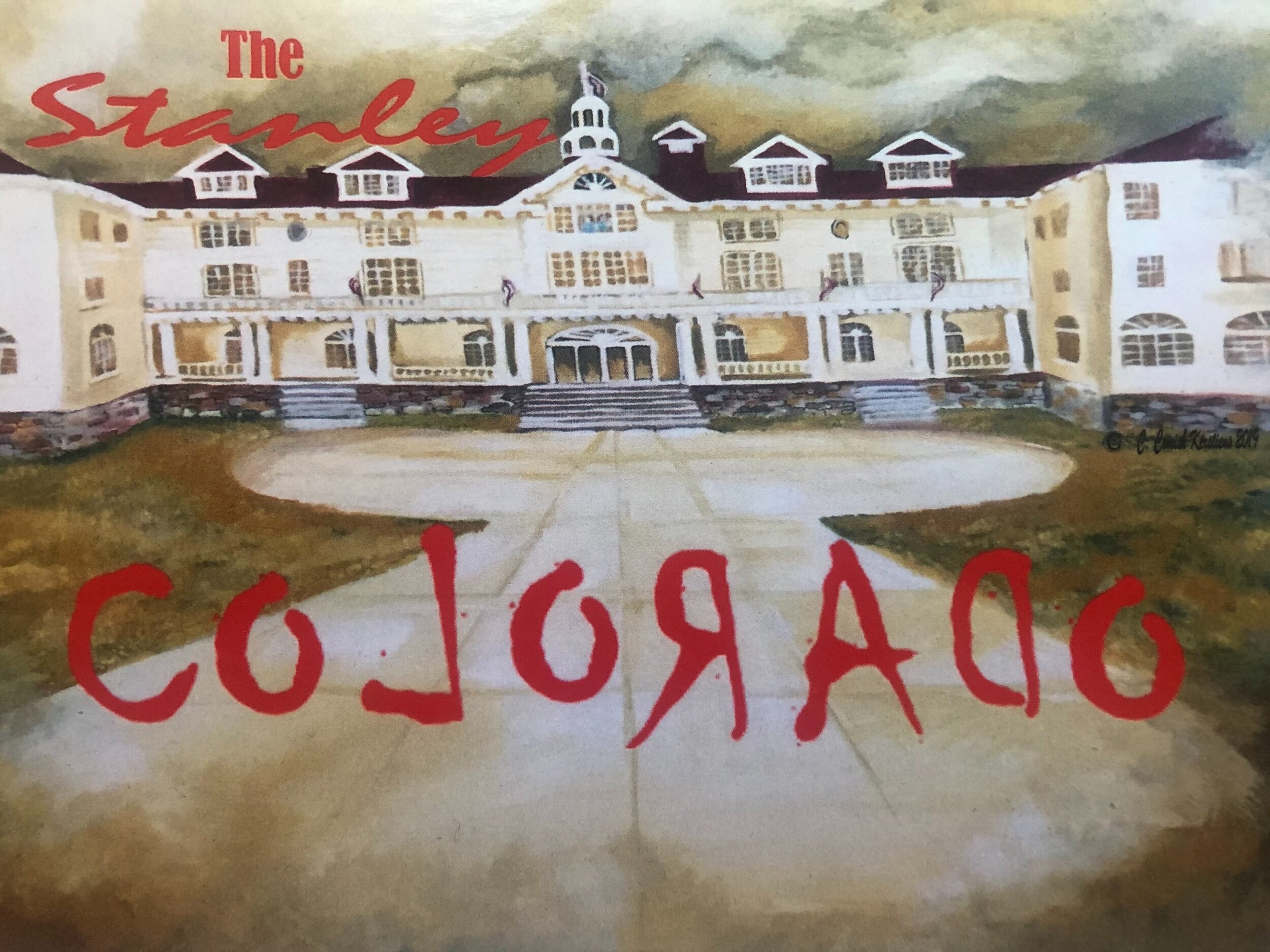
Postcard from the Stanley Hotel

richard bence October 18, 2020

Nestled at the eastern entrance of Rocky Mountain National Park (RMNP), just 90 minutes from Denver, Estes Park is known as "Colorado's original playground." The town is celebrated for its stunning mountain landscapes, free-roaming wildlife, and endless opportunities for outdoor adventures. A standout feature is the Trail Ridge Road, one of Colorado's most famous scenic routes. This paved highway, the highest continuous one in North America, reaches an altitude of over 12,000 feet and offers breathtaking views from Estes Park to Grand Lake, making it a must-visit for travelers.


Yet, Estes Park's allure goes beyond its natural beauty. It’s also home to the historic Stanley Hotel, a grand and isolated resort that inspired one of the most iconic horror stories of all time—Stephen King's The Shining. After spending just one night at the hotel in the 1970s, King was inspired to write his 1977 novel, which later became a classic horror film.


The Stanley Hotel, built in 1909 by Massachusetts couple F.O. and Flora Stanley, has since earned a reputation as one of the most haunted hotels in the U.S. Guests and staff alike have reported eerie occurrences. Mrs. Stanley's Steinway piano is said to mysteriously play by itself in the music room at night, while Mr. Stanley allegedly appears in photographs. Unexplained events such as lights turning on and off, bags being unpacked, and ghostly laughter of children echoing in the hallways have all been reported, cementing the Stanley’s place among the nation’s most active paranormal sites. 


For fans of King’s chilling novel and film adaptation, a visit to the Stanley Hotel provides a unique glimpse into the eerie inspiration behind The Shining.

a1a0a3c0a0672b25fc6b606341bf2420.png

Postcard from Utah

richard bence October 18, 2020

The dusty and dramatic eastern Utah landscapes around Moab used to portray HBOʼs futuristic theme park in Westworld have appeared on both the big and small screen dozens of times before. The desert scenes in Thelma & Louise, while pretending to be the rather flat ‘New Mexico’, are the spectacular sandstone landscapes of the La Sal Mountains, Route 46, southeast of Moab in eastern Utah; Arches National Park, to the north of Moab and Canyonlands National Park to the southwest. The spectacular gorge of the final scene is not the ‘Grand Canyon’, but the Colorado River flowing through Dead Horse Point State Park, about 30 miles southwest of Moab. The police chase is at Cisco, Utah. Filming also took place at Thompson Springs and Valley City where you can stay at Desert Moon Hotel which has been serving the greater Moab area since the Uranium Boom days of the early 1950's.

There’s rugged beauty at every turn when you drive Highway 12, constructed in 1914, passing through some of the nation’s most rugged and diverse landscapes. Spanning 124 miles, SR-12 plays host to two national parks, three state parks, a national monument, and a national forest. From one of the world’s highest alpine forests to the rust-tinged walls of Red Canyon, expect to see golden-colored aspen leaves accent against the evergreens in fall while the colorful rocky scenery changes from pink to beige to yellow depending on which geological time period you are traveling through. You'll also come across the Dixie National Forest, called so because of the heat and all the southerners that settled there to grow cotton for the Mormon church. Utah is home to more than 2 million Mormons. Mormon settlers began a westward exodus in the 1830s. When they arrived in the valley of the Great Salt Lake, outside the boundaries of the United States, in 1847, they felt they had found a home.


Utah's spellbinding red-rock desert and high-altitude forests are just a few of the wonders to discover in heavenly Zion National Park. Mormon explorers arriving in this red-rock wonderland in the 1860s were so overwhelmed by the natural beauty of Zion Canyon and its surroundings that they named it after the Old Testament name for the city of Jerusalem. For Mormon pioneers, Zion was often used to mean the Kingdom of Heaven, sanctuary or a happy, peaceful place. If you’ve ever been to Zion National Park, you can understand why they felt this way about this sacred place.

← NewerOlder →