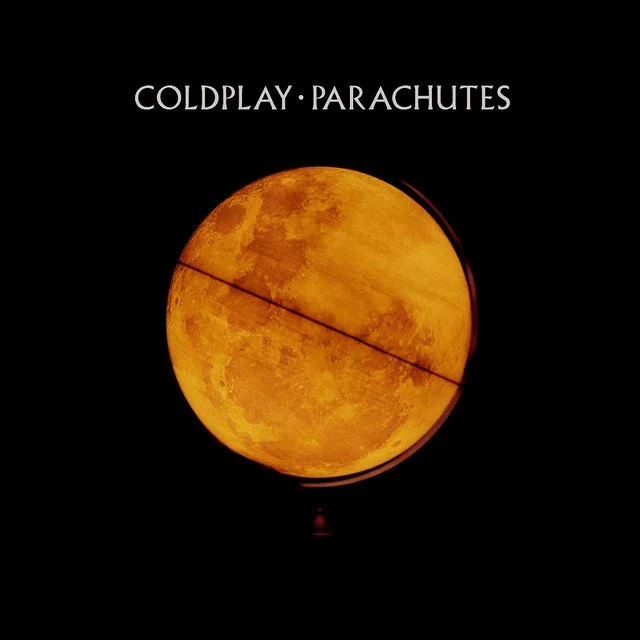
“We live in a beautiful world,” sings Chris Martin on Don’t Panic, the opening track of Coldplay’s 2000 debut album, Parachutes. He sings it twice, almost apologetically, as though offering a small correction to the prevailing mood. The song is barely two minutes long. There is no grand declaration, no soaring crescendo, just a delicate guitar figure, a melancholy voice and the suggestion that beauty might be something we have overlooked.
I have been listening to it again while also rewatching The Office, the original British series that first appeared on the BBC in 2001. Together, they return me to a particular moment in British culture, when understatement still felt possible. Music was allowed to be quiet. Comedy could be uncomfortable. Ordinary life, with its humiliations and minor disappointments, was treated as a subject worthy of serious attention.
Neither Parachutes nor The Office tried especially hard to be liked. Both seemed comfortable with their own peculiarities: one could be sentimental without being grandiose, the other funny without being reassuring. There was room for awkwardness, silence and the possibility that nothing much would happen.
What I miss is not youth, or even the Britain I remember, but a certain scale. Culture felt human-sized. You could discover a record, listen until its edges became familiar, and carry it around privately. A television programme could make you laugh at the recognisable absurdity of your colleagues without telling you what it all meant. The internet existed, but it had not yet colonised every quiet corner of experience. There was less pressure to make every experience count, to document your response, to turn enjoyment into identity. You could simply like something and not broadcast it to the world.
It would be easy to claim that everything was better in 2000. It was not. The past is generous with its omissions. The optimism of Cool Britannia had its limits, and the ordinary lives depicted in The Office were hardly free of anxiety. David Brent’s desperate need to be liked was an early warning about a culture of performance that would eventually escape the office and follow us everywhere.
Still, something in those two works feels worth recovering. They understood that the ordinary is not the opposite of the extraordinary. It is where most of life happens.
Perhaps the difference is that, in 2000, an experience did not have to become anything beyond itself. A song could accompany an evening without becoming the soundtrack to a social media post. A walk could be enjoyed without being mapped, measured or recorded. You could sit in a café, watch the people passing and let your mind wander. There was no particular need to turn any of it into evidence that you were having a life.
Of course, people have always documented their experiences, and nostalgia has a way of editing out the distractions of the past. But the technology we carry now has changed the terms of our attention. The phone offers an endless succession of things to look at, while the world in front of us waits patiently for its turn. Even our attempts to escape can become projects: the weekend planned down to the last detail, the itinerary that leaves little to chance, the restaurant chosen from hundreds of reviews. We can spend so much time arranging to experience something that the experience itself begins to feel almost incidental.
I keep returning to the lyric because it is so modest. It does not promise that everything will be fine. It does not deny that the world is frightening, absurd or difficult. It simply holds two thoughts together: that things can be terrible, and that beauty persists.
Perhaps this is what Parachutes and The Office have in common. Both are melancholy yet quietly optimistic. Neither needs to manufacture a happy ending. Their optimism is quieter than that, residing in the music, the silences, the awkward exchanges and the small recognitions that make life bearable.
Maybe that is what I miss about the turn of the millennium: not a better world, necessarily, but a culture that seemed more comfortable with the idea that life did not have to be extraordinary to be worth paying attention to. Before every experience became something to record, share or turn into a performance, there was a little more room simply to inhabit it.