• portfolio
  • blog
  • about
Menu

Richard Bence

  • portfolio
  • blog
  • about
×

travel | architecture | style | culture

Postcard from Beachwood Canyon

richard bence November 26, 2022

Tucked away in the hills below the Hollywood Sign, Beachwood Canyon is an exclusive neighborhood that has become a shrine for Harry Styles fans. The (mostly female) pilgrims come to take selfies at the Beachwood Cafe, immortalized in his song “Falling” from the Fine Line album (2019). Once known as “Hollwoodland,” its architecture and landscaping drew inspiration from the southern regions of France, Italy and Spain. The six sets of 1920s-era stone staircases (one featuring cascading ponds) that zigzag between hillside streets add to the pretty enclave’s charm which was sold as a refuge in the early 1920s. Driving or walking through the stone gates that still mark the entrance to Hollywoodland, transports you back in time to a small storybook town that seems out of place within the confines of Los Angeles. The Village Plaza, situated at the end of Beachwood Drive, may no longer have the gas station or drug store, but Beachwood Market, the neighborhood grocery store since 1933, is still serving the community and even expanded to the building next door with its distinctive John Lautner-designed glass front. You can stop in for a cup of coffee at the Beachwood Cafe, say hello to a neighbor, and check the bulletin board outside for a missing cat or neighborhood event.


Beachwood Canyon is also home to Besant Lodge (2560 N Beachwood Dr) which has quite a history. Originally built as the first Independent Silent Movie Cinema in Los Angeles, the theater showcased many of the famous silent era films. During this time it was also used as a private preview club for directors to share their new works with each other. Along the way in the 30's and 40's, actors such as Orson Welles and Joan Crawford did some local theater here as part of what was called "The Beachwood Players". It became the present-day Besant Lodge when the cinema was bought by the Theosophical Society in the 1950s. Beachwood Canyon at that time had a large Theosophical community who were dedicated to both “Spirit” and “Art”. These same local Theosophists built venues like The Hollywood Bowl. In its Theosophical incarnation, Besant Lodge has welcomed lecturers worldwide, including Aldous Huxley, Gerald Heard and Manly P. Hall. Today, Besant Lodge continues all of these rich traditions by hosting unique speakers, artists and events from around the globe.


Exploring the ruins of Echo Mountain

richard bence October 1, 2022

Given that spooky season is now officially upon us, Jackson and I decided to explore an abandoned estate at the mouth of Las Flores Canyon in an area known as the Haunted Forest in Altadena. Adventurers know this area as Cobb Estate and it consists of a few remnants of a 107-acre estate that was built over a century ago.


Lumber magnate Charles Cobb and his wife, Carrie, built their Altadena mansion in 1918. Over the next decades, the Spanish-styled estate survived brush fires, a public plan to turn the land into a cemetery, and ownership by the Marx Brothers before it was ultimately turned into public parkland. Now owned by the U.S. Forest Service, the estate (also known as Las Flores Ranch) is said to be haunted.


As we explored further, we came upon more fascinating historical sites, including where Mt. Lowe Railway once shuttled vacationers to a resort on the mountainside once known as the "White City." Atop Echo Mountain there once was a dazzling Victorian resort, pictured, known as The White City in the Sky. This ‘city’ was comprised of a 40-room chalet, astronomical observatory, zoo, dormitories, dance hall, bowling alley, tennis courts, picnic areas, shops and, the jewel of the city, the palatial 70-room Echo Mountain House, built in 1894.


The entire complex of buildings was painted a brilliant white to reflect the southern California sun. Situated as it was at the tip of Echo Mountain, the resort could be seen glowing against the backdrop of the San Gabriel Mountains (then called the Sierra Madre Mountains) from downtown Los Angeles, some 13 miles distant. The resort was part of a series of hotels and taverns built to service the Mount Lowe Railway, the brainchild of Professor Thaddeus Lowe.

At night there was a white-linen dinner service prepared on dishes etched with the resort’s logo followed by dancing. The luxuriousness and sheer spectacle of the resort along with the incredible scenery quickly made the White City the top honeymoon destination in America. Unfortunately, the cost to construct and maintain the railway and the hotels proved to be too much for Lowe and the project fell into receivership. In 1899, only six years after it opened, the professor lost everything except for title to the observatory. But that was only the beginning of the end for the White City.

Between 1900 and 1905 fires destroyed Echo Mountain House and the Chalet. Although the observatory was still in operation, after 1905, Echo Mountain was only a stopover on the trip further up to Alpine Tavern, a 22-room Swiss Chalet hospice with tennis courts, wading pools and mule rides.

In 1937, the Mount Lowe Railway made its last public trek past the remains of the White City to the burnt ruins of the Mount Lowe Tavern. What little remained of the buildings that once graced the promontory of Echo Mountain was declared a hazardous nuisance and blasted into history with dynamite by the US Forest Service between 1959 and 1962.

Today, all that remains of Professor Lowe’s dream are some foundations marking the location of the Echo Mountain House and it’s periphery buildings. Alas, only the foundations of the Cobb Estate remain as well. But what an adventure it must have been transforming a barren mountaintop into a sought-after destination for locals and travelers alike. And while the mountain wonderland may no longer exist, the views from Echo Mountain are still spectacular – from the mountains and cities of the San Gabriel Valley, to the city of Los Angeles and to the ocean and its beaches, even as far away as Catalina Island. A sign at the entrance to the former mountain resort reads:

“For those with vivid imaginations, it is possible to stand among the foundations of the mountain railway and picture oneself a part of Professor Lowe’s dream-come-true. The iron rails, the buildings, the holiday crowds are gone, but the scars on the mountain remain as slowly fading legacies to man’s creative talents.”

Trails of the Angeles, John W. Robinson


Postcard from Carmel

richard bence September 24, 2022

Located on the Pacific Coast about 300 miles north of Los Angeles, Carmel-by-the-Sea, or just Carmel, is a town whose rustic sensibility has captured the imaginations of everyone from bohemian artists and writers to Betty White. The cooling coastal breezes coming off this deep section of the Pacific Ocean create a serene environment that is ripe for creativity. Inspired by the Cypress trees and craggy rocks that line the Monterey Bay coastline, Carmel’s pine-studded sand dunes have long attracted artists who began coming here in the early 1900s to paint its breathtakingly natural scenery.


Apart from the gorgeous landscape, one of the biggest draws to Carmel is its amazing architecture. Many of the homes appear as though they’ve sprung up from the scenery like something out of a fairytale, or the imaginations of their owners. The buildings of Carmel certainly emanate a fairytale-like quality. But Carmel provides more than just whimsy. Sited at one of the most scenic meetings of land and sea in the world, Carmel is a microcosm of California's architectural heritage.

Its Mission San Carlos Borromeo, first built in 1797 and founded by Father Juñipero Serra, a Franciscan priest, consisted of adobe-brick structures heavily influenced by the churches found in Serra’s native Mallorca. Its original designers weren’t trained architects; they merely replicated what they remembered of the European churches in their native Spain. It became a root building for California's first regional building style, the Mission Revival, and remains as one of the best examples of its kind (it's the only mission in the state with its original bell tower). It also offers a valuable glimpse into the history of California under Spanish colonial rule and later, Mexico.

After the 1906 San Francisco earthquake, the village was inundated with musicians, writers, painters and other artists turning to the establishing artist colony after the bay city was destroyed. The new residents were offered home lots – ten dollars down, little or no interest, and whatever they could pay on a monthly basis. Many embraced the Arts and Crafts aesthetic of handcrafted homes built from native materials, informally sited in the landscape. In the mid-1920s, Tudor Revival and Spanish Romantic Revival styles enhanced the storybook quality of the community. Individual expression continues as an ongoing aesthetic theme.


Other builders followed, like Hugh Comstock in 1924. Originally from Illinois, Comstock had no formal training as an architect, yet he designed and built his wife (a Otsy-Totsy rag doll maker) a fairytale cottage for her handmade dolls called “Hansel,” as a 244-square foot showroom and sales center for his wife’s dolls. Later he built a companion cottage on the same parcel and named it “Gretel.” Another favorite: The “Cottage of Sweets” is now a candy store in town on main street.


The 1940s and 1950s in Carmel were filled with one-of-a-kind construction, landscapes, and art pieces in typical fairytale-cottage-style Carmel architecture. Known for being dog-friendly, Cypress Inn was owned by legendary singer, actress and animal activist Doris Day. Doris’s deep devotion to animals helped put Cypress Inn on the map as the “pet friendliest” inn in the “pet friendliest” town in America. At the dog-friendly beach, you can watch dogs running, fetching and playing with each other and in the surf.


Postcard from Whidbey Island

richard bence May 20, 2022

Nestled among the majestic evergreens of the Pacific Northwest, Captain Whidbey is a historic inn on the shores of Penn Cove outside of Seattle, and deeply connected to the local rhythms of Puget Sound’s Whidbey Island. With scene-stealing old fireplaces built from local stones, to log-paneled rooms that capture the essence of a different time, stepping into the Captain Whidbey, with all its creaky, imperfect, crooked charm, is like an ode to wabi-sabi. It does feel like a return to the slower days of summer camp. The flow of locals who continue to come onto the property to eat at the restaurant or sit on the swings by the lagoon are a testament to how Captain Whidbey remains a familiar fixture with a comforting lack of pretension. Whidbey Island is the largest island in the state of Washington, and it’s where one of my favorite movies, Practical Magic, was filmed back in the 90s. With a nautical soul and agricultural heart, this 45-mile-long island in Puget Sound feels like the West Coast’s version of Nantucket. Unlike the San Juans, you can drive directly to Whidbey over the breathtaking Deception Pass Bridge or hop a 20-minute ferry in Mukilteo, located 20 miles from Seattle.

captainwhidbey.com

Postcard from Marfa

richard bence April 16, 2022

I first visited the West Texas town of Marfa back in the summer of 2013. Besides some rather impressive Donald Judd art installations, what had made this remote outpost famous was an unlikely looking Prada store (established in 2005) plonked on the side of a dusty road, a few miles outside of the tiny town of Valentine, which is in fact a “pop architectural land art project.” And it was while bubbling away in a hot tub under the stars at El Cosmico that I had a burning bush moment. I’d always longed to live in America, and as soon as I got home, I set things in motion; a year later, once the visa had been approved, I moved to Los Angeles. So big, life-changing things happened for me in Texas nearly a decade ago. To return was something of a personal pilgrimage, I guess, although going back anywhere a second time is never the same, and I wasn’t sure what to expect given how much America has changed.

Fortunately, this desert gem still shines, partly because its natural setting is still so unusual for an international art hub. It sometimes feels like you’ve wandered onto a film set (Giant was filmed here in 1955, and features the sprawling, windblown landscape of the remote cattle town as a character.) As it turns out, the planets had aligned and a rare, once-in-a-lifetime phenomenon coincided with my return visit: the Jupiter-Neptune conjunction of 2022. I had no idea that this interplanetary event was going to happen, and it wasn’t visible to the human eye, but it felt like kismet. This rare alignment hasn't occurred since 1856 and won't happen again until 2188. Maybe this will bring some good vibes to the region, the country, or maybe even the world. Meanwhile, the Marfa Lights, mysterious glowing orbs that appear in the desert outside of town, have mystified people for generations. According to eyewitnesses, the Marfa Lights appear to be roughly the size of basketballs and are varyingly described as white, blue, yellow, red or other colors. Reportedly, the Marfa Lights hover, merge, twinkle, split into two, flicker, float up into the air or dart quickly across Mitchell Flat (the area east of Marfa where they're most commonly reported).

Inspired by the magical constellations that make up the celestial canvas of the West Texas night sky, I stopped at The McDonald Observatory (built in 1933) which hosts Dark Skies festivals. On a scenic loop of the Davis Mountains, also known as Highway to the Sky, oak and juniper line the volcanic peaks, while blooming agave and cactus blossom make this a striking 74-mile drive through some of Texas’s highest mountains. On my epic journey home through the Guadalupe Mountains and Sonoran Desert, where giant cacti dot the primordial landscape, I felt a deep sense of wonder. Cultural tectonic plates will continue to shift, and we can never return to the way things were in 2013. But in the run-up to Easter, I’m reminded that this is a period of rebirth and resurrection. Great things are on the horizon. Happy Easter y’all.

Stay: The Lincoln Marfa. A lodging community in the heart of Marfa, consisting of eclectic casitas surrounding garden courtyards with native plants, water features, fire pits and shady porches. It’s also dog-friendly; thelincolnmarfa.com


Postcard from Jackson Hole

richard bence December 9, 2021

Tucked away in the heart of the Tetons, Jackson Hole, Wyoming, is a town where rugged wilderness meets understated luxury. Picture a scene straight out of a vintage Western, complete with a town square ringed by iconic antler arches, and you're halfway there. But don’t be fooled by the laid-back vibe; this is no ordinary mountain town. Jackson’s charm lies in its unpretentious allure, a rarefied yet approachable sanctuary that draws visitors in—many of whom never leave. And therein lies the rub. The influx of remote workers, fueled by the pandemic, has turned this once idyllic retreat into a flashpoint for debates about affordable housing, as rents soar and the local community grapples with change.


Despite these growing pains, Jackson continues to make waves for its small but mighty dining scene. Restaurants here have earned a reputation for punching well above their weight, although the pandemic and the occasional mask mandate have certainly left their mark. In winter, Jackson Hole transforms into a mecca for world-class skiing, though climate change casts a long shadow over its once-reliable snow seasons—an unsettling omen for a town so deeply intertwined with its outdoor economy. With the absence of early snow in December, the vulnerability of Jackson’s future as a ski haven becomes ever more apparent.


It’s not just the snow that’s shifting. Teton County, where Jackson sits, now holds the distinction of being the wealthiest county in the U.S., making it a magnet for the ultra-wealthy in search of pandemic-proof havens. The mythos of the rural West—the dusty cowboy, the bohemian ski bum—persists, offering a stark contrast to urban life’s moral quandaries. Jackson feels like a world apart, a place where the wilderness is pristine, the air crisp, and the ties to nature profound. The proximity of Grand Teton National Park lends the town an almost cinematic grandeur, while its architecture—an eclectic mix of frontier nostalgia and modernist flourishes—tells a tale of transformation.


Take a walk through town and the Old West still lingers in its bones, though newer steel-wrapped, glass-heavy structures speak to Jackson’s growing Malibu-meets-Mountain retreat identity. It’s no wonder some locals have christened it ‘Neverland.’ While the town’s rustic dude-ranch charm has long appealed to blue-blooded elites seeking respite, its modern architectural aesthetic seems tailor-made for the Montecito crowd.


Visiting in the off-season, from early November to mid-December, reveals a quieter Jackson, perfect for those who prefer to take it slow. For those in search of chic lodging, the Anvil Hotel—a renovated mid-century motel designed by Brooklyn-based Studio Tack—offers a stylish base with frontier-chic interiors. Think custom cast-iron beds, Woolrich blankets, brass fixtures, parquet floors, and kilim rugs that set the tone for a stay as cozy as it is cool. Nearby, The Virginian Lodge offers a groovy take on Western kitsch, with wood-paneled walls, cowboy oil paintings, and just the right amount of taxidermy for that authentic ‘old-school Jackson’ feel. As for dining? Don’t miss the elk bolognese at Glorietta, where you’ll discover a taste of Wyoming that’s anything but expected.

anvilhotel.com; virginianlodge.com

original-2917-1628719333-23.jpg

Paradise lost

richard bence August 18, 2021

"As the Earth warms and the drought deepens, a network of biologists and conservationists in California are building a 'Noah's Ark' to protect wildlife from extinction by fire and heat." -- LA Times, August 18th, 2021.

As I write this, a massive wildfire continues to rage through Northern California as an evacuation map has been released to locals. This follows The Dixie Fire, the largest of the major wildfires burning in Western U.S. states that have seen historic drought and weeks of high temperatures and dry weather that have left trees, brush and grasslands as flammable as tinder. While 2020 was the largest wildfire season recorded in California’s modern history, 2021 is off to a daunting start.


California was always the world’s idea of paradise (until perhaps the city of that name burned in 2018). Hollywood shaped our fantasies of the last century, and many of its movies were set in the Golden state. It’s where the Okies trudged when their climate turned vicious during the Dust Bowl years – “pastures of plenty”, Woody Guthrie called the green agricultural valleys. John Muir invented our grammar and rhetoric of wildness in the high Sierra (and modern environmentalism was born with the club he founded).


Personal, direct effects of climate change—having to conserve water during drought season, install air-conditioning to combat rising temperatures, and clear vegetation from yards and gardens to protect against wildfires—are the new normal in California. Some residents are wondering, is California still California when our weather becomes an adversary rather than an ally? What is California for when summertime, the season in which the Golden State once found its fullest luster, turns from heaven into hell?


The increasingly hostile weather is straining social relations and disrupting economics, politics and mental health. Extreme weather events like wildfires have been linked to depression, anxiety, post-traumatic stress disorder (PTSD), and suicidal ideation. The sound of a siren can be a triggering event for anyone who has experienced the incineration of their home. The threat of evacuation, and reliving the horrifying memories of fleeing a previous inferno, have created a nightmarish present -- and paint a grim picture of our future. Mental struggles are also common among wildland firefighters who are being exposed to horrendous conditions - entire communities destroyed, loss of human life, loss of wildlife, loss of landscape that we treasure.


As one writer eloquently puts it: “We need a new word for that feeling for nature that is love and wonder mingled with dread and sorrow, for when we see those things that are still beautiful, still powerful, but struggling under the burden of our mistakes.”

kcet.brightspotcdn.jpg

Dam right

richard bence August 8, 2021

The Mulholland Dam, now commonly known as the Hollywood Reservoir or Lake Hollywood, got off to a rocky start when a sister dam buckled and ruined the career of its creator -- Willam Mulholland. The St Francis disaster of 1928 cast doubt on the the safety of the antecedent Hollywood dam, and for decades afterward, kept Hollywood residents on edge. William Mulholland (1855–1935), the LA superintendent of water and power, was the engineer who carried out the transit plan that brought drinkable water and blue pools from the Owens Valley and the Sierra to the city. This is the history that lies behind the film Chinatown. On March 17, 1925, the completed dam was renamed in honor of Mulholland. In a ceremony attended by dignitaries and filmland luminaries, including a canine movie star named Strongheart, Mulholland was feted as a genius. The Los Angeles demigod, after which the infamous Mulholland Dr is named, was forced to retire in 1928, a depressed, dimmed man since the St. Francis disaster.


Expert consensus now holds that its sister dam buckled due to a perfect storm of factors, including its placement on an undetectable (at the time) ancient landslide and Mulholland’s inability to tailor the dam’s design to San Francisquito Canyon, relying too heavily on plans drawn up for the Mulholland Dam. Its collapse was a combination of geography and man’s folly. And so, the Mulholland Dam remains, as does the Mulholland Memorial Fountain and Mulholland Drive. Mulholland’s legacy has been remarkably rehabilitated, as the story of Saint Francis and its sister dam have been washed away from the city’s memory by the passing of time. Today, as a century ago, water is a daily topic of conversation across the state of California. Many of its water systems were built in the 20th century for a different climate, unaltered by the effects of global heating and for a smaller population. Both a visionary and a tactician, Mulholland is being looked at through a different lens in the context of a broader reassessment of history. For some, L.A. represents everything that has gone wrong in the relationship between man and nature.

Image from “The Last Resort,” a documentary about South Beach in the 1970s

Image from “The Last Resort,” a documentary about South Beach in the 1970s

A Requiem for Florida, the Paradise That Should Never Have Been

richard bence July 1, 2021

The state of Florida was basically considered a wasteland until developers figured out that they could transform swampland into promised land. Its economy over history has been a pyramid scheme of developers and people marketing “a bewildering dreamscape forged by greed, flimflam, and absurdly grandiose visions that somehow stumbled into heavily populated realities.” Swindlers sold swampland to homesteaders, turning Florida real estate into a land-by-the-gallon punchline. Pioneers flocked to the “tropical wonderland,” buying lots that looked great in the dry season only to find that they still flood regularly during the rainy season. Once Henry Flagler built a railroad to Key West in 1912, a Floridian version of manifest destiny took hold and real estate exploded. There was a land boom, then bust, in the 1920s. After World War II, settlers and retirees beelined in again, on new highways built in the 1950s and ‘60s. Cubans fleeing communism arrived around the same time. Between 1960 and 1980, the state population nearly doubled, from 4.9 million to 9.7 million.

But the fundamental issue is that South Florida is an artificial civilization, engineered and air-conditioned to insulate its residents and tourists from the realities of its natural landscape. From sea level rise to habitat loss, the effects of the climate crisis are on the verge of making South Florida uninhabitable. Few places on the planet are more at risk from the climate crisis than South Florida, where more than 8 million residents are affected by the convergence of almost every modern environmental challenge – from rising seas to contaminated drinking water, more frequent and powerful hurricanes, coastal erosion, flooding and vanishing wildlife and habitat. If scientists are right, the lower third of the state will be underwater by the end of the century. Will this stop people relocating here? Probably not—there’s still going to be a market for paradise. And most came here to escape reality, not to deal with it.

Miami’s tech boom is heating up as cutting-edge companies flee Silicon Valley, New York and other areas to join start-ups and investors here that are turning the “Magic City” into a prime innovation hub — called so because people who lived at the time recounted how it was as if a major city had popped up overnight, almost like magic. Miami would love to be the crypto, tech hub of the future if you can forget that Miami is sinking and will not have much of a future, but how long before transplants get wise to the fact that Mother Nature never intended us to live here? The Miami condo collapse is a crisis for the entire state, casting doubt over the desirability of living in South Florida. Many condo owners are going to have to bear the costs of special assessments and stricter building codes. These buildings take a beating from the weather, and with rising sea levels, it could become increasingly difficult to get insurance.

Understanding the causes of economic inequality are important but one thing is clear: climate change disproportionately affects poor people in low-income communities. The impact of global warming is going to hit some populations in Miami harder than others — especially retirees on limited incomes. Market experts in South Florida are anticipating that the lagging interest in older condos will cause prices to sink, while the push for more engineering reports will likely put lower-income condo owners in untenable positions, forcing many to take on assessments they can’t afford or sell as quickly as possible. That could lead to significant changes in condo ownership and even the Miami skyline. My heart goes out to anyone who was involved in the collapse, and any condo owners who now feel a sense of impending doom. Meanwhile, here are some sobering stats to ponder on:

Miami is considered the most vulnerable coastal city in the world. What were once called “100-year floods” could occur regularly — meaning every couple of years.

  • Miami is predicted to see 6 inches of sea-level rise by 2030 and 2 ft by 2060.

  • Miami, which is built on silt, is also sinking into the sea. When sea levels rise, saltwater also infiltrates water supplies and septic systems.

  • Miami, already the warmest city in the U.S. year-round, has warmed over 2.3°F since 1970. By 2050, expect 151 days/year to feel like 105°F or higher.

tower.JPG

Broadway: Downtown L.A.’s architectural wonderland

richard bence June 25, 2021

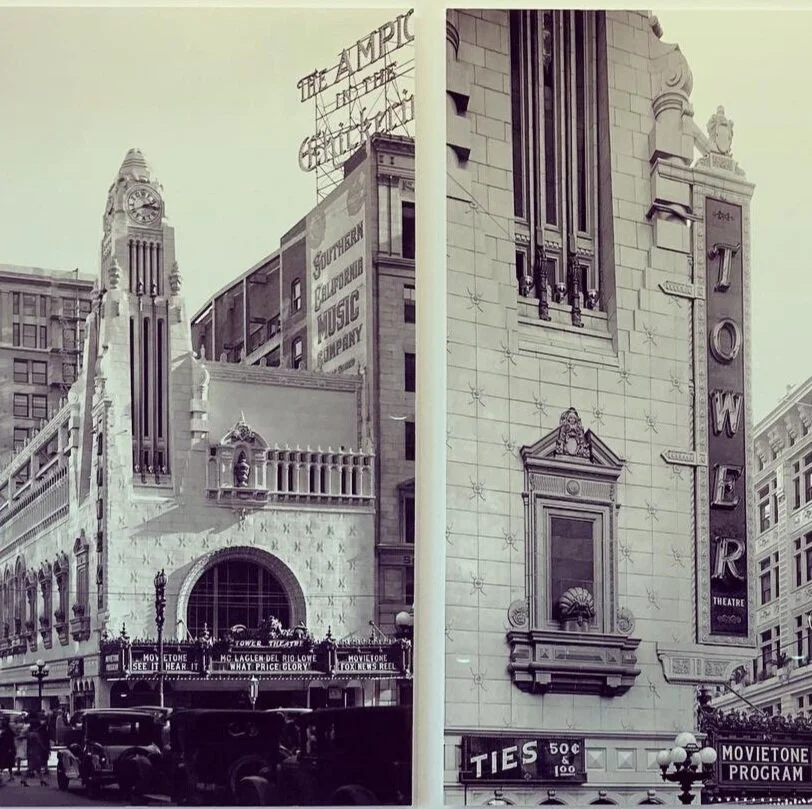
Downtown L.A. has one of the most impressive collections of historic movie theaters in the world. Broadway Street offered Angelenos a heady mix of vaudeville and cinema in beautiful theater houses and stately department stores. The Beaux-Arts style was firmly in place when most of the Broadway theaters were built, in 1910 to 1931, and therefore many exteriors and interiors favor classic (Greek, Roman, Italian Renaissance) designs. By the late 1920s, the Art Deco style had come into favor for office buildings, though theatergoers still loved the ornate, eye-popping styles as featured in The Theatre at Ace Hotel, the Tower, and particularly the Los Angeles.


Beginning in the 1920s, automobiles contributed to the decline of the extensive trolly system that connected Downtown Los Angeles to the rest of the urban area. As a result, ridership ceased to grow and with it fare revenue. An obsession with cars and the consequent rise of auto-centric planning along with “white flight” did more damage. Theaters began moving to Hollywood – Grauman’s had already opened the Egyptian Theatre in 1922 and Grauman’s Chinese Theatre opened in 1927 – and department stores opened branches in outlying areas. There’s no clear date that can be stamped on Broadway as its year of demise because the change was gradual. But by the 1950s, with the explosive post-war growth in the suburbs, the completion of new shopping centers, and the growth of the freeway system, the end had come.

Most of the majestic buildings still stand. They remain as icons of an earlier age.

tower.png

Apple opens store in Los Angeles' historic Tower Theatre

richard bence June 24, 2021

Apple Tower Theatre is a new Apple Store designed by UK studio Foster + Partners inside an abandoned 1920s movie theatre in Downtown Los Angeles. Foster + Partners worked with the technology company to renovate the historic building, which was originally designed by American architect S Charles Lee in 1927 in the baroque revival style. Originally home to the first theater in Los Angeles wired for film with sound, the historic Tower Theatre has lain empty and unused after it closed its doors in 1988. It’s also been a frequent filming location and has been featured, among others, in The Last Action Hero, Transformers, and is a favorite shooting spot for David Lynch.

After Betty and Rita are seen entering the neon-lit doorway for Club Sliencio in Mulholland Drive, the following scene shows them watching a dreamlike show inside that mysterious club. Lynch filmed that interior scene in The Tower Theatre, which is also where Lynch filmed the Mulholland Drive scenes where Theroux’s character is seen staying inside a run-down place called the Park Hotel. Years later, Lynch returned to the Tower Theatre, using its interior as a location in the third season of Twin Peaks (or, as many people call it, Twin Peaks: The Return). This was the otherworldly space occupied by a character known as the Fireman (a.k.a. the Giant) and Señorita Dido. On his Twin Peaks Blog, Steven Miller analyzes where Lynch filmed these scenes within the building.

After walking through the Broadway doors, visitors enter the monumental lobby inspired by Charles Garnier’s Paris Opera house, featuring a grand arched stairway with bronze handrails flanked by marble Corinthian columns. The movie theatre's original balconies remain in situ, and Apple plans to use the space as an auditorium for daily skills workshops and presentations from local filmmakers and musicians. An original stained glass window with a pattern that includes coiled strips of film has also been painstakingly restored, along with a fresco of a blue and cloudy sky that arches over the double-height space.

Apple Tower Theatre anchors the corner of Eighth Street and Broadway. While the Broadway Theater District, home to a network of Latino-owned small businesses, has remained largely devoid of big global chains in its recent history, Downtown L.A.’s historic core is now undergoing a fast-moving transformation as big-box retailers and hospitality brands, including Urban Outfitters (the Rialto Theater) and Ace Hotel (the United Artists Theater), revive and reactivate Broadway’s concentrated wealth of historic theaters, many of which had gone to seed over the decades. Just north of the Apple Tower Theatre on Broadway and West Fourth, near Grand Central Market and the famed Bradbury Building, the neighborhood’s first high-rise constructed in over a century, a 35-story luxury residential tower, opened to residents this spring.

For businesses owned by people of color, large companies like Apple moving in will be a mixed blessing. It will bring foot traffic, which is good, but will those customers stop and purchase at a mom-and-pop store, and will those Latino-owned businesses eventually get displaced? Deep-seated racial disparities often mean they cannot rely on money from family and friends to start new enterprises, while also struggling to secure credit from banks. A gleaming Apple store is a wonderful thing, but a new reality is emerging from the rubble of the pandemic’s economic devastation: COVID-19 was a toxin for underdogs and a steroid for many giants. As we enter a new evolutionary stage of retail, one glaring trend is the mass commodification of the streetscape. Everything that we typically decried about chains—their cold efficiency, sterility and predictably, may come to feel like a blessing following a period when people felt stalked by murderous pathogens.

Postcard from Lake Tahoe

richard bence June 17, 2021

Starting not long after the turn of the 20th century, Lake Tahoe witnessed a strong infusion of filmmakers and Hollywood stars into the region. Legends of the Silver Screen such as Clark Gable, Jimmy Stewart, Greta Garbo and Elizabeth Taylor became part of local lore as they stayed in and frequented local establishments during their shooing schedule. However, after World War II, when much of the railroad infrastructure was torn up and used as scrap metal, the steady stream of movies shot in Truckee/Tahoe dried into a trickle. Beverly Lewis, director of the Placer-Lake Tahoe Film Office, said one probable factor is the rise of the highway system and automobiles as a replacement for the railway system. “Hollywood’s first choice now (for mountain or winter scenes) is Big Bear or Mammoth because the drive is a little easier,” she said. This accounts for why after 1938, Tahoe/Truckee served as a location only once every couple of years, sometimes a couple of times a decade, rather than four or five a year. Nevertheless, what the region lacked in quantity of films produced, it made up for in quality. Here’s some of my favorites:

A PLACE IN THE SUN (1951)

Elizabeth Taylor, at the peak of her craft, and Montgomery Clift, one of the great American actors, team up for this sizzling and devastating romance. In the film, Lake Tahoe is supposed to resemble a lake set in upstate New York, where the beautiful people spend their summers sojourning amid their wealth, luxury and general self-regard. This gem from the Golden Era of Hollywood is loosely based on the novel “An American Tragedy” (1925) by Theodore Dreiser, itself inspired by the true story of a sensational 1906 murder case. A Place in the Sun premiered in Los Angeles on August 14, 1951, although it was filmed in 1949. The film scored a total of nine nominations and six wins at the 1952 Oscars.

Clift’s sexuality, like those other 50s idols Rock Hudson and Tab Hunter, was carefully concealed from the public. He was “lonely,” yet with the help of his refusal to live in Los Angeles or participate in café society, he was able to keep his private life private. But he found acceptance and kinship with Elizabeth. On the evening of May 12, 1956, while filming Raintree County, Clift was involved in a serious car crash when he smashed his car into a telephone pole, minutes after leaving a dinner party at Taylor’s Beverly Hills home. Her devotion was never clearer than when she crawled into the wreckage and saved him from choking.


Monty's accident shattered his face and left him in constant pain. But even before Raintree, the decline had been visible. Author Christopher Isherwood tracked Clift’s decline in his journals, and by August 1955, he was “drinking himself out of a career”; biographies of Clift posit that he drank because he couldn’t be his true self, because homosexuality was the shame he had to shelter within. As he sank into alcoholism and addiction, Elizabeth used her power to keep him working. In turn, through scandals and multiple marriages, he was her constant. Their relationship endured until his death in 1966, and loyalty united them to the end. His influence continued in her outspoken support for the gay community, especially during the AIDS crisis.

MISERY (1990)

Misery was partially filmed in Nevada’s oldest town Genoa, which stood in for Silver Creek, CO. The opening scene in which Paul Sheldon drives off the snowy road was filmed near Donner Pass. The crew built four buildings on Genoa’s main boulevard – a cafe, radiator shop, sheriff’s station, and a general store. The production also filmed at Nevada’s oldest thirst parlor, the Genoa Bar and Saloon.

“He didn’t get out of the COCKADOODIE CAR”

“YOU DIRTY BIRD, HOW COULD YOU”

“Well, I’ll get your stupid paper, but you just better start showing me a little appreciation around here MR MAN”

THE BODYGUARD (1992)

In The Bodyguard, you may recall the scene where Kevin Coster's character jumps off the pier to save a boy from a boat that's about to explode. That pier belongs to Tallac House, a rustic lodge-style retreat on the shore of Fallen Leaf Lake, just a mile or so from Lake Tahoe.

IMG_3471.jpeg

Atomic L.A.

richard bence June 5, 2021

During the Cold War in the late ’50s, LA-96 was one of 16 NIKE missile sites that protected Los Angeles from a feared attack by Soviet bombers. Army specialists monitored the skies from this high point between Los Angeles and the Valley, looking for Soviet air strikes. The technology at the site could both detect enemy aircraft and assist anti-aircraft missiles launched from a nearby facility. It was an active battery from 1956-1968.

Years of disuse later, the missile site is now part of a public park. People can stomp up the steel structures and enjoy the sweeping views in all directions. Not much has changed, or what’s been added is deliberately made to match the existing structures, so it still sort of feels like somewhere you’re not allowed to be.

The ever-present threat of nuclear annihilation had a great impact on American domestic life. The 1950s and 1960s saw an epidemic of popular films that horrified moviegoers with depictions of nuclear devastation and mutant creatures. Cuba’s alliance with the Soviets had a profound impact on the American psyche, which peaked in the Cuban Missile Crisis of 1962 over the installation of nuclear-armed Soviet missiles on Cuba, just 90 miles from U.S. shores. In these and other ways, the Cold War was a constant presence in Americans’ everyday lives.

Paranoia about an internal Communist threat—the second Red Scare—reached a fever pitch between 1950 and 1954, when Senator Joe McCarthy of Wisconsin, a right-wing Republican, launched a series of highly publicized probes into alleged Communist penetration of the State Department, the White House, the Treasury, and even the US Army. During Eisenhower’s first two years in office, McCarthy’s shrieking denunciations and fear-mongering created a climate of fear and suspicion across the country. No one dared tangle with McCarthy for fear of being labeled disloyal.

The Red Scare led to a range of actions that had a profound and enduring effect on U.S. government and society. Federal employees were analyzed to determine whether they were sufficiently loyal to the government, and the House Un-American Activities Committee investigated allegations of subversive elements in the government and the Hollywood film industry.

McCarthy became the person most closely associated with the anticommunist crusade–and with its excesses. He used hearsay and intimidation to establish himself as a powerful and feared figure in American politics. He leveled charges of disloyalty at celebrities, intellectuals and anyone who disagreed with his political views, costing many of his victims their reputations and jobs. McCarthy’s reign of terror continued until his colleagues formally denounced his tactics in 1954 during the Army-McCarthy hearings, when army lawyer Joseph Welch famously asked McCarthy, “Have you no decency?”

image.jpg

Desert X 2021

richard bence April 17, 2021

Artworks in this year’s biennial, scattered around the Palm Springs area, explore issues of land rights, water supply and more. In the foothills near the Palm Springs Visitors Center, Nicholas Galanin has mimicked L.A.’s famous Hollywood Sign with “Never Forget,” which references the colonization of ancestral Cahuilla territory. The undulating Pop installation of the word “Indianland” acknowledges the Hollywood Sign’s original form, erected as a real estate gimmick to promote the colonization of Beachwood Canyon. Built by Mexican laborers in two months during 1923, it is an accidental icon. Today, the city’s most prominent landmark is also a symbol of the entertainment industry; but “Hollywoodland“ was never designed to be anything other than an advertisement for a housing development on the side of a steep hill. People from around the world project their own dreams and fantasies onto it. In this way, it makes a perfect “empty vessel” to use as a springboard for the show’s most Instagram-ready work, which is both a strength and a weakness: strong because the virtual image will travel far and wide, weak because seeing it reproduced on a cellphone screen is actually more impactful than encountering the analog object at the site (much like the sign it mimics.) That said, the artist does point out that the sign itself is less significant than the land it sits on, and the history of who engages with that. A related, somewhat reversed issue hampers Xaviera Simmons’ string of billboards along Gene Autry Trail, a busy thoroughfare between the city and Interstate 10. Her image-and-text articulations of the pressing topic of reparations and redistribution of wealth are thought-provoking. But billboards aren’t designed for the paragraph-length typography found on several of them, which simply cannot be read at 55 mph.


Desert X is open until May 16.

cahuenga freeway.png

The Cahuenga Pass Parkway

richard bence March 30, 2021

The first section of the Hollywood Freeway opened in 1940. It was then known as the Cahuenga Pass Parkway and trolleys ran down the center of it until 1952. The Parkway was designed by a team of engineers under the direction of Merrill Butler, the same team that had designed the Arroyo Seco Freeway/Parkway. Here in the Pass, they were able to incorporate lessons they had learned in their earlier work eg generous access ramps.

In spite of the fact that the on- and off-ramps of the former Cahuenga Pass Parkway have been modified by Caltrans since their original construction, the bridges have remained virtually intact. Although the detailing, methods of construction and structure of the three bridges are similar, and all manifest the *WPA-Heroic Streamline Moderne design influences, each has a slightly different appearance. The Pilgrimage Bridge is the low, arched one; the Mulholland Bridge, pictured, tall with a longer span over Cahuenga Blvd; and the Barham bridge wide and workman-like. These differences are most apparent in their streetlight/- luminaire designs, which are unique to each of these three bridges. However, they all share similar simple decorative concrete railings and a late Thirties sense of monumentality and civic presence. These bridges, walls, ramps, guard rails and tunnels represent an example of the late 1930’s civic social aspirations and grandeur. 

Where earlier roads once crossed open countryside, however, early planning maps showed the Hollywood Parkway (to use its original name) slicing through a densely populated area. Residents were understandably unsettled. As early as 1940, the Hollywood Anti-Parkway League denounced the Cahuenga Pass Parkway, then under construction, as “un-American.” Later, as planners moved to extend the parkway toward downtown, opposition became even louder. Movie stars worried about their Whitley Heights homes. Merchants fretted about a sweeping concrete viaduct over Franklin Avenue. The Hollywood Bowl Association feared noise pollution. Some critics suggested that the city build a rapid transit line instead. Most supported the general idea of a freeway but disagreed with its routing.


Ultimately, the state relented to local opposition and struck compromises with the mostly white, middle-class, and politically powerful Hollywood community. Construction claimed several historic structures, including Charlie Chaplin's and Rudolph Valentino’s former homes in Whitley Heights, but the state planted extensive landscaping near the Hollywood Bowl to dampen traffic noise, and highway engineers bent the freeway around local landmarks like the First Presbyterian Church, the Hollywood Tower apartments, and KTTV’s newly constructed television studio.


The more ethnically diverse and working-class communities southeast of Hollywood – as in Boyle Heights and East Lost Angeles, where seven superhighways were built over local objections – were not as lucky. There, the freeway took a more direct route. It bisected Echo Park, severing the recreational lake from its adjacent playgrounds. It carved a canyon through downtown, obliterating historic Fort Moore Hill and its 1873 high school building. And where it met the Arroyo Seco Parkway rose the Four-Level Interchange, a colossal structure that displaced some 4,000 people.


Construction lasted seven years (1947-54) and cost $55 million. Nearly half went toward right-of-way acquisition, which involved the relocation of 1,728 buildings and the demolition of another 90. When the final link of the ten-mile freeway opened in 1954, an ancient transportation corridor had entered modern times, but it had also opened urban wounds that have yet to heal.

*The Works Progress Administration (WPA; renamed in 1939 as the Work Projects Administration) was an American New Deal agency, employing millions of job-seekers (mostly unskilled men) to carry out public works projects, including the construction of public buildings and roads. It was established on May 6, 1935, by presidential order, as a key part of the Second New Deal.

arroyo seco.png

The Arroyo Seco Parkway

richard bence March 30, 2021

Originally started as a WPA flood control project, the Arroyo Seco Parkway—also known as the Pasadena Freeway—is considered one of the most important roads in American history. Built by the WPA and PWA (in conjunction with local agencies) and mostly completed by 1940, it was the first freeway west of the Mississippi. At the dedication, California Governor Culbert Olson stated, "It takes courage to do a thing the first time, no matter how simple and obvious it may appear after it is done. And this, fellow citizens, is the first Freeway in the West."


Designed in the parkway tradition, it features lush landscaping, windy curves and highlights the unique geographical features of Southern California, including views of the San Gabriel Mountains. It was also practical, becoming the initial stretch of road for the well-known (and, now, much maligned) Los Angeles freeway system. Today, it's still in nearly the same configuration it was in 1940 and is a American Society of Civil Engineers Historic Landmark.

martin-5004.jpg

Postcard from Pasadena

richard bence March 14, 2021

The Arroyo Seco cuts a steep canyon through the west side of Pasadena, separating it from the hilly neighborhoods of Northeast Los Angeles. As Pasadena grew, this canyon posed a daunting obstacle to accessing the neighborhoods to the west, one that would be bridged over many times to link both sides of the canyon. Although the stream of the Arroyo Seco itself is confined to a narrow concrete channel for most of its length through Pasadena, the adjoining landscape is far more natural than that along the Los Angeles River. Beneath the many bridges that span the canyon, the wooded canyon offers a lovely secluded bit of nature close to Old Pasadena.


As you walk through the park, you’ll find the aging remnants of old park infrastructure: a crumbling stone wall here, an old bench there. The cliff face on the west side of the canyon holds numerous staircases that seem to vanish into the overgrowth, while castle-like mansions poke out on the ridge above, aloof and disconnected from the nature beneath them. In contrast to Pasadena’s typically heavily-cultivated parks, such as the lush lawns surrounding the Rose Bowl just to the north, Lower Arroyo Park feels mostly forgotten by the city above.


Ironically, the Lower Arroyo was once home to a major tourist attraction. In the 1900s, Adolphus Busch (of the Anheuser-Busch brewing company) turned his summer home at the southern end of the park into an elaborate garden filled with statues, picturesque buildings, and waterfalls. This was the original “Busch Gardens,” long before it turned into a chain of amusement parks, and it stayed opened until the 1930s before it was closed and replaced with a residential neighborhood, with few traces of the gardens remaining.


But it’s the grace of the Colorado Street Bridge, proclaimed the highest concrete bridge in the world upon completion in 1913, which really draws your breath. With its majestic arches rising 150 feet into the sky, the Colorado Street Bridge is a historic Beaux Arts bridge that spreads over the Arroyo Seco to ease travel between Pasadena and Los Angeles. Before the bridge was built, people had to go down into the Arroyo Seco, cross the river and come back up the other side. Today it offers visitors picturesque views of the city and is featured in several television shows and movies. Most recently the Colorado Street Bridge was featured in the 2016 film "LA LA Land."

Highland_Park.jpg

Image by RAOUL DE LA SOTA

Postcard from Highland Park

richard bence March 10, 2021

The northeast Los Angeles neighborhood thrived throughout the prewar period, when many of the landmarks that now define Highland Park — including the Highland Theater and the Highland Park Masonic Temple — were built. In the 1950s, the rise of the suburbs saw the beginning of a period of transition for the neighborhood, with Highland Park becoming an important center of Latino life in Los Angeles. Though a cause for celebration when it opened in 1940, construction of the Arroyo Seco Parkway—America's first freeway—sped up Highland Park's gradual decline. Reduced to "drive-over" country connecting two distinct political powers—Pasadena and Los Angeles—the area struggled to retain its own identity. Channelization of the Arroyo Seco further accelerated the transformation of the area from suburban Eden to an inner-city enclave.


Paradoxically, Highland Park was fading as more and more people arrived to the city. The population of Los Angeles in 1900 was 100,000. By 1930 it was over one million and growing. Many of these new arrivals had come to California looking for a paradise that was advertised to them in newspapers, books and idyllic scenes from motion pictures. African-Americans from the South had come looking for opportunity and fair treatment. The civil war in Mexico drove a large number of immigrants north through the 1910s and 1920s, many settling near downtown to take advantage of available jobs and transportation. During the 1930s the number of Mexicans and Mexican-Americans in Los Angeles decreased due to mass deportations carried out by government authorities, all without due process. But Latinos were nonetheless establishing themselves in areas such as Chavez Ravine and neighborhoods east of the Los Angeles River.


As early as the 1920s, the predominantly white residents of Highland Park began looking to other areas of Los Angeles for housing. As new neighborhoods developed and transportation became more available to the west, residents began moving to areas such as the Mid-Wilshire district, which offered both new housing stock (humble and magnificent) and thriving commercial districts. After World War II, this westward drift became a full-on exodus of Anglo middle-class families out of communities like Highland Park and into the San Gabriel and San Fernando Valleys. This in turn left housing in Highland Park to Mexican-Americans and working-class whites.


Real estate developers and property owners eager to maximize cheap rentals in the area subdivided large Victorian and craftsman homes, or razed them completely in favor of multi-unit housing and commercial strip malls. The once-thriving Figueroa commercial corridor lost much of its prominence as the trolley and foot traffic that had once supported diminished due the opening of the Arroyo Seco Parkway. Traffic now moved up and down the Parkway between Los Angeles and Pasadena at 40mph, with Highland Park reduced to being an off-ramp sign.


During the 1950s and '60s, Mexican-American working-class families continued to increase in numbers while whites moved out to newer, homogenous communities. This white flight occurred not only in Highland Park, but was seen in many of Los Angeles' original and older neighborhoods. As white middle-class families moved to the suburbs, resources moved with them, leaving their old neighborhood in slow decline. After the advent of the freeways, waves of white flight enabled many Latino families to make what they regarded as a step up from East Los Angeles to Highland Park, for example.


Today, Highland Park is one of the epicenters of gentrification in Los Angeles. Not so long ago it was an unassuming, mildly depressed, Latino-majority suburb with a string of mom-and-pop style businesses along its two major thoroughfares — York Boulevard and Figueroa Street. Now, or certainly pre-pandemic, it is a place of spiraling rents, designer Craftsman cottage renovations, bars, restaurants and playfully curated boutiques catering not to anyone’s basic needs but to shopping as recreation. Highland Park is also home to a groundswell of anti-gentrification activism, emboldened by but predating BLM protests. Vandalization of hipster stores and restaurants in the rapidly gentrifying neighborhood is nothing new. Being named “The Hottest Neighborhood of 2013” by Redfin might well have been the death knell. Now, gentrification has become synonymous with white supremacy.

Like other fast-changing neighborhoods, Highland Park has not always been able to accommodate the new without displacing the established. As one blogger puts it: "Working-class communities are often built around interdependence on one another, gentrification redesigns the neighborhood around capital. Communal spaces are re-imagined into commercial spaces, homes which were once upheld as places for families are now upheld only by how much they can profit investors. As the demographic forcefully changes from proletarian to rich, brown or black to white, renter to homeowner, the sense of home starts to disappear as bourgeois newcomers seldom acknowledge the previous residents or the culture they’ve already established."


The Golden Age of L.A.'s 'Little Harlem'

richard bence March 1, 2021

During the 1920s, Los Angeles attracted more African Americans than any other city on the West Coast. Undoubtedly the epicenter of L.A.’s jazz scene, South Central's Dunbar Hotel was built in 1928 by Drs. John and Vada Sommerville – the power couple of progressive black Los Angeles – as a place where black travelers could stay in style and comfort. The luxurious hotel soon attracted the likes of Louis Armstrong, Ella Fitzgerald, Lena Horne, and Billie Holiday. During the '30s and '40s, Central Avenue was the peak of chic. The Dunbar was the sun around which the tight-knit neighborhood revolved. The black entertainment district on Central Avenue welcomed white viewers and listeners. Many racially-prejudiced middle-class whites in Los Angeles were reluctant to live amongst African Americans, but they were attracted to jazz music and African American entertainment. Indeed, the creative theft and cultural appropriation of black music by white jazz bands transformed mainstream music and pop culture in Los Angeles. Before the Dunbar stopped attracting upscale visitors and fell into disrepair it was a source of tremendous pride on Central Avenue, and the area became known by some as “Little Harlem” and “Brown Broadway.”

Lured by an expanding economy and the prospect of jobs, many black families who had come from the South during the Great Migration settled in Compton and South L.A. Before the courts struck down racially restrictive covenants--deeds that prohibited blacks and other races from living on a property--in 1948, Compton was white. By the 1950s, Compton was a largely middle-class black city. For a brief moment in time, blacks and whites coexisted quite peacefully in Compton from the early 1950s to the Watts Riots of 1965. After the riots, and again after the L.A. riots in 1992, which erupted after four police officers were acquitted of assault for the beating of Rodney King, Compton experienced a wave of violence that prompted middle-class families to leave.

Around the world, Compton is famous for producing musicians such as Kendrick Lamar and athletes like Serena and Venus Williams. But the city is also known for its history with gangs and police violence. When the crack epidemic first hit Los Angeles in 1983, it embedded itself into the city’s fabric. Ravaging neighborhoods and taking lives, crack exploited the conditions that society had allowed to fester and were unwilling to confront. Economic restructuring in the manufacturing sector and other changes in the economy had led to a decline in low-skilled and semi-skilled employment among blacks. These conditions contributed to the rise of the crack cocaine economy. Crack offered a quick fix with a high profit margin. Crack single-handedly set back African American progress 30 years; the trauma gets passed down. Whether you used it or not, it changed the dynamics of the black community forever. But before the horrors of the drug were as widely known, the day-to-day realities of the crack epidemic were mainly told through the emerging art form that we would come to know as hip-hop. In 1988, N.W.A. put the city of Compton in the national consciousness (and on the world stage) with the release of Straight Outta Compton, a chronicle of violent life on the streets and fury aimed at the police. The emerging genre of hip-hop in the mid-1980s served as a portal for mainstream America to see what was happening in the urban centers that the Reagan administration had left behind. It was stark, brutal, and unrelenting in their depiction of violence on the streets of South Central and Compton.

Crack was a scourge, but it got turned into a demon, which was then used to demonize the inner city. To discuss crack cocaine is to tackle a litany of bigger, intertwined American issues: racial and economic disparities; inner city poverty and crime; media reporting and sensationalism; political and legislative campaigning and action; mass incarceration and exploitation; and personal and communal responsibility. Many of those topics are present in Crack: Cocaine, Corruption & Conspiracy, Stanley Nelson’s documentary, which examines all the ways that the government and the media used the grim reality of crack, turning it against the very people who were being victimized by it. 

American-Horror-Story-The-Dark-History-of-the-Cecil-Hotel-3.jpg

Horror hotel

richard bence February 10, 2021

Built in 1924, the Hotel Cecil opened just a few years before the Great Depression (1929-1939). The hotel was intended as lodging for business people, but with the economic collapse, the Cecil’s clientele drifted toward the less affluent. The Cecil’s central location in Downtown Los Angeles and proximity to the Pacific Railroad made it an ideal spot for transients including actress Elizabeth Short (The Black Dahlia.) The 1947 murder is one of the great unsolved murders of history. Apparently, Short was seen at the Cecil’s bar in the days leading up to her death. It has yet to be proven or disproven. More recently, Elisa Lam, a Canadian student at the University of British Columbia in Vancouver, was recovered from a water tank on top of the hotel on February 19, 2013.


The Hotel itself was known to have “insanity within its walls,” as said in Netflix's Crime Scene: The Vanishing at the Cecil Hotel, with guests ranging from drug dealers to prostitutes and rapists. One interviewee in the documentary says the hotel is where “serial killers let their hair down,” perhaps in part because it was so cheap — in the mid-1970s and ’80s, rooms were about $14 per night. Killer Richard Ramirez, a.k.a. the Night Stalker, stayed at the hotel between his grizzly murders. One witness in the documentary said he would often see Ramirez take off his bloody clothes in the alley and walk up the Cecil stairs to his room.


Austrian serial killer Jack Unterweger stayed at the Cecil for a time in 1991 in a twisted homage to Ramirez. During that time he posed as a journalist and killed at least three sex workers, all while taking advantage of his rapport with the police that he garnered during ride-alongs. Unterweger was later convicted of the murders and hanged himself in Austria. Other incidents at the Cecil included someone trying to burn down the hallways, domestic abuse, assaults and stabbings, someone slashing their own throat with a razor and even an infamous leap by Pauline Otton, who jumped from the ninth-floor window, killing herself and an elderly passerby who was on the pavement below her.


Back in 2015, the Cecil inspired Ryan Murphy to create American Horror Story: Hotel, which focuses on the disturbing events at the fictional Hotel Cortez. The most-recent incident happened in 2015, when a 28 year-old man was found dead on the pavement outside the hotel in an apparent suicide. Los Angeles-based firm Marmol Radziner was to helm Hotel Cecil’s rehabilitation, but it remains to be seen if the long-in-the-works project will continue, given that the pandemic has severely hurt the hotel industry and effectively killed off travel. Once again, it seems like fate has dealt the storied hotel a heavy blow.

← NewerOlder →