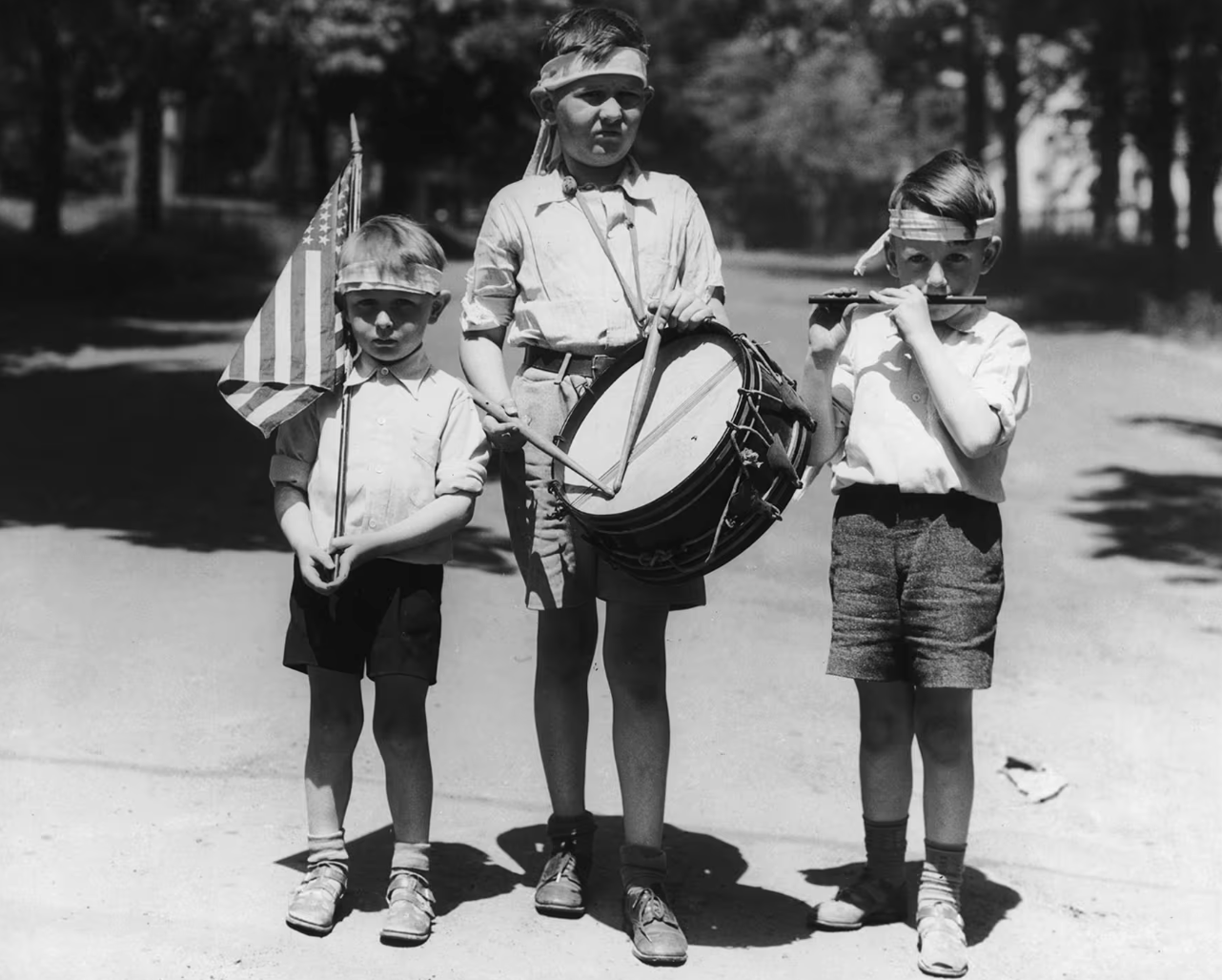
When we see marching bands today — vibrant formations at football games, parades, and civic celebrations — it can feel like an American invention. In reality, many of their defining features trace back to 19th-century England, particularly in the industrial north.
While military bands existed across Europe for centuries, England helped transform this tradition into something distinctly civic. Brass bands, especially, moved from regimented military use into community life — supported by factories, mines, and local organizations. These were not just performers but participants: people who rehearsed together, competed, and played at public gatherings, fêtes, and parades.
That shift — from battlefield to bandstand — is key. It rooted music in local identity, pride, and participation, rather than ceremony alone.
Parades, too, took on a particularly civic character in Britain. Though processions are ancient and widespread, 19th-century English parades often emphasized organized civic involvement: trade groups, friendly societies, church congregations, and volunteer units marching alongside bands. The visual language — banners, uniforms, decorated floats, and bunting — reflected both celebration and social structure.
In contrast, southern European traditions — particularly in countries like Spain and Italy — often centered on religious festivals. Processions for saints’ days or holy weeks could be visually elaborate and musically rich, but they were typically structured around devotion and ritual, rather than the same kind of broad-based civic participation seen in industrial-era Britain.
By the late 19th century, British band traditions had spread to the United States, where they took on a new life. Figures like John Philip Sousa helped popularize marching music, while schools and colleges integrated bands into campus culture — especially alongside the rise of football. Elsewhere in the British Empire — including Australia and New Zealand — brass bands also became central to civic life, often tied to local industry, municipalities, and competitions.