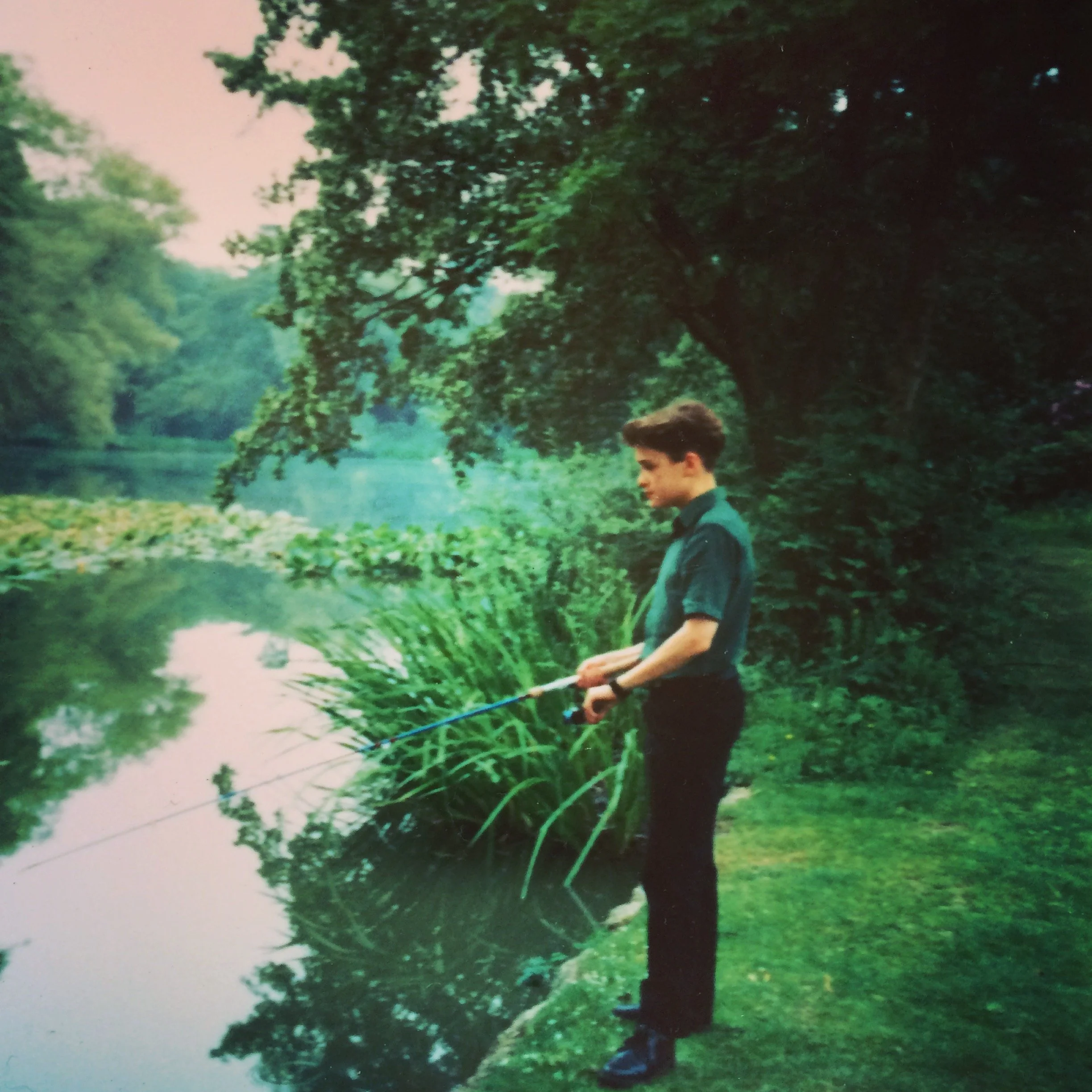
As headmaster, Major Philip Henry James was the soul of Streete Court Preparatory School, located in Godstone, Surrey.
Born in Burma on 17 June 1924, he was sent to England at seven, first to Streete Court itself and then to Oundle. He enlisted at 17, went up to Selwyn College, Cambridge—where he played cricket—and compressed the first part of an Engineering degree into six months before joining the Royal Engineers. That sense of a life lived fully and without fuss, seemed to follow him into the life of the school.
There was an unspoken freedom in how things were done under his stewardship. It felt human. There was room for character, for eccentricity, for small traditions that didn’t need justification because they simply were. Expectations existed, of course, but they were part of the shared fabric of the place. It was a community in the truest sense.
I became a boarder in 1986, aged 10, and that changed everything. The school was no longer somewhere I attended—it was somewhere I inhabited. Days didn’t begin and end with the bell in the same way, especially on long summer nights when we’d be out playing games in the extensive grounds until long after dusk. Although it was within earshot of the M25, it was a cloistered world unto itself.
Music became part of that world. I learned the piano there—something that, in hindsight, feels as much a product of the environment as of any personal inclination. And then there was singing in the choir at Westminster Abbey, a huge privilege that is rarely offered to outsiders.
The boys came from mostly upper middle-class families, although quietly aspirational. Many were what might be called “gin and Jag” types—new money more than old, people who had worked their way into comfort and were choosing something deliberate for their children. There was a sense of investment: in possibility, in polish, in giving access to a life beyond the ordinary.
And yet, alongside this, there were elements that now feel like artifacts of another era. An outdoor pool where we swam naked during the summer term—well into our early teens—which would be inconceivable now. But in the Major’s world, it made a kind of sense. There was, he said, nothing to hide. And he was right.
That period remains one of the happiest of my life. After years of asthma and eczema, both seemed to disappear once I began boarding, as though something in the environment—freedom, routine, air—allowed the body to reset.
Boarding so young also left its mark in other ways. Each term we made small camps—temporary worlds within the larger one—where we slept and worked. You learned to get along with whoever you were placed beside. It built a kind of resilience, an adaptability that has stayed with me ever since: the ability to arrive somewhere unfamiliar and make it work.
Looking back, it’s not hard to see how a place like Streete Court came under pressure. Not through any single failing, but through a gradual convergence: tightening economics, shifting parental expectations and the increasing standardization of education. Schools like this depended not only on financial viability, but on a cultural alignment that became harder to sustain as the world changed.
It closed in 1995.
It wasn’t just a school that ended. It was a particular kind of English education—small, personal, idiosyncratic, and quietly confident in its own values. The sort long admired from abroad. We had a truly diverse collection of boys from all around the world—a vestige of empire, perhaps. It gave us more than instruction. It gave us a way of being: curious, self-directed, and at ease in the world.