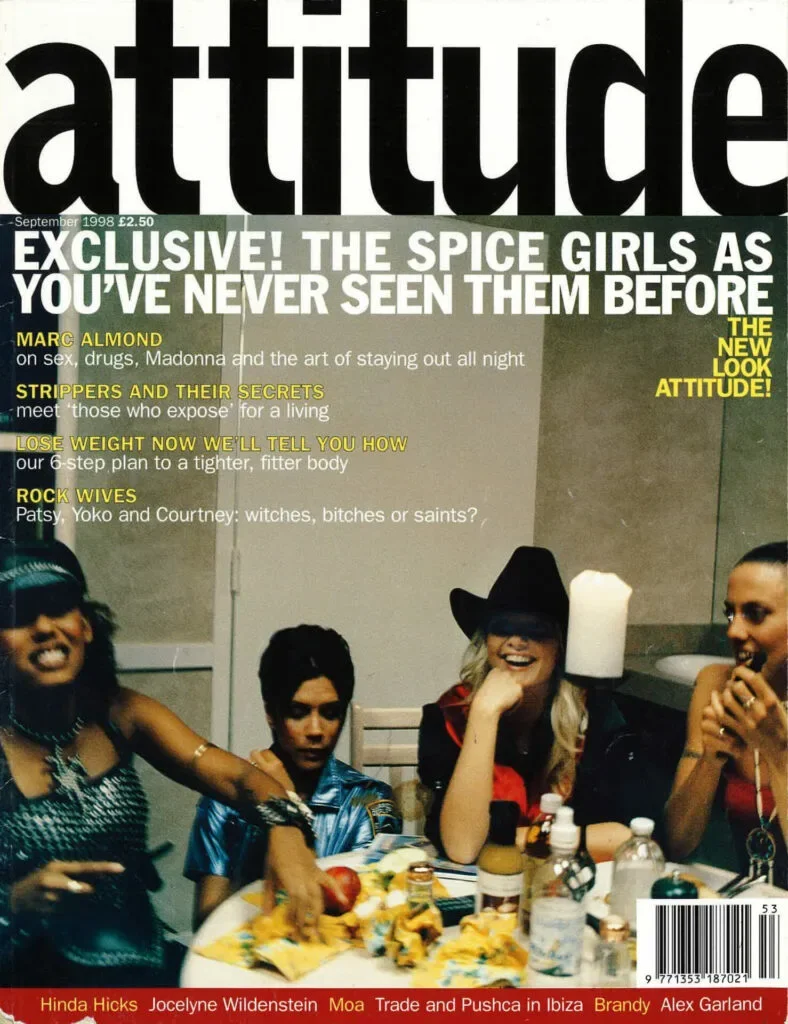
As America entered the 1990s, its pop culture became a battlefield. Rodney King. O.J. Simpson. Clinton. Michael Jackson. Scandals tore the country apart. Every celebrity misstep was amplified, dissected, weaponized. The newly launched 24-hour cable news cycle turned outrage into an unrelenting firehose — everyone was drenched, nothing remained sacred.
By contrast, the mid‑’90s Cool Britannia moment — Britpop bands, YBA art stars, fashion spreads, magazine covers, and Tony Blair’s flirtation with pop culture — felt like a parallel universe. Britain was presenting itself as young, creative, modern. Knowingly glossy. Occasionally cringe. The mood peaked in 1996, when the Spice Girls arrived with Wannabe, and the performance of national confidence became impossible to ignore.
London in the 1990s was a strange mix of old institutions and restless reinvention. Coming of age there meant feeling the city as a living thing — irreverent, anarchic and completely its own.
I turned fourteen in 1990. London then was at the top of its game: the beating heart of the world’s advertising industry, where glossy visuals and clever slogans shaped what people desired. Fleet Street, the old bastion of newspapers, was in transition as the press decentralized into Canary Wharf and Wapping, but journalism still felt like a viable career choice — especially for those who hadn’t come through the public school system.
Wallpaper magazine launched in 1996, bringing a global eye to design, fashion and interiors. Suddenly London wasn’t just a place for business — it was experimenting with itself, trying on different shapes and colors in a way that even our more established European cousins couldn’t manage with such ease. Ian Schrager’s Sanderson Hotel opened in April 2000, Philippe Starck’s design a marker that London had fully arrived on the world stage — sleek, confident and unapologetically global.
Before that came Pharmacy, a restaurant that became shorthand for raucous BritArt shenanigans. It opened in 1998 in Notting Hill, the brainchild of Damien Hirst and Matthew Freud. The concept wasn’t about the food — it was a performance you walked into, where the likes of Tara PT perched on Jasper Morrison furniture amid pillboxes and butterfly displays. It was a vibe.
It was also the most exciting place to come out. Attitude had launched in 1994, and Soho buzzed with pubs and bars. There were the big names — Popstars at the Scala in King’s Cross (launched in 1995) and dance clubs in Vauxhall — alongside dive bars in Shoreditch like the George & Dragon and the Joiners Arms. The city’s gay scene felt experimental, rough-edged, and unpolished in the best way. Many of those venues have since disappeared, swallowed by gentrification and rising rents. The energy has faded, but not the memory.