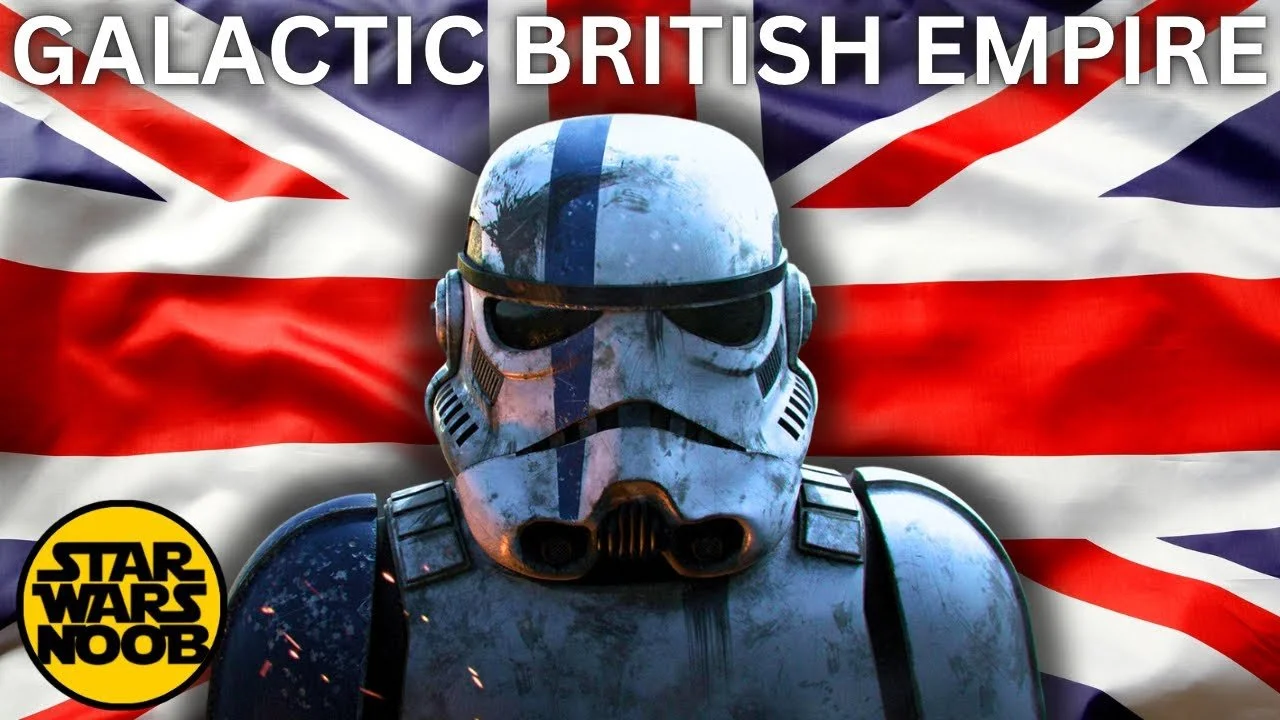
In Star Wars (1977), George Lucas didn’t just give the Galactic Empire stormtroopers and officers; he gave them posh British accents. To American ears fresh off Vietnam and Watergate, that sound meant something specific: chilly competence, aristocratic disdain, and the lingering ghost of empire. Grand Moff Tarkin wasn’t barking orders like an American sergeant—he was enunciating them with the crisp certainty of men who’d once run half the planet and still hadn’t quite accepted the memo. Darth Vader’s voice (James Earl Jones’ baritone wrapped around a British actor’s cadence) sealed it. The Empire wasn’t chaotic evil. It was institutional evil. Bureaucratic. Polite. Terrifyingly well-spoken.
Fifty years later, the trope is still going strong — and it’s gotten delightfully absurd.
The British accent remains the only one in American cinema that reliably signals both superiority and faded empire at once. The character isn’t just foreign — they’re looking down their nose at you while quietly reminiscing about the good old days when they could tax your tea. It’s auditory nostalgia for a power dynamic America both rebelled against and later inherited. We kicked the British out, built something bigger, then spent decades hiring their actors to sound quietly disappointed in us.
That perfect middle ground is catnip for filmmakers: intelligible enough to need no subtitles, exotic enough to feel “other,” classy enough to imply intelligence or menace without any extra work. Ruthless corporate overlord? British. Treacherous intelligence officer? British. Scientist who explains why the American hero’s plan is crude? Poshest possible.
And now, in 2026’s Star City — Apple TV+’s glossy new For All Mankind spinoff about the Soviet space program, British actors play Soviet cosmonauts, engineers, and KGB officers… speaking in their native British accents. Soviets as stand-ins for what, exactly? The lingering menace of empire? The cold bureaucracy of a superpower? The same clipped vowels that once evoked the Galactic Empire are now doing double duty as the Iron Curtain. Apparently nothing says “oppressive Soviet surveillance state” quite like a well-bred British lilt or crisp RP disdain.
It’s colonial LARPing with a Received Pronunciation accent. The sun may have set on the actual British Empire, but in Hollywood it’s still perpetually teatime. The joke is that we’re all in on it now. The actors know they’re wearing linguistic hand-me-downs. The audience knows the accent is 90% vibes and 10% actual characterization — especially since modern Britain is very much under the tractor beam of American cultural power. Yet we keep indulging it because it works. Nothing says “I’m better than you and slightly evil” quite like a well-placed “quite” or a disdainful “indeed.”
The irreverence lies in how naked the trick has become. In 1977 those clipped vowels could still produce a genuine cultural shiver. Today it’s nostalgic cosplay for a power dynamic that no longer exists. Hollywood keeps dressing up its villains, mentors, and morally ambiguous anti-heroes in grandpa’s old imperial uniform. Meanwhile, American characters get to mumble, drawl, and chew scenery. The British ones articulate. They weaponize enunciation.
In the end, the British accent in Hollywood isn’t really about Britain anymore. It’s about us — what Americans still find impressive, threatening, or sexy. It’s auditory set dressing for our imperial anxieties, class fantasies, and lingering cultural insecurity.
Cheerio, comrades. Pass the popcorn. The Empire strikes back… this time with a Soviet passport and a very proper accent.