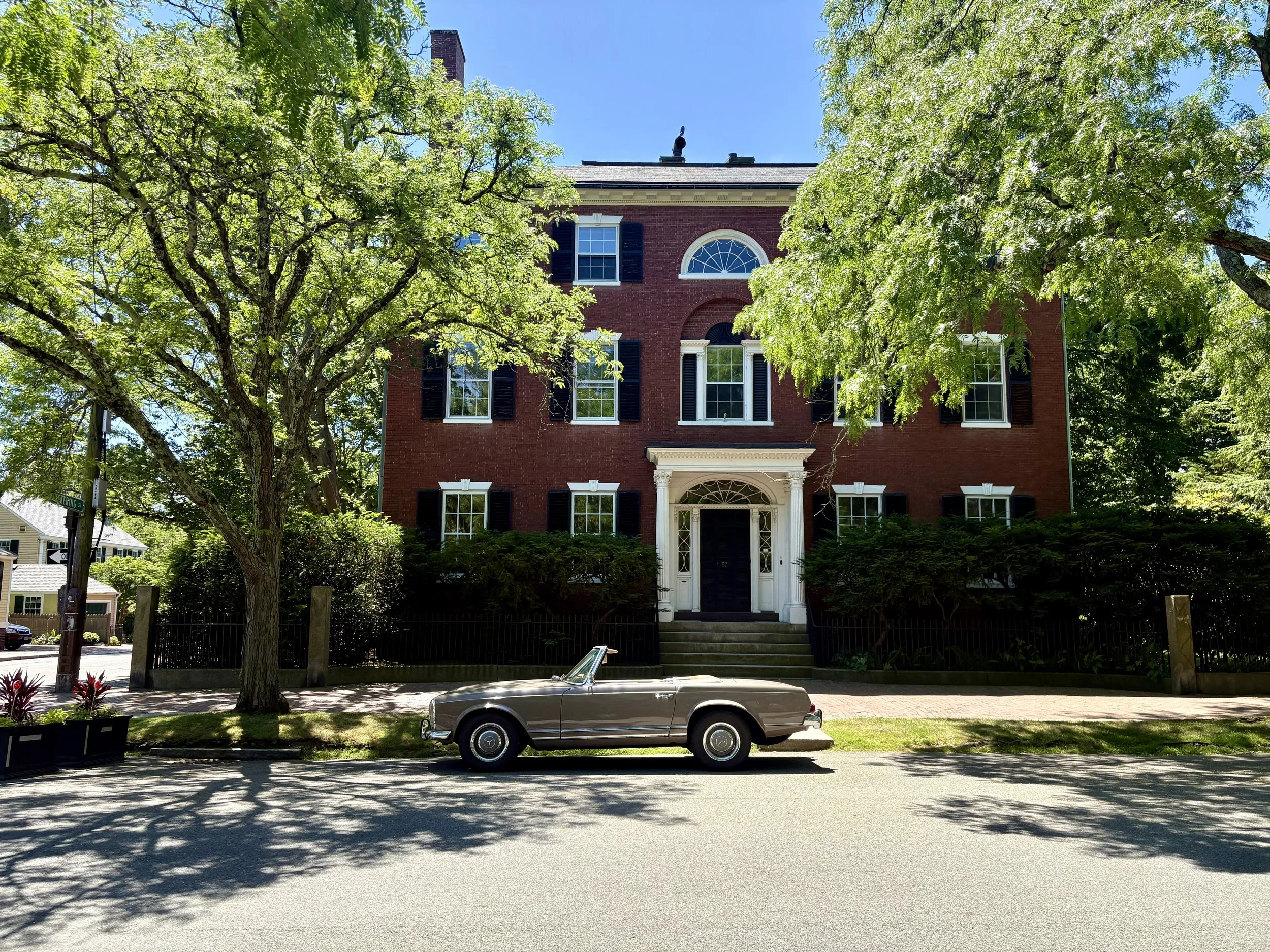
Stroll through the McIntire Historic District in Salem, Massachusetts, and you enter one of America’s finest concentrations of pre-1900 domestic architecture. Named for Samuel McIntire (1757–1811), the district preserves the elegant legacy of a self-taught architect and carver whose work defined the look of Federal-era Salem. This is not a frozen museum piece but a living neighborhood where history feels tangible beneath your feet.
Chestnut Street stands as the undisputed crown jewel of any walk through Salem’s historic core. Flanked by impeccably preserved Federal-era townhouses, it ranks among the most magnificent and harmonious streetscapes in America. These refined mansions serve as enduring monuments to Salem’s extraordinary maritime and mercantile golden age in the late 18th and early 19th centuries. Wealth amassed by sea captains and merchants who traded across the globe found its most elegant expression in the architectural mastery of Samuel McIntire.
Yet the district’s celebrated beauty—its photogenic churches, graceful mansions, and eminently livable neighborhoods—derives in large measure from English-derived building traditions and classical principles. The harmonious proportions, disciplined restraint, and understated elegance that continue to captivate visitors are no accident; they are the direct inheritance of a specific civilizational legacy that valued order, craftsmanship and measured beauty.
Today, this living district remains an authentic testament to Salem’s—and by extension, America’s—foundational eras. Its charm is no manufactured nostalgia; it is a hard-won inheritance, legible in every doorway, cornice, and perfectly scaled facade. Walk it with thoughtful attention, and the past speaks with remarkable clarity.