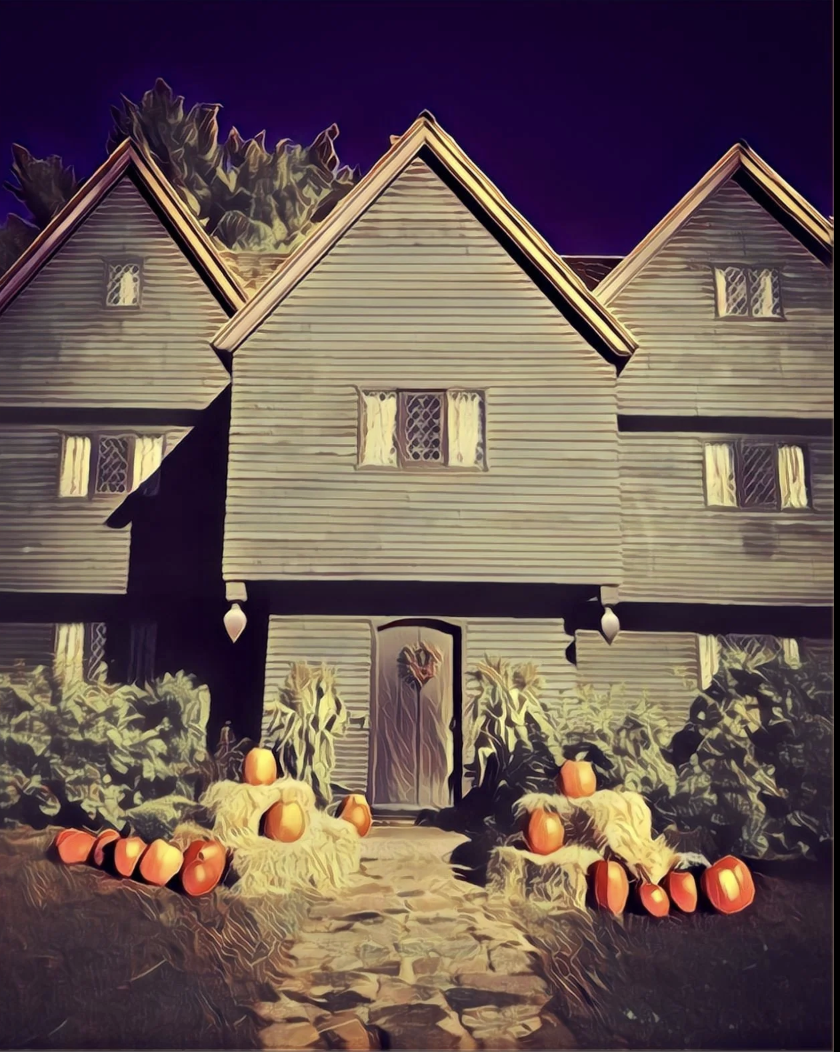
Salem, Massachusetts, is famous for the 1692 witch trials—one of the most dramatic episodes in early American history. The best-known surviving building from that era is the Witch House, the former home of Judge Jonathan Corwin. Corwin served on the Court of Oyer and Terminer that convicted and sentenced 19 people to death by hanging for witchcraft, along with others who died in prison or were crushed to death. One man, Giles Corey, was pressed to death under stones for refusing to enter a plea.
The trials were not isolated madness but grew out of a deeply religious Puritan society that genuinely believed the Devil and his agents were active in the world. Witchcraft was a capital crime under English law, and most people at the time—judges, clergy, and ordinary citizens—accepted its reality.
Accusations often began with strange behaviors among adolescent girls (the “afflicted children”), whose fits, convulsions, and claims of being pinched or tormented by spectral figures spread rapidly through the community. Modern observers have noted patterns similar to contagious psychogenic illness—comparable in some ways to later episodes of mass hysteria or conditions like anorexia nervosa that can spread among adolescent girls in close-knit groups. Whatever the precise triggers, the symptoms were taken as credible evidence of witchcraft at the time.
Jonathan Corwin, a prominent local magistrate and landowner, purchased the house in 1675. Like many Puritan households, his family endured severe hardship: five of his children died young, feeding local talk of a “Corwin curse.” The house itself is a typical 17th-century New England structure with multiple fireplaces built to endure harsh winters. It is the only standing building with direct ties to the trials’ judges and officials.
Inside, the museum displays artifacts and explains the worldview of the period. This includes “poppets” (cloth dolls sometimes used in folk magic), which featured in testimony against the first executed victim, Bridget Bishop. Also shown are witch bottles—containers filled with urine, hair, nails, and iron pins or nails—buried or hidden near doorways and hearths by people seeking protection from evil influences. While strict Puritans like Corwin opposed such practices as superstitious, many otherwise devout residents saw them as legitimate countermeasures against malevolent forces.
The Salem trials eventually collapsed under their own weight. Increasing skepticism about “spectral evidence,” influential critics, and the realization that prominent people could also be accused brought the proceedings to an end. Several participants later expressed regret. The episode remains a cautionary tale about the dangers of credulity, rumor and unchecked fear in a society under pressure—disease, harsh frontier life, and religious fervor all played roles.
The Witch House stands today as a rare physical link to that world, letting visitors see how people actually lived and thought in late 1600s New England rather than viewing events solely through modern lenses. It reflects an era when belief in witches was mainstream, courts operated under prevailing law and theology, and ordinary tragedies were often interpreted through a spiritual lens.