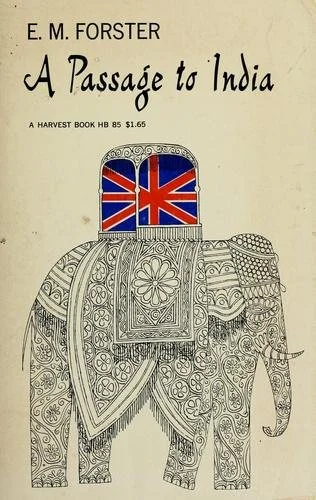
The British Empire projected an image of enduring dignity, civilized order, and moral authority. Yet in its final decades and long aftermath, that grandeur revealed itself as increasingly hollow. E.M. Forster’s A Passage to India (1924) and Kazuo Ishiguro’s The Remains of the Day (1989) both capture this fading glory, exposing the gap between the polished imperial facade and the human and political costs beneath it.
In A Passage to India, the empire’s grandeur is still physically present but visibly strained. British officials in Chandrapore maintain the rituals of rule — the segregated club, the ordered Civil Station, the displays of administrative confidence — even as Indian nationalism grows and cultural misunderstandings deepen. The Marabar Caves episode brutally undercuts any notion of Western superiority: what should have been a grand excursion collapses into panic, breakdown, and racial hysteria. Forster shows a ruling class desperately performing dignity while sensing its impending obsolescence. The famous final lines (“No, not yet… No, not there”) confirm that the power imbalance of empire makes genuine connection impossible.
The Remains of the Day examines the same imperial legacy from the opposite direction: its quiet, domestic decline in postwar England. Darlington Hall, once a center of influence, is now being sold off to an American. Lord Darlington’s motivations are rooted in an old-fashioned aristocratic code of sportsmanship and fair play. He viewed the Treaty of Versailles as ungentlemanly and vindictive — a crushing humiliation of Germany that offended his sense of honor. In this worldview, the British were doing something necessary and decent by pursuing appeasement and gentlemanly diplomacy with the rising powers of Europe.
Beneath that polished surface, however, Ishiguro delivers a devastating critique. The beautiful, courteous facade of the British aristocracy masked toxic political choices, including sympathy for the Nazi regime. The ideal of the “perfect British butler” becomes equally damning. Stevens’ obsessive pursuit of dignity — defined as emotional restraint, unwavering loyalty, and professional composure — forces him to suppress his own humanity. He sacrifices any chance of love with Miss Kenton and refuses to acknowledge the moral failures of his employer, leaving him with a life of quiet regret. The “remains” of empire are not grand ruins but small, personal losses: unspoken feelings on a country road, a career spent in service to a misguided ideal.
Both novels portray empire as a performance of greatness that ultimately fails its participants. Forster reveals the active machinery of colonialism cracking under pressure in India. Ishiguro shows the lingering emotional and cultural residue left behind in England once that machinery has stopped. In each case, the characters most committed to the imperial code — colonial administrators clinging to prestige, or Stevens devoting himself to “greatness” — are left most disoriented when the grand narrative collapses.
What gives these books particular power is the perspective of their creators. Both Forster (drawing on his time in India) and Ishiguro (a Japanese-born writer observing England from the outside) looked at British society with enough distance to see both its profound beauty and its deep, quiet tragedies — elements that a purely domestic writer might have taken for granted or romanticized too heavily.
In the end, A Passage to India and The Remains of the Day complement each other as portraits of faded imperial grandeur. One shows the empire’s twilight abroad; the other reveals its melancholic sunset at home. Together they suggest that the greatest cost of empire was not only what it did to the colonized, but what it quietly did to the colonizers themselves.
Darlington Hall, once a center of British influence and aristocratic authority, is eventually purchased by an American — a quiet but powerful symbol that the old world has lost its dominance. The estate — much like the empire — does not collapse in dramatic ruin; it simply changes hands.