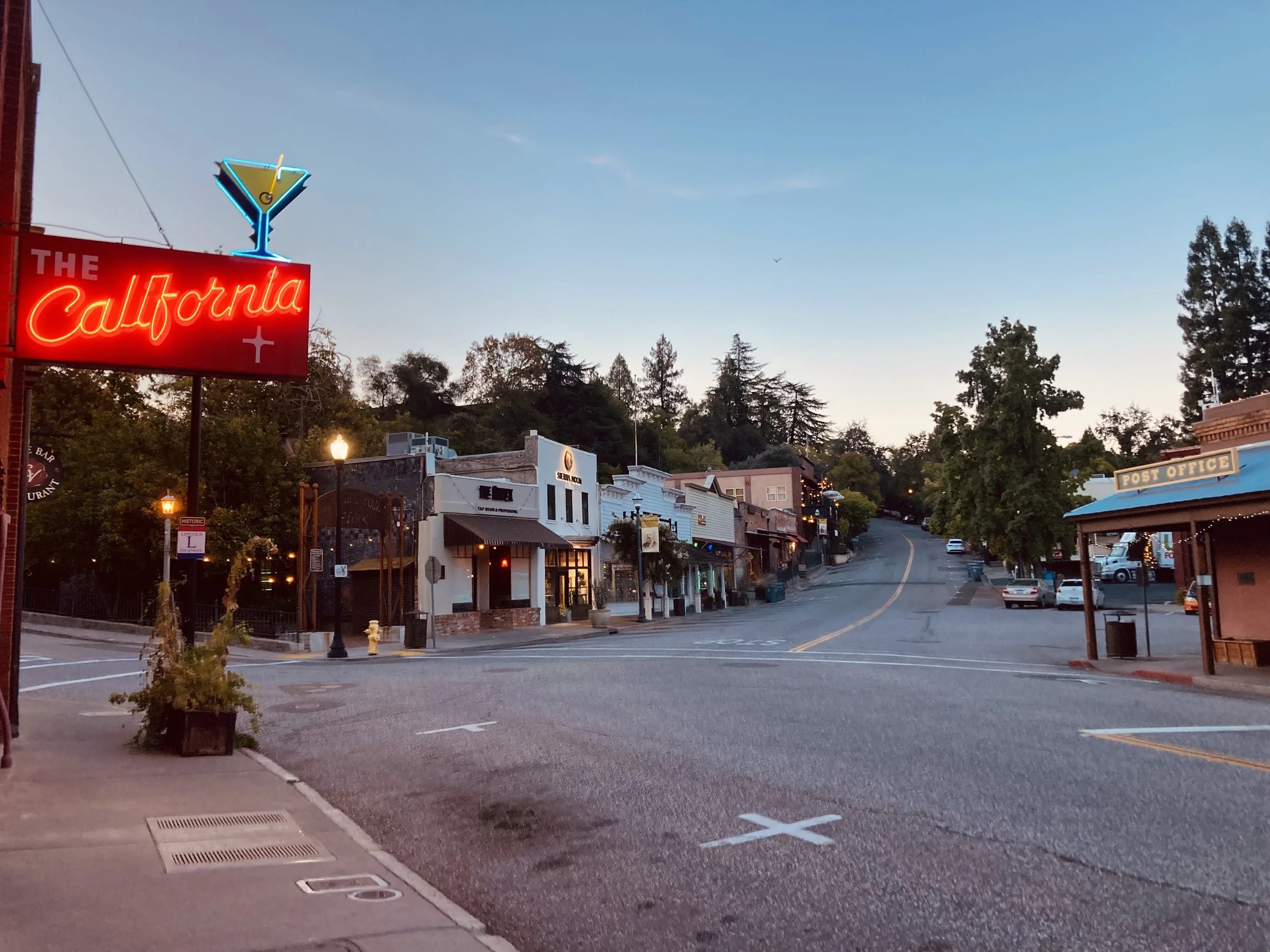
A recent weekend in Kernville, California, felt like stepping back into a more grounded era. Tucked deep into the Sequoia National Forest—at least three hours from Los Angeles—the town green was humming. Café staff were warm and chatty, the crowd was a diverse, everyman mix of hikers, families, and locals gearing up for river swims, boating, or trails. It had that easy, unpretentious 2014 California feel: normal people enjoying a weekend in the countryside rather than performing it. The location helps. You have to want to get there. It’s not a casual stop-off.
Contrast that with Carmel-by-the-Sea, slap-bang on Highway 1. Same state, very different fate. Carmel has perfected the storybook charm—cottages, courtyards, dramatic coastline—into one of America’s most photographed destinations. Yet that very success has turned it from a lived-in village into something closer to an experience to be consumed. Visitors chase the perfect image; the town risks being overwhelmed by them.
This is the peculiar paradox of many of the world’s wealthiest and most desirable enclaves. They achieve extraordinary property values, flawless restoration, and global recognition—yet quietly lose the ordinary disorder and daily rhythms that make a place feel alive. The warning sign is not decay. It is perfection.
From Living Towns to Curated Exhibits
Call it the “museum town” effect. These places are not empty; they are carefully staged. Wealth purchases more than privacy—it reshapes the public realm. Historic buildings gleam, flower baskets overflow, and streets stay immaculate. But the broader cross-section of life gradually disappears. Cafés and shops that once served locals on modest margins give way to luxury dining, boutiques, and lifestyle brands that can absorb sky-high rents. The town grows richer and more beautiful, yet narrower and quieter outside peak visitor hours.
Tiburon, north of San Francisco, illustrates the withdrawal of life. Its waterfront remains stunning, but the everyday vitality that once drew ferry day-trippers has thinned. In California’s Gold Country, Grass Valley leans into polished heritage aesthetics—galleries, cafés, curated charm—while nearby Sonora retains more of the texture of a working town, where residents still shop, work, and linger without everything revolving around tourism or lifestyle consumption.
The same forces are unmistakable in the UK. Coastal Dorset offers a textbook case. Hotels and inns that once catered to middle-class families have been reimagined for a far narrower clientele. One that your parents used to stay at now operates as Pig on the Beach and commands up to £800 per night. This is not mere inflation—it is affluenza in action: the contagious pressure of extreme wealth to commodify every desirable experience, pushing prices beyond the reach of the broad public that once sustained these places as genuine destinations.
Travel Trends Fueling the Shift
Modern travel has accelerated this transformation. July 23, 2026, was the busiest day for commercial air travel ever. Social media rewards the photogenic and the performative. Instagram, TikTok, and travel influencers turn towns into visual products—perfect light, hidden gems, “secret” beaches that quickly cease to be secret. The rise of the “experience economy” means visitors increasingly seek curated moments rather than simple stays. Short-term rentals and high-end boutique hotels amplify the effect, concentrating returns among owners and operators while squeezing out year-round local businesses.
Overtourism is one symptom (Carmel’s crowded lanes, Dorset’s honeypot villages). The opposite—hollowed-out exclusivity—is the other. In both cases, the place stops being primarily a home for its residents and becomes an object of desire for outsiders. Wealthy enclaves withdraw into privacy; popular ones are loved to death. The middle ground erodes.
Affluenza compounds it. As global affluence grows for the top tiers, demand for “authentic” escapes intensifies. Paradoxically, the pursuit of authenticity often destroys it. Towns respond by polishing every surface, but in doing so they replace the messy, mixed-use vitality—mechanics grabbing coffee, children buying snacks, neighbors chatting on errands—with something more staged. The invisible infrastructure of community weakens.
The Healthier Path
The healthiest towns and villages occupy the “messy” middle. They welcome visitors without surrendering their soul to tourism. They attract investment without pricing out the ordinary businesses and people who generate everyday life. They preserve beauty without freezing themselves as museum pieces.
A thriving place is not defined by flawless architecture or stratospheric prices. It is defined by diversity of purpose: enough different people with enough different reasons to be there on any given day. Locals living their routines alongside respectful visitors. Working trades alongside weekend hikers. Independent shops alongside smarter restaurants. Imperfection and ordinariness are features, not bugs—they signal that life is still visibly unfolding, not just displayed.
Kernville’s relative remoteness and unpretentious character give it breathing room for now. Many less Instagram-famous coastal spots retain similar resilience (somehow Cambria is still holding on). But as travel trends push ever higher prices and expectations, the pressure spreads.
The danger of extreme prosperity and hyper-connected travel is not that places become ugly. Quite the opposite. They can become so beautiful, so desirable, and so expensive that the living communities they were built for quietly fade into the background, leaving polished exhibits in their place. Recognizing the pattern is the first step toward protecting the middle ground that keeps towns truly alive.
Maine offers a quieter version of the same dilemma. Its coastal villages have long attracted visitors precisely because they resisted becoming resorts. Places such as Deer Isle and Stonington retain the qualities travelers increasingly crave: working harbors, independent shops, unhurried rhythms, and the feeling that daily life continues beyond the visitor season.
But that authenticity has itself become a commodity. The search for “the real Maine” has created the same pressures seen elsewhere: rising property values, second-home ownership, seasonal economies, and a widening gap between those who visit and those who remain year-round. The danger is not that Maine will suddenly become another Carmel. It is that the qualities that made it special become preserved as scenery rather than sustained as community.
The ultimate irony of the experience economy is that people are increasingly paying to encounter places that have not yet been fully shaped by the experience economy.