One of the strange things about living in Los Angeles is how infrequently Angelenos go to the beach. It’s easy to think of it as a “beach city,” but it really isn’t. The beach is there, of course, running along the western edge of the city, but for most Angelenos it is somewhere you visit once in a blue moon rather than somewhere you live your life.
The broad sweep of sand, the volleyball nets, the surfers, sunbathers, runners and cyclists, the rows of lifeguard towers and the endless Pacific beyond them all seem so intrinsically Californian that it is hard to imagine the coastline any other way. But much of what we now think of as the Southern California beach is surprisingly recent.
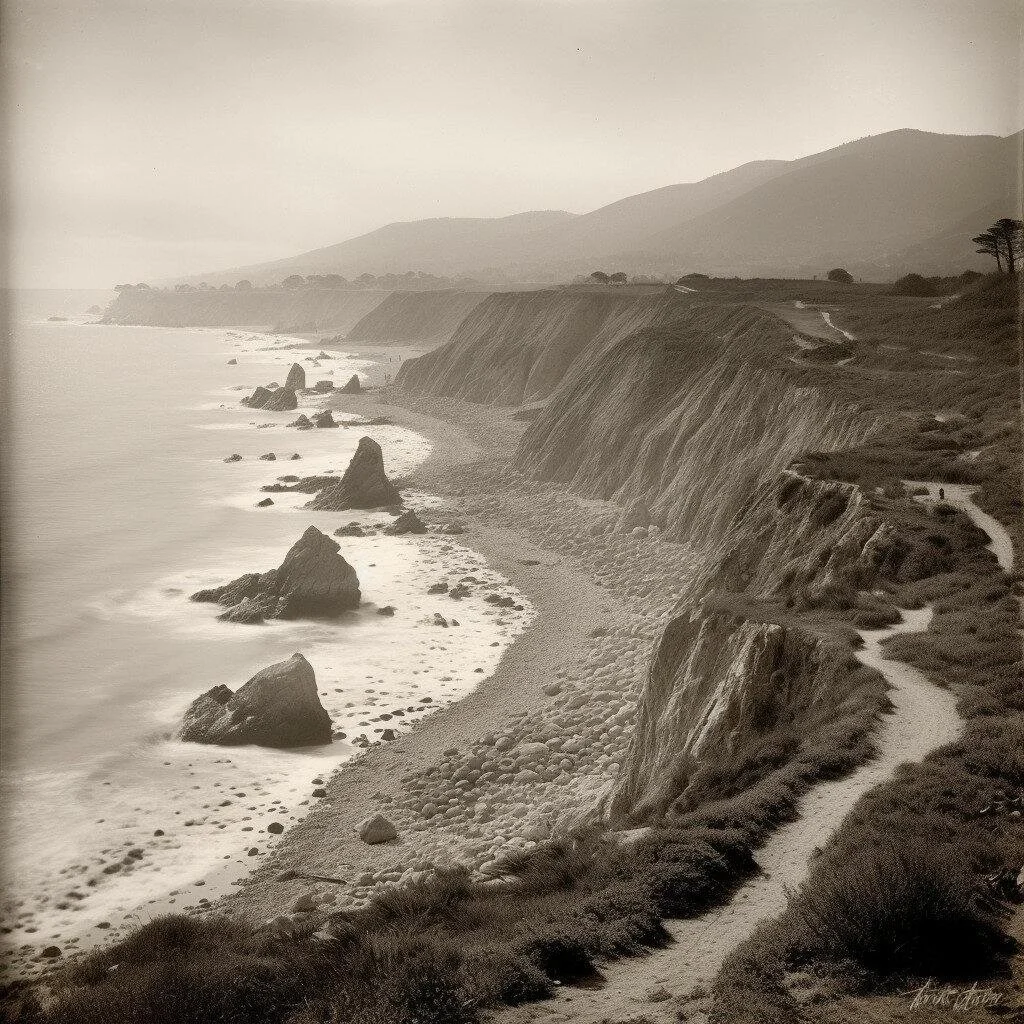
The sand, of course, was there. Nineteenth-century Angelenos had a coastline, and people certainly visited it, picnicked on it, sought its fresh air and, increasingly, went into the water. Santa Monica was already developing as a seaside resort by the end of the nineteenth century, while Venice was attracting bathers by the early 1900s. But the experience of the coast was very different from the one we know today. Beaches could be narrow, shifting and difficult to reach, backed by bluffs, dunes or marshland, while other stretches of the coast were distinctly rocky. The Pacific was not yet the vast recreational playground it would become.
That transformation is the subject of Elsa Devienne’s Sand Rush: The Revival of the Beach in Twentieth-Century Los Angeles, a fascinating reminder that some of the most seemingly “natural” features of Los Angeles are actually the result of decades of engineering, planning and cultural change.
From the early twentieth century onward, Los Angeles began systematically remaking its relationship with the coast. Cities and public agencies acquired shoreline, built roads and transportation links, addressed sewage and pollution, fought erosion and constructed facilities that made the beach increasingly accessible to a rapidly growing population. Most remarkably, they began moving sand around on a vast scale, widening and stabilizing beaches that had previously been considerably narrower and more variable.
Some of that sand even came from the dunes around the Hyperion sewage-treatment area in Playa del Rey. It is a wonderfully Los Angeles detail: material associated with the city’s infrastructure helping to create the enormous recreational landscape that now looks completely natural.
By the postwar period, the ambition had become considerably larger than simply preserving the coastline. Los Angeles was creating beaches capable of accommodating Los Angeles itself — a growing, increasingly mobile population that wanted somewhere to swim, sunbathe, play, exercise and escape the city without actually leaving it.
And this wasn’t simply a physical transformation. The culture of the beach changed along with the beach itself. What had once been associated with health, fresh air, seaside resorts and occasional bathing became a defining part of Southern California life. The ocean moved from the edge of the city into the center of its identity. Surfing, swimming and sunbathing became commonplace, while the beach developed its own fashions, rituals and ideas about the body.
That is what makes Sand Rush such a compelling title. The story isn’t that Los Angeles suddenly discovered that it had sand. It is that the city turned sand into a beach — and turned that beach into a cultural institution.
The result is so successful that it is easy to forget how constructed it all is. We look at those enormous stretches of sand today and see nature. But underneath the Southern California fantasy is an extraordinary story of urban planning, engineering, public access, environmental intervention and changing social attitudes.