• portfolio
  • blog
  • about
Menu

Richard Bence

  • portfolio
  • blog
  • about
×

travel | architecture | style | culture

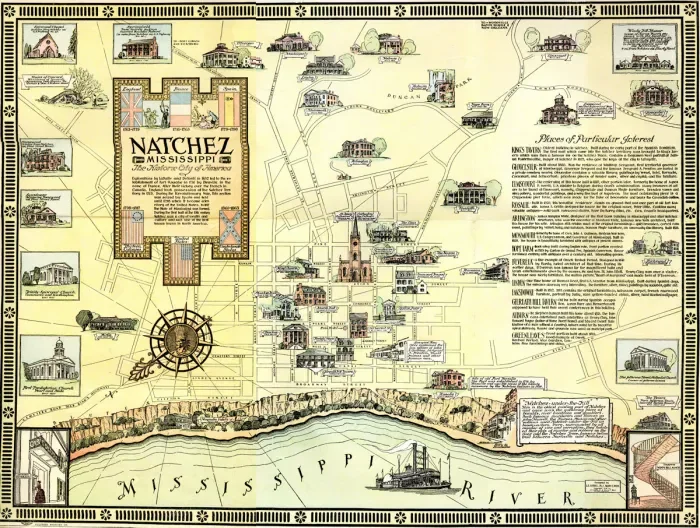
Postcard from Natchez

richard bence July 10, 2026

Founded by the French in 1716, Natchez takes its name from the Natchez people, whose homeland occupied this stretch of the Mississippi River for centuries before European settlement. The city's history is therefore far older than its colonial founding. Long before Natchez became synonymous with grand mansions and spring pilgrimages, it owed its success to geography.

Perched high above the Mississippi River on one of the few natural bluffs along its course, Natchez became an important trading settlement long before the Civil War. Under French, British, Spanish and eventually American rule, it served as a gateway between the fertile interior of Mississippi and the global marketplace. By the early nineteenth century, merchants, bankers, riverboat operators and cotton brokers had transformed the town into one of the South's busiest commercial centers.

Everything changed after 1793 with the invention of Eli Whitney's cotton gin. Suddenly, short-staple cotton—which thrived across much of the Deep South—could be processed efficiently and profitably. As European demand for cotton cloth accelerated during the Industrial Revolution, Mississippi found itself at the center of a booming international economy.

By the 1850s, Manchester, England had earned the nickname "Cottonopolis," its textile mills consuming staggering quantities of raw cotton. Lancashire wove what Mississippi grew. The United States supplied roughly three-quarters of Britain's imported cotton, making the crop America's most valuable export and binding the economies of Britain and the American South together in a remarkably interdependent relationship.

Natchez prospered accordingly. Cotton poured downriver to New Orleans before crossing the Atlantic to Britain's mills. Banks financed plantations, merchants supplied them, and fortunes accumulated with astonishing speed. Wealthy planters often maintained elegant townhouses in Natchez while overseeing vast plantations scattered across the surrounding countryside. By the eve of the Civil War, Natchez ranked among the wealthiest communities in the United States on a per-capita basis.

Yet that prosperity rested upon an uncomfortable foundation.

Cotton was extraordinarily labor-intensive, and after Congress prohibited the international slave trade in 1808, the expanding plantations of Mississippi relied on the domestic slave trade to meet their labor demands. Hundreds of thousands of enslaved men, women and children were forcibly relocated from older states such as Virginia and Maryland to the Deep South in what historians describe as the Second Middle Passage. Natchez became not only a major cotton market but also one of the nation's principal centers for the buying and selling of enslaved people. The wealth that financed its magnificent homes, churches and civic buildings was, in overwhelming measure, created through enslaved labor.

That paradox continues to shape Natchez today.

Tourism often celebrates the city's remarkable architectural legacy while struggling to present the fuller history that made such grandeur possible. Nowhere is this more evident than during the annual Pilgrimage, when homeowners open antebellum mansions to visitors, dressed in period costume and recounting stories of prominent families, refined society and architectural elegance. For decades, these narratives often softened or omitted the central role slavery played in creating the wealth on display.

In her documentary Natchez, filmmaker Suzannah Herbert does not portray these tours as isolated curiosities. Instead, she presents them as the continuation of a mythology long cultivated through popular culture—a version of the Old South populated by gracious belles and genteel gentlemen while the labor that sustained their world remains largely offstage. By peeling back that carefully maintained performance, Herbert reveals not only the gap between memory and history, but also how the South itself has often been presented as a genre as much as a geography.

The Golden Light of 1990: Janet Jackson and the American Dream

richard bence July 5, 2026

Having just experienced the most depressing Fourth of July ever, as America’s 250th birthday passed with barely a whimper, I find myself thinking about what first attracted me to the idea of America, and it all stems back to 1990 when the single "Love Will Never Do (Without You)" by Janet Jackson was officially released.

The Herb Ritts-directed music video was like nothing I had ever seen. Today, it still takes my breath away. Bathed in that warm, golden desert light, Janet—confident, sensual, radiant in a simple black top and jeans—dances with effortless beauty alongside Djimon Hounsou and Antonio Sabàto Jr. It wasn’t just a music video. It was a cultural artifact: polished, aspirational, unapologetically American in its glamour and optimism.

At age 14, watching it in rain-soaked England, I fell in love with the idea of America that beamed through that television screen. These icons were projected across the world, and we naturally thought this was what most Americans looked like: confident, vibrant, stylish, and effortlessly cool. Back then, pop culture still produced big, beautiful, shared experiences instead of endless algorithmic fragments. Janet wasn’t just the most beautiful woman on screen; she embodied a broader cultural peak of American excellence.

In 1990, culture wasn’t yet fragmented by infinite scrolling, ragebait, and democratized mediocrity. Videos like Ritts’ were crafted with intention, lit like art, and broadcast to a mass audience that experienced them together. Today’s aesthetics often feel cheap and ugly by comparison: over-filtered, low-effort, designed for clicks rather than timelessness. The golden light feels replaced by cold blue screens and declining standards across media, architecture, and public discourse.

This isn’t simple nostalgia. It’s grief for a version of the American experiment that felt like it was delivering—prosperity, beauty, relative social cohesion, and forward momentum. The country didn’t collapse after 1990, but something vital shifted. The unifying optimism gave way to endless grievance, institutional skepticism, and visual and cultural coarsening. We traded Herb Ritts’ desert glow for dystopian feeds and hollow spectacle.\

Janet’s video remains a time capsule. It reminds us what peak American popular culture looked like: glamorous, integrated, confident, and bathed in light. Recapturing that spirit—refusing the cheap and ugly, demanding excellence again—might be the only way to move beyond the precipice we crossed. The American Dream didn’t end in 1990. But we lost sight of its shine, and we’ve been living in the shadow ever since.

The Lost Colony of Roanoke

richard bence July 4, 2026

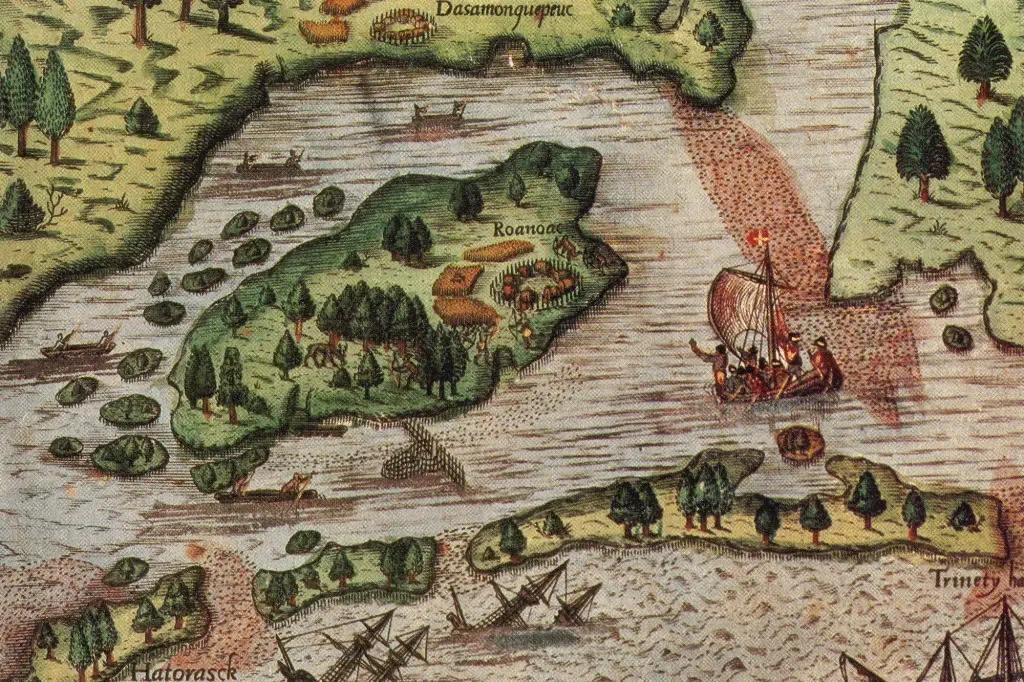
The disappearance of the Roanoke colonists was probably not an inexplicable vanishing but the likely outcome of a struggling English settlement attempting to survive in a harsh and unfamiliar environment. Established in 1587 under the sponsorship of Sir Walter Raleigh, Roanoke represented one of England's earliest efforts to establish a permanent foothold in North America. Like many colonial ventures of the era, it faced daunting challenges, including unreliable supply lines, food shortages, disease, and complex relationships with the Algonquian-speaking peoples who already inhabited the region.

When Governor John White returned in 1590 after a resupply voyage delayed by the war with Spain, he found the settlement deserted. Rather than evidence of violence, he encountered signs of an orderly departure. Buildings had been carefully dismantled rather than destroyed, and the only messages left behind were the word "CROATOAN" carved into a palisade post and the letters "CRO" etched into a nearby tree. Before White had departed three years earlier, the colonists had agreed that any planned relocation would be marked in this way. "Croatoan" referred to present-day Hatteras Island, home to a Native community that had maintained relatively friendly relations with the English.

Although later generations transformed Roanoke into the legend of the "Lost Colony," the evidence has long pointed toward a far less mysterious explanation. Archaeological excavations on Hatteras Island have uncovered English metal tools, weapons, ceramics, and other artifacts dating to the late sixteenth century in contexts that suggest prolonged interaction—and possibly the gradual absorption of at least some colonists into the Croatoan community. Other discoveries inland have raised the possibility that portions of the colony relocated elsewhere as well, indicating that the settlers may have dispersed rather than remained together.

As England established more successful colonies, particularly at Jamestown in 1607, the fate of Roanoke faded into the background of history. In recent decades, however, archaeological discoveries and renewed scholarship have shifted the focus away from sensational theories and toward the practical realities of survival. Rather than a supernatural disappearance, Roanoke increasingly appears to have been a story of adaptation, migration, and the difficult choices faced by a vulnerable community cut off from its homeland.

Today, the surviving archaeological sites and artifacts provide a tangible connection to this pivotal moment in early colonial history. They offer a glimpse into a world where English expansion was still uncertain, alliances with Native peoples could mean the difference between life and death, and survival often depended on abandoning expectations in favor of necessity. The enduring fascination with Roanoke lies not in an unsolved mystery, but in what it reveals about the precarious beginnings of England's American colonies.

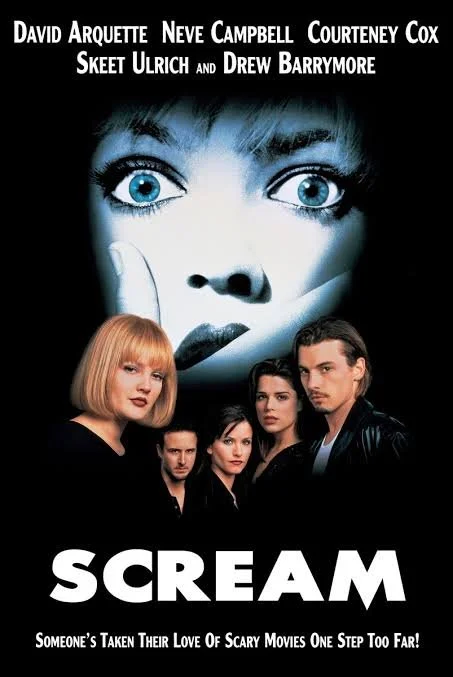
Scream: 30 Years On

richard bence June 26, 2026

By any commercial measure, Scream 7 is a success. The film has crossed the $200 million mark worldwide, becoming one of the franchise’s biggest performers. In Hollywood, that qualifies as a victory.

And yet watching it raises a far more damning question: what exactly is left of the thing that made us care in the first place?

When Wes Craven and Kevin Williamson released Scream in 1996, they didn’t just make a slasher—they eviscerated the genre with surgical precision. It was funny because it was smart, literate, and vicious. It understood horror history without ever forgetting that horror lives and dies on fear. The characters—Sidney Prescott, Tatum Riley, even the unhinged killers—felt like real people trapped in a nightmare, not mouthpieces for quips.

Thirty years later, the franchise is still desperately performing that same postmodern trick. The problem is that the trick has calcified into a tired, self-satisfied formula.

The new generation of characters aren’t people—they’re carefully curated avatars: sarcastic, hyper-aware, and insufferable. They know exactly what kind of movie they’re in, and the film never shuts up about it. The result is an alienating emotional void. These characters have attitude but zero soul. You feel nothing when they die. And I guarantee none of these actors will be headlining legacy sequels in 30 years.

The original Scream understood that irony only works when there are genuine stakes underneath it. The jokes landed because the danger felt real. The deaths hurt because you cared about the victims. Strip away that foundation and the self-referential humor stops being satire. It becomes a desperate franchise trying to convince you it’s still in on the joke.

Neve Campbell’s return as Sidney Prescott should have carried real weight. Sidney remains one of horror’s greatest survivors—a character forged in vulnerability, terror, and raw resilience. Instead, Scream 7 reduces her to a calmer, more “therapized” figure managing her trauma over a latte. The survivor instinct is gone. What’s left feels like legacy-brand maintenance.

The film’s bigger failure is mistaking modern gimmicks for actual suspense. Like so many recent horrors, it reaches for technology—phones, cameras, surveillance, deepfakes—as the new source of fear. But great horror has always been elemental: a shadow in the hallway, a creak on the stairs, the primal dread of something unseen. A knife in the dark still terrifies. A push notification never will.

Here’s the deepest cut: Scream was originally a movie about the exhaustion of a genre. It arrived when slashers had grown stale and made them thrilling again. Now it’s hopelessly trapped in the exact cycle it once mocked—rebooting, referencing, expanding, and over-explaining its own mythology until the spark is extinguished.

Worse, it displays a staggering arrogance about its own importance. Audiences could casually reference the archives of Halloween or A Nightmare on Elm Street because those films were good—iconic, rewatchable, and culturally embedded. It is profoundly narcissistic to assume anyone has, or wants, that level of forensic knowledge of the Scream franchise. Jessica’s motive in Scream 7—the obsessive neighbor who read Sidney’s book from Scream 4, got mad that Sidney sat out Scream 6, and decided to force a new “Final Girl” arc—doesn’t land as clever. It lands as homework. If your big reveal requires a flowchart of previous entries, you haven’t earned it.

The early films worked because the actors sold the absurdity while still respecting the danger. They joked about the rules because they believed in the horror. Here, the dialogue chases trendiness and edginess with exhausting profanity, mistaking loud for sharp. Restraint would have been far more powerful.

Most frustratingly, Scream 7 doubles down on modern horror’s worst habit: turning every conflict into a therapy session about trauma. Horror used to force characters to face monsters. Now the monster is the conversation about feelings. The result is a movie that can recite Scream history chapter and verse but has completely lost its spirit. It feels like it was written by AI—or worse, by people so thoroughly medicalized they no longer know how to capture raw human emotion, a basic requirement for any writing team.

The original was fearless: it mocked the genre while clearly loving it. Scream 7 feels like a franchise that’s stared at its own ghostly reflection for far too long.


Faded grandeur

richard bence June 23, 2026

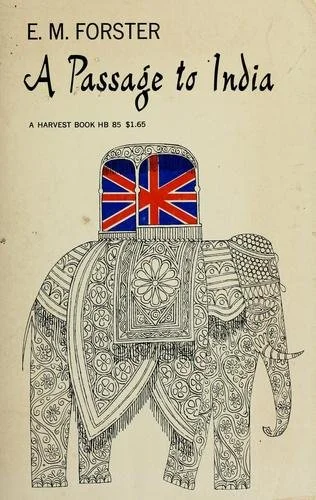
The British Empire projected an image of enduring dignity, civilized order, and moral authority. Yet in its final decades and long aftermath, that grandeur revealed itself as increasingly hollow. E.M. Forster’s A Passage to India (1924) and Kazuo Ishiguro’s The Remains of the Day (1989) both capture this fading glory, exposing the gap between the polished imperial facade and the human and political costs beneath it.


In A Passage to India, the empire’s grandeur is still physically present but visibly strained. British officials in Chandrapore maintain the rituals of rule — the segregated club, the ordered Civil Station, the displays of administrative confidence — even as Indian nationalism grows and cultural misunderstandings deepen. The Marabar Caves episode brutally undercuts any notion of Western superiority: what should have been a grand excursion collapses into panic, breakdown, and racial hysteria. Forster shows a ruling class desperately performing dignity while sensing its impending obsolescence. The famous final lines (“No, not yet… No, not there”) confirm that the power imbalance of empire makes genuine connection impossible.


The Remains of the Day examines the same imperial legacy from the opposite direction: its quiet, domestic decline in postwar England. Darlington Hall, once a center of influence, is now being sold off to an American. Lord Darlington’s motivations are rooted in an old-fashioned aristocratic code of sportsmanship and fair play. He viewed the Treaty of Versailles as ungentlemanly and vindictive — a crushing humiliation of Germany that offended his sense of honor. In this worldview, the British were doing something necessary and decent by pursuing appeasement and gentlemanly diplomacy with the rising powers of Europe.


Beneath that polished surface, however, Ishiguro delivers a devastating critique. The beautiful, courteous facade of the British aristocracy masked toxic political choices, including sympathy for the Nazi regime. The ideal of the “perfect British butler” becomes equally damning. Stevens’ obsessive pursuit of dignity — defined as emotional restraint, unwavering loyalty, and professional composure — forces him to suppress his own humanity. He sacrifices any chance of love with Miss Kenton and refuses to acknowledge the moral failures of his employer, leaving him with a life of quiet regret. The “remains” of empire are not grand ruins but small, personal losses: unspoken feelings on a country road, a career spent in service to a misguided ideal.


Both novels portray empire as a performance of greatness that ultimately fails its participants. Forster reveals the active machinery of colonialism cracking under pressure in India. Ishiguro shows the lingering emotional and cultural residue left behind in England once that machinery has stopped. In each case, the characters most committed to the imperial code — colonial administrators clinging to prestige, or Stevens devoting himself to “greatness” — are left most disoriented when the grand narrative collapses.


What gives these books particular power is the perspective of their creators. Both Forster (drawing on his time in India) and Ishiguro (a Japanese-born writer observing England from the outside) looked at British society with enough distance to see both its profound beauty and its deep, quiet tragedies — elements that a purely domestic writer might have taken for granted or romanticized too heavily.


In the end, A Passage to India and The Remains of the Day complement each other as portraits of faded imperial grandeur. One shows the empire’s twilight abroad; the other reveals its melancholic sunset at home. Together they suggest that the greatest cost of empire was not only what it did to the colonized, but what it quietly did to the colonizers themselves.


Darlington Hall, once a center of British influence and aristocratic authority, is eventually purchased by an American — a quiet but powerful symbol that the old world has lost its dominance. The estate — much like the empire — does not collapse in dramatic ruin; it simply changes hands.

When the Revolutionary War Came to Cape Porpoise

richard bence June 17, 2026

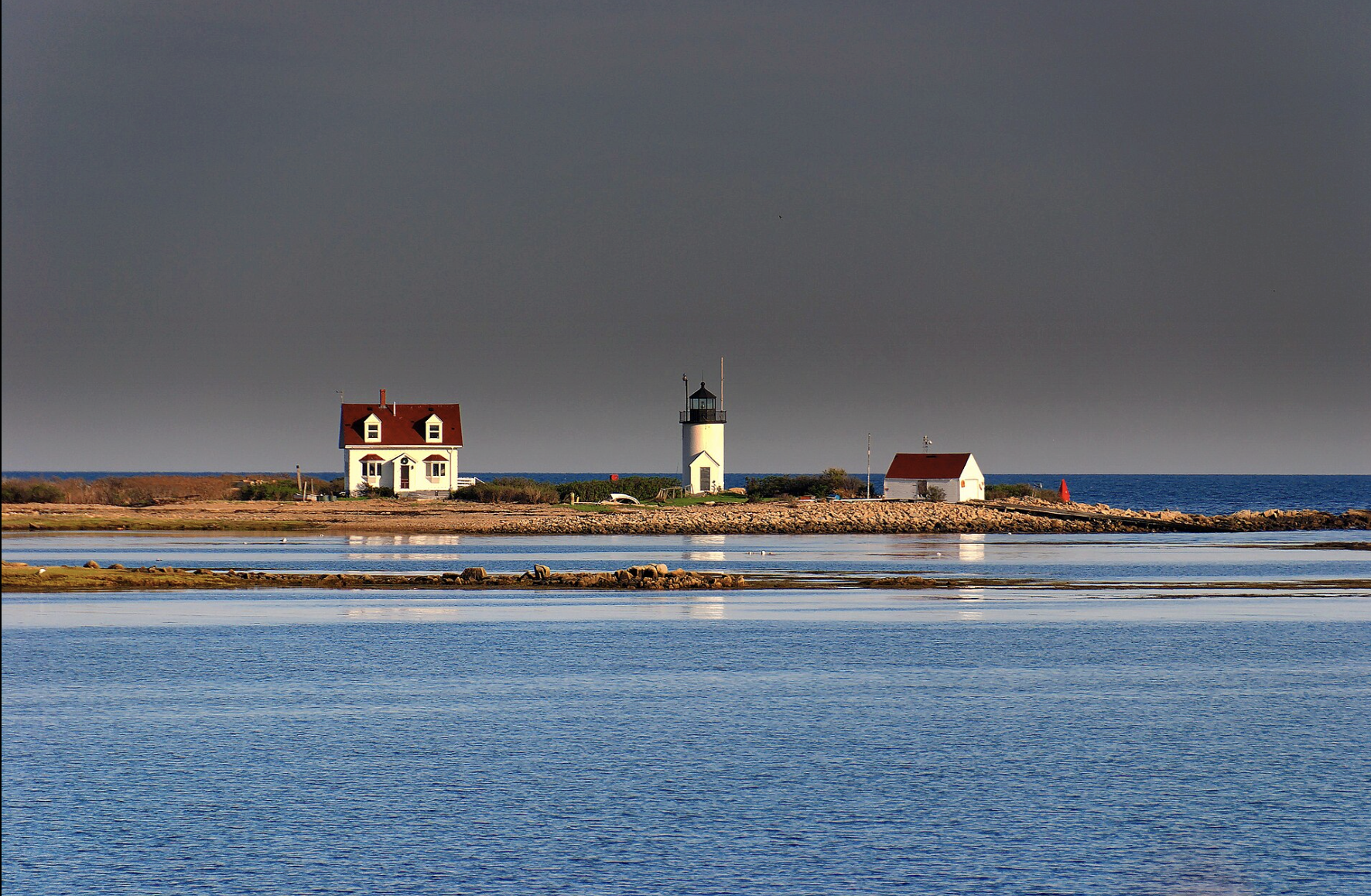
Today, Cape Porpoise is known for its lobster boats, weathered wharves, and quiet coves. It is hard to imagine this peaceful harbor as a battlefield. Yet on August 8, 1782—less than a year before the Revolutionary War ended—local residents suddenly found themselves under attack.


That morning, two British vessels entered the harbor: the 16-gun brig Meriam, commanded by Richard Pomroy, and the privateer schooner Hammond. Their mission was straightforward: seize local vessels and disrupt American shipping along the Maine coast.


After capturing one vessel and grounding another, the British met unexpected resistance. Local militia quickly assembled on Goat Island, which guards the entrance to the harbor, and opened fire with cannons and muskets.


What began as a routine coastal raid soon became a costly retreat. Under sustained fire, the British ships withdrew from the harbor, suffering 17 casualties. The Americans lost only one man: Lieutenant James Burnham, a local militia leader remembered as the battle’s sole fatality.


The Battle of Cape Porpoise was small compared to Yorktown or Saratoga, but it illustrates how the Revolution reached even the most remote corners of New England. Fishermen, farmers, and merchants found themselves defending their homes against the world’s most powerful navy.


Standing on the harbor today, with lobster boats moving across the water and Goat Island on the horizon, it is difficult to picture the smoke and gunfire of that August morning. Yet the battle reminds us that Maine’s coastline was shaped not only by commerce and fishing, but also by war.


Conflicts with Britain continued long after the Revolution. Three decades later, the British occupation of eastern Maine during the War of 1812 exposed the vulnerability of the District of Maine and helped fuel growing support for separation from Massachusetts. Many historians view the events of 1814 as a key factor propelling Maine toward statehood in 1820.

Postcard from Southern Maine

richard bence June 17, 2026

In this corner of southern Maine, place names are sedimentary layers, each revealing how New England evolved: Indigenous landscapes beneath English settlements, working harbors beneath Victorian colonies and artists’ enclaves, and modern tourism layered over them all. What looks like timeless charm is actually a living palimpsest.

Kennebunkport


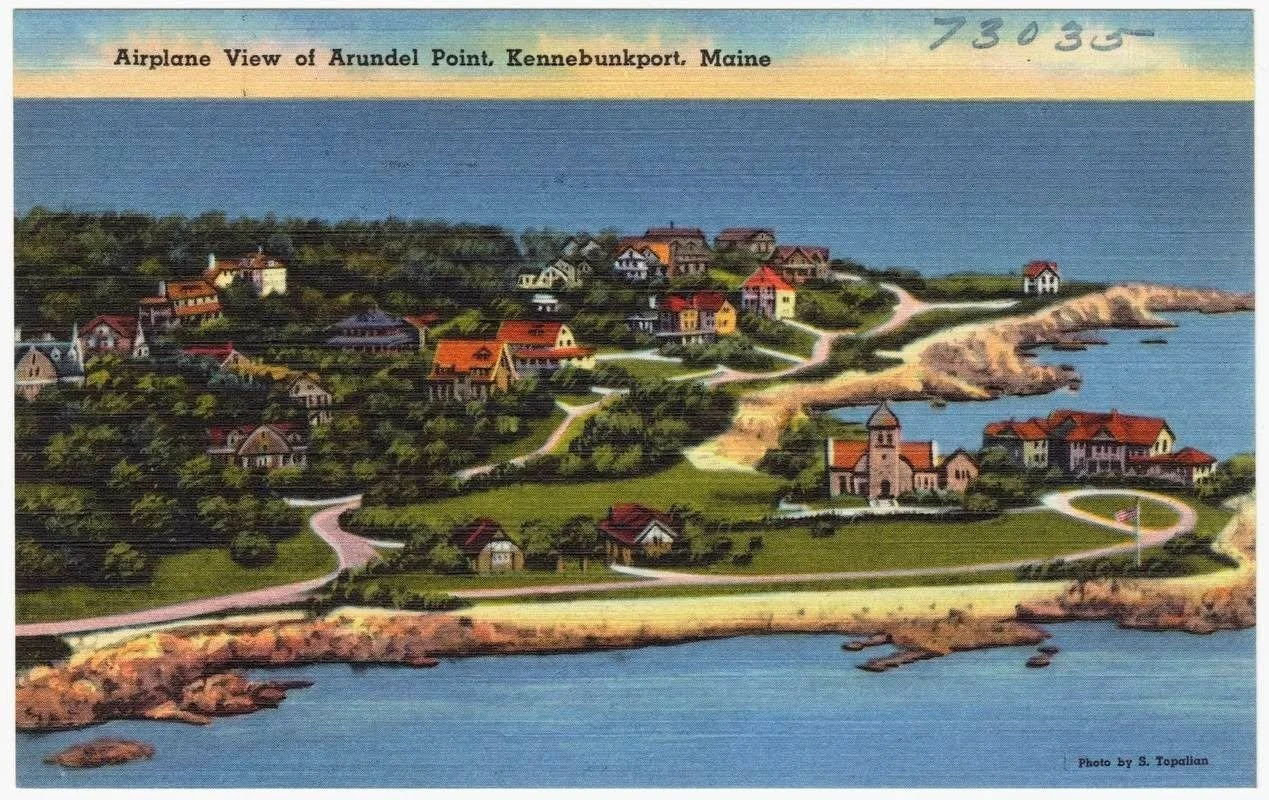
Few names illustrate that fluidity better than Kennebunkport. The area began as Cape Porpus (or Porpoise) in the 17th century, named for the harbor’s leaping marine life. In 1719 it was reincorporated as Arundel, after the English town in West Sussex—a deliberate echo of the Old World. By 1821 it had become Kennebunkport, grafting an Indigenous river name onto its maritime identity.

The maritime village later reinvented itself as a Victorian summer colony. Wealthy families built grand but understated shingled “cottages” along Cape Arundel and Ocean Avenue—less transplanted castles than distinctly American compounds of weathered wood, wide porches, and quiet generational wealth. Today the past isn’t cordoned off in museums. It lives in the rocky coves, narrow lanes, and historic homes that still overlook the water. Kennebunkport provides a temporary pass into a bygone America when a privileged few created their own seaside kingdoms along Maine’s rugged coastline.

Ogunquit


Ogunquit took a different route. Its name is purely Indigenous, and its modern identity was never anchored to an English transplant. Instead, the town was rediscovered in waves: first by artists captivated by its dramatic cliffs and luminous light, later by LGBTQ+ visitors who helped turn it into one of New England’s most welcoming destinations.

That artistic spirit took root in Perkins Cove, a former fishing hamlet that transformed into a thriving artists’ colony in the late 19th and early 20th centuries. Painters like Charles Woodbury drew students and peers to its picturesque harbor, fish shacks, and rugged shoreline. The cove’s iconic drawbridge and cluster of galleries, studios, and seafood spots still carry echoes of that creative boom.

This same openness is embodied in the Marginal Way. Created in the 1920s and named for the “margin” of the sea, this mile-long, car-free path clings to the coastline from the village to Perkins Cove, offering sweeping views of some of Maine’s most expensive oceanfront property. In an age when so much shoreline was privatized or paved, Ogunquit kept this ribbon of land public—a shared promenade open to everyone.

It's just a bunch of hocus pocus!

richard bence June 16, 2026

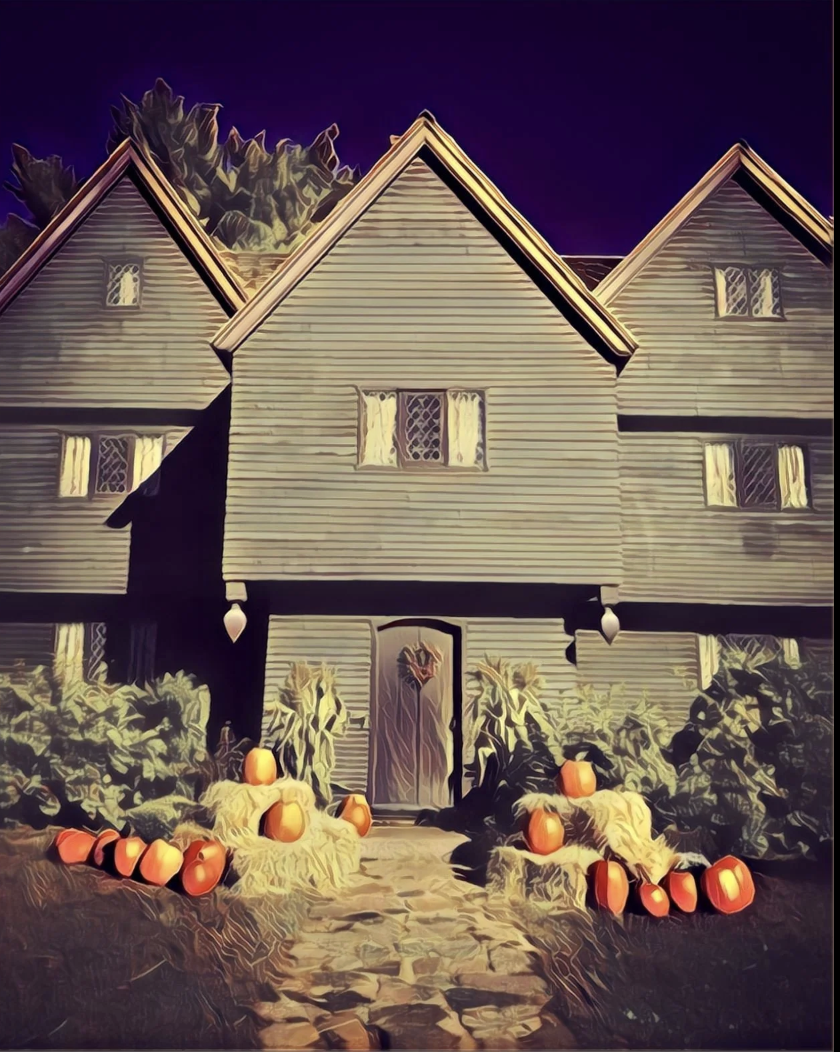
Salem, Massachusetts, is famous for the 1692 witch trials—one of the most dramatic episodes in early American history. The best-known surviving building from that era is the Witch House, the former home of Judge Jonathan Corwin. Corwin served on the Court of Oyer and Terminer that convicted and sentenced 19 people to death by hanging for witchcraft, along with others who died in prison or were crushed to death. One man, Giles Corey, was pressed to death under stones for refusing to enter a plea.


The trials were not isolated madness but grew out of a deeply religious Puritan society that genuinely believed the Devil and his agents were active in the world. Witchcraft was a capital crime under English law, and most people at the time—judges, clergy, and ordinary citizens—accepted its reality. 


Accusations often began with strange behaviors among adolescent girls (the “afflicted children”), whose fits, convulsions, and claims of being pinched or tormented by spectral figures spread rapidly through the community. Modern observers have noted patterns similar to contagious psychogenic illness—comparable in some ways to later episodes of mass hysteria or conditions like anorexia nervosa that can spread among adolescent girls in close-knit groups. Whatever the precise triggers, the symptoms were taken as credible evidence of witchcraft at the time.


Jonathan Corwin, a prominent local magistrate and landowner, purchased the house in 1675. Like many Puritan households, his family endured severe hardship: five of his children died young, feeding local talk of a “Corwin curse.” The house itself is a typical 17th-century New England structure with multiple fireplaces built to endure harsh winters. It is the only standing building with direct ties to the trials’ judges and officials.


Inside, the museum displays artifacts and explains the worldview of the period. This includes “poppets” (cloth dolls sometimes used in folk magic), which featured in testimony against the first executed victim, Bridget Bishop. Also shown are witch bottles—containers filled with urine, hair, nails, and iron pins or nails—buried or hidden near doorways and hearths by people seeking protection from evil influences. While strict Puritans like Corwin opposed such practices as superstitious, many otherwise devout residents saw them as legitimate countermeasures against malevolent forces.


The Salem trials eventually collapsed under their own weight. Increasing skepticism about “spectral evidence,” influential critics, and the realization that prominent people could also be accused brought the proceedings to an end. Several participants later expressed regret. The episode remains a cautionary tale about the dangers of credulity, rumor and unchecked fear in a society under pressure—disease, harsh frontier life, and religious fervor all played roles.

The Witch House stands today as a rare physical link to that world, letting visitors see how people actually lived and thought in late 1600s New England rather than viewing events solely through modern lenses. It reflects an era when belief in witches was mainstream, courts operated under prevailing law and theology, and ordinary tragedies were often interpreted through a spiritual lens.

Walk in the Footsteps of History: The McIntire Neighborhood in Salem

richard bence June 15, 2026

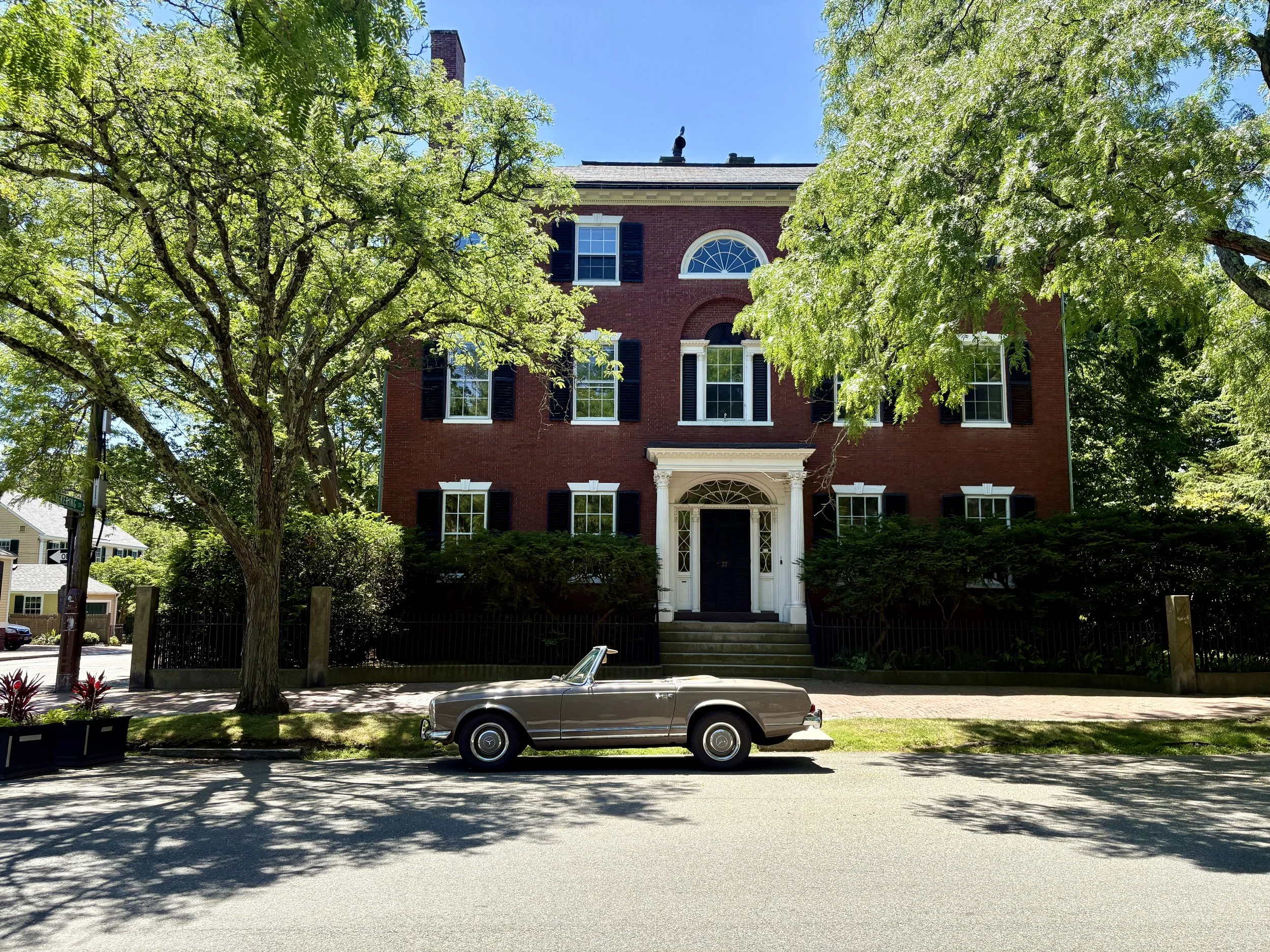
Stroll through the McIntire Historic District in Salem, Massachusetts, and you enter one of America’s finest concentrations of pre-1900 domestic architecture. Named for Samuel McIntire (1757–1811), the district preserves the elegant legacy of a self-taught architect and carver whose work defined the look of Federal-era Salem. This is not a frozen museum piece but a living neighborhood where history feels tangible beneath your feet.

Chestnut Street stands as the undisputed crown jewel of any walk through Salem’s historic core. Flanked by impeccably preserved Federal-era townhouses, it ranks among the most magnificent and harmonious streetscapes in America. These refined mansions serve as enduring monuments to Salem’s extraordinary maritime and mercantile golden age in the late 18th and early 19th centuries. Wealth amassed by sea captains and merchants who traded across the globe found its most elegant expression in the architectural mastery of Samuel McIntire.

Yet the district’s celebrated beauty—its photogenic churches, graceful mansions, and eminently livable neighborhoods—derives in large measure from English-derived building traditions and classical principles. The harmonious proportions, disciplined restraint, and understated elegance that continue to captivate visitors are no accident; they are the direct inheritance of a specific civilizational legacy that valued order, craftsmanship and measured beauty.

Today, this living district remains an authentic testament to Salem’s—and by extension, America’s—foundational eras. Its charm is no manufactured nostalgia; it is a hard-won inheritance, legible in every doorway, cornice, and perfectly scaled facade. Walk it with thoughtful attention, and the past speaks with remarkable clarity.

The British Accent: Deploy the Garrison!

richard bence May 31, 2026

In Star Wars (1977), George Lucas didn’t just give the Galactic Empire stormtroopers and officers; he gave them posh British accents. To American ears fresh off Vietnam and Watergate, that sound meant something specific: chilly competence, aristocratic disdain, and the lingering ghost of empire. Grand Moff Tarkin wasn’t barking orders like an American sergeant—he was enunciating them with the crisp certainty of men who’d once run half the planet and still hadn’t quite accepted the memo. Darth Vader’s voice (James Earl Jones’ baritone wrapped around a British actor’s cadence) sealed it. The Empire wasn’t chaotic evil. It was institutional evil. Bureaucratic. Polite. Terrifyingly well-spoken.

Fifty years later, the trope is still going strong — and it’s gotten delightfully absurd.

The British accent remains the only one in American cinema that reliably signals both superiority and faded empire at once. The character isn’t just foreign — they’re looking down their nose at you while quietly reminiscing about the good old days when they could tax your tea. It’s auditory nostalgia for a power dynamic America both rebelled against and later inherited. We kicked the British out, built something bigger, then spent decades hiring their actors to sound quietly disappointed in us.

That perfect middle ground is catnip for filmmakers: intelligible enough to need no subtitles, exotic enough to feel “other,” classy enough to imply intelligence or menace without any extra work. Ruthless corporate overlord? British. Treacherous intelligence officer? British. Scientist who explains why the American hero’s plan is crude? Poshest possible.

And now, in 2026’s Star City — Apple TV+’s glossy new For All Mankind spinoff about the Soviet space program, British actors play Soviet cosmonauts, engineers, and KGB officers… speaking in their native British accents. Soviets as stand-ins for what, exactly? The lingering menace of empire? The cold bureaucracy of a superpower? The same clipped vowels that once evoked the Galactic Empire are now doing double duty as the Iron Curtain. Apparently nothing says “oppressive Soviet surveillance state” quite like a well-bred British lilt or crisp RP disdain.

It’s colonial LARPing with a Received Pronunciation accent. The sun may have set on the actual British Empire, but in Hollywood it’s still perpetually teatime. The joke is that we’re all in on it now. The actors know they’re wearing linguistic hand-me-downs. The audience knows the accent is 90% vibes and 10% actual characterization — especially since modern Britain is very much under the tractor beam of American cultural power. Yet we keep indulging it because it works. Nothing says “I’m better than you and slightly evil” quite like a well-placed “quite” or a disdainful “indeed.”

The irreverence lies in how naked the trick has become. In 1977 those clipped vowels could still produce a genuine cultural shiver. Today it’s nostalgic cosplay for a power dynamic that no longer exists. Hollywood keeps dressing up its villains, mentors, and morally ambiguous anti-heroes in grandpa’s old imperial uniform. Meanwhile, American characters get to mumble, drawl, and chew scenery. The British ones articulate. They weaponize enunciation.

In the end, the British accent in Hollywood isn’t really about Britain anymore. It’s about us — what Americans still find impressive, threatening, or sexy. It’s auditory set dressing for our imperial anxieties, class fantasies, and lingering cultural insecurity.

Cheerio, comrades. Pass the popcorn. The Empire strikes back… this time with a Soviet passport and a very proper accent.

The Horror Next Door: How the 1990s Turned Systems into Nightmares

richard bence May 23, 2026

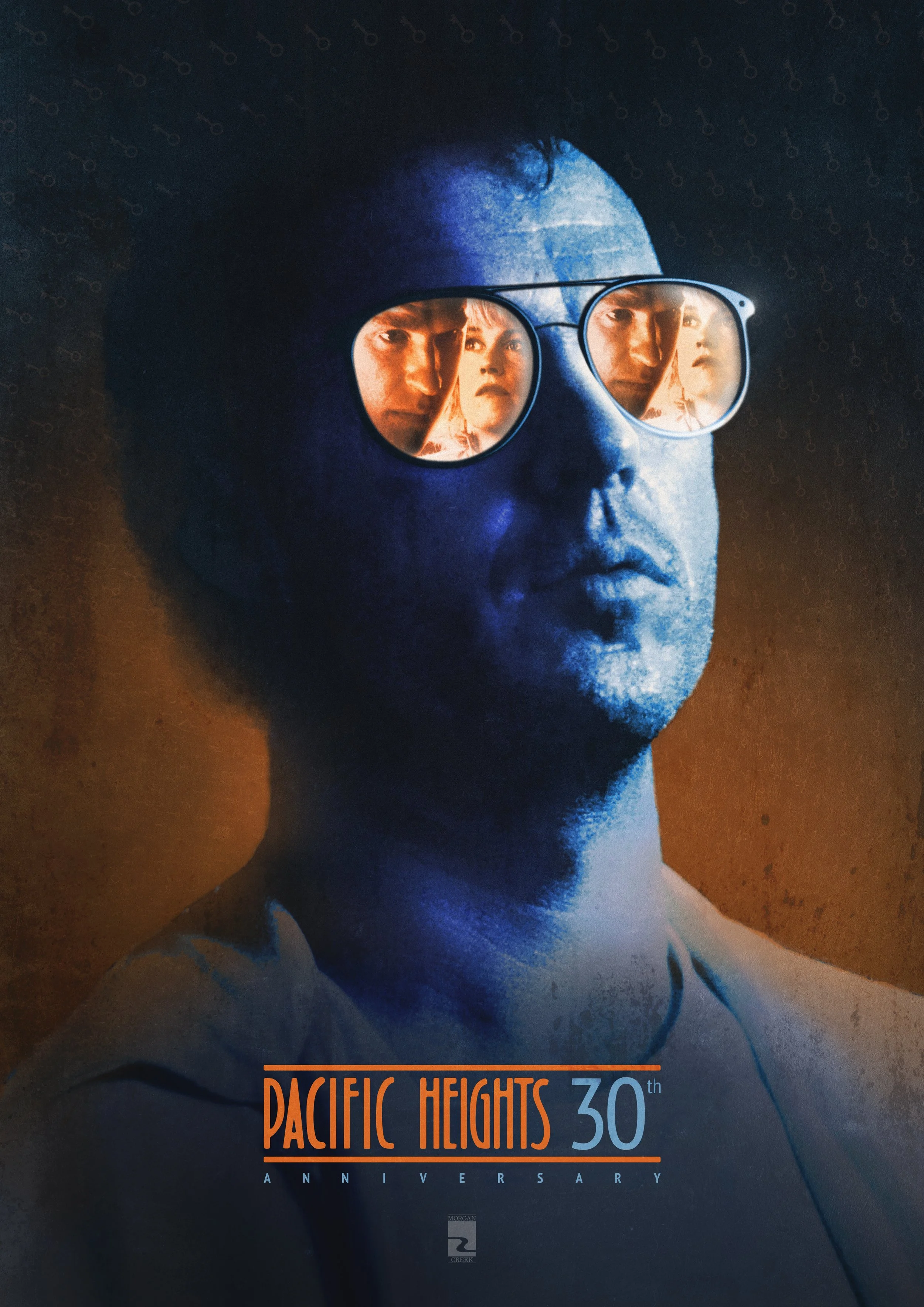
By the time the Berlin Wall had fallen and the Soviet Union dissolved, the grand geopolitical monsters of the 20th century had receded. What replaced them was something more intimate, more insidious: the enemy who signs a lease and moves in downstairs. The 1990s, for all their technological optimism, grunge cool, and economic rebound, were an extremely paranoid decade in the U.S. The fears that once pointed outward—at nuclear annihilation or foreign ideology—now curled inward, toward the home, the neighbor, the roommate, the tenant. Nowhere is this shift captured more chillingly than in Pacific Heights (1990), a film that weaponizes normalcy itself into a form of bureaucratic horror.


In Pacific Heights, directed by John Schlesinger, aspiring yuppies Drake and Patty (Matthew Modine and Melanie Griffith) purchase a Victorian fixer-upper in San Francisco. Like many in the late-’80s boom, they overextend, banking on rental income from the downstairs unit to service their mortgage. Enter Carter Hayes (Michael Keaton), a soft-spoken drifter who understands the city’s tenant protections better than most landlords ever will. He pays no rent. He damages the property. He provokes just enough to trigger responses that can be documented as harassment. The system—designed to shield vulnerable renters from predatory property owners—becomes the instrument of their slow-motion ruin.


There is no masked killer here, no supernatural force, no cathartic shootout. The horror is procedural: police officers who recite rules rather than intervene, courts clogged with delays, utility shutoffs reframed as illegal retaliation. You cannot fight back without becoming the villain on paper. Change the locks? Illegal. Document the destruction? It becomes evidence against you. The film’s dread lies in the correctness of the nightmare. The processes meant to prevent abuse have become the abuser.


This is what makes Pacific Heights feel more frightening than its contemporaries. Compare it to Single White Female (1992), where the terror is personal and psychological—an obsessive roommate who literally tries on your identity—or Unlawful Entry (1992), in which Ray Liotta plays a seemingly heroic cop who responds to a home invasion at the upscale Los Angeles home of Kurt Russell and Madeleine Stowe’s characters, only to begin a campaign of relentless harassment.


Those films still offer a clear antagonist to confront. Pacific Heights offers something colder and more systemic: a villain who mostly just exists and litigates. Violence is secondary to financial erosion, reputational damage, and helplessness. It is closer in spirit to Kafka’s The Trial or Terry Gilliam’s Brazil than to any slasher. The true antagonist is not one man, but the institutional inertia that protects him.


The Post-Cold War Inward Turn

The clustering of these domestic thrillers in the early 1990s was no accident. With the Cold War’s end came a cultural pivot. For decades, American cinema had externalized threats: Soviets, terrorists, invading armies. Now the danger lived inside the walls. Home, once the ultimate symbol of stability and the American Dream, became a site of fragility—especially in expensive coastal cities where housing pressures were intensifying.


San Francisco in Pacific Heights is not incidental. The city had become shorthand for landlord-tenant warfare, with tenant protections strengthened by earlier progressive movements. Rising costs, yuppie gentrification, and urban density turned “your castle” into a leveraged liability. Privacy was no longer guaranteed; it was negotiated through leases and shared spaces. The film captures a precise anxiety of the era: ownership feels illusory when the person living under your roof understands the rules better than you do. Asymmetric information flips the expected power dynamic. The tenant becomes the parasite, and the house—the biggest investment most families will ever make—eats its owners alive through perfectly legal channels.

This wasn’t mere cinematic exaggeration. Real-world stories of nightmare tenants circulated widely, just as tales of abusive landlords had fueled the very protections now being gamed. The era’s economic anxieties—personal finance, property values, relationship instability—found expression in films that refused the safety of genre abstraction. Everything felt plausible, bureaucratically grounded, socially adjacent.


Other movies amplified the theme. In The Hand That Rocks the Cradle (1992), a trusted nanny invades the family sanctuary. Sleeping with the Enemy (1991) shows domestic abuse hiding in plain sight for Julia Roberts, who has to learn how to swim and pretend to be dead to escape her abuser. Falling Down (1993) dramatizes an ordinary man snapping against the bureaucratic grind of modern life. Across these works, the message was consistent: the danger isn't always the outsider—sometimes it's the person sharing your bed and bank account.

Civilization is thinner than it looks. It's a fragile agreement held together by people mostly choosing to "play ball"—following norms, keeping their resentments in check, honoring trust in everyday roles (nanny, spouse, neighbor, stranger on the road). Once someone defects, the whole setup frays fast. These aren't slasher movies with supernatural evil. They're about proximity and defection. The threat is usually right next to you, wearing a normal face, until the mask slips. Safety isn't guaranteed by institutions or laws alone—it's heavily dependent on most people self-regulating.


Systems Designed to Protect

At the heart of this 1990s anxiety is a deeper idea: systems designed to prevent abuse can themselves become the abuser. Tenant protections, intended to shield the vulnerable, create new exploitation vectors. Custody laws that historically favored mothers—rooted in the “tender years” doctrine—produced unfair outcomes for fathers, turning family courts into arenas of rampant institutional bias. These are not symmetrical phenomena, and both have trade-offs. Pre-1970s landlord power carried its own abuses. Yet the 1990s films dramatize the moment when good intentions overshoot or get gamed, when protective bureaucracies harden into traps.


This is bureaucratic violence in its purest form: harm delivered not through dramatic confrontation but through impersonal rules, paperwork, and institutional thinness. It echoes Hannah Arendt’s “banality of evil”—the quiet destructiveness of ordinary functionaries and procedures—updated for the administrative state. Or, in Foucauldian terms, disciplinary power operating through normalized systems rather than overt authority. The police don’t refuse to help out of malice; they simply follow protocol. The courts aren’t corrupt; they’re slow and one-sided in practice.


The decade’s paranoia was not unfounded, even if it coexisted with genuine cultural vitality. It reflected a growing distrust in institutions—not full-blown conspiracy, but a recognition of their blind spots and perverse incentives. External threats had faded, but domestic and relational fragility filled the vacuum.


Why It Feels Even Truer Today

These films have aged into something prophetic. What was marketed as “psychological thriller” in the 1990s now reads like sustained horror: the procedural traps laid then have only grown more sophisticated with technology and regulation. Pacific Heights remains the purest distillation because it offers the least escape. There is no heroic confrontation, no simple villain to defeat. The threat signs the lease, pays nothing, and weaponizes the very safeguards meant to promote fairness. In doing so, it captures the particular dread of late modernity: being trapped inside correct processes that still produce nightmare outcomes.


The real monster of the 1990s—and perhaps our own time—was never a foreign power or a supernatural force. It was the quiet realization that the systems we built to protect us could, under the right circumstances, turn the home itself into a cage. And the person holding the key might just be the one living downstairs.

Before America, There Was Edinburgh

richard bence March 29, 2026

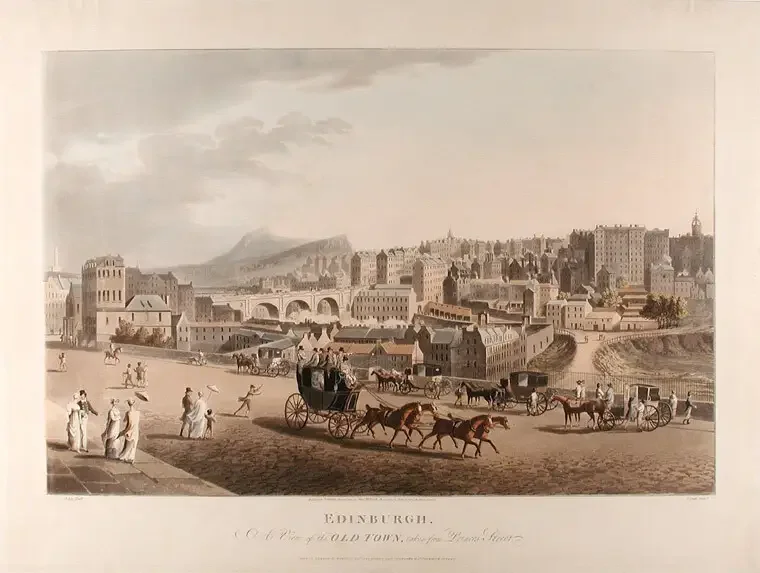
Walk through Edinburgh, and you walk through time.

The city rises in layers—medieval closes and wynds, Renaissance facades, and the ordered geometry of the Enlightenment New Town. Each era builds on the last, forming not just a skyline, but the intellectual scaffolding of the modern world.

In the second half of the eighteenth century, something remarkable happened here. In a country of just one and a half million people, a concentration of thinkers emerged whose ideas would ripple far beyond Scotland—helping shape the philosophical and economic foundations of the United States.

Adam Smith published The Wealth of Nations in 1776—the same year America declared independence. His ideas about free markets, competition, and the “invisible hand” didn’t just redefine economics; they influenced figures like Alexander Hamilton and informed the economic framework of the new republic.

David Hume, meanwhile, dismantled assumptions about certainty itself. By questioning how we know anything, and insisting on reason over superstition, he helped shape the intellectual climate that influenced American thinkers such as Thomas Jefferson and James Madison—men tasked with turning abstract ideals into a functioning system of governance.

Then there was James Hutton, who looked not to politics but to the earth beneath our feet. In uncovering the concept of deep geological time, he laid the foundations of modern geology. His insistence on observation and evidence helped model a way of thinking that would influence generations of American scientists and engineers, embedding inquiry and experimentation into the nation’s DNA.

But beyond any single figure, it was the atmosphere of Scottish Enlightenment itself that mattered most. Edinburgh was a city of salons, societies, and argument—a place where ideas were tested, challenged, and refined. Americans who studied these works, or traveled here, encountered not just theories, but a method: debate, empiricism, and a belief that society could be improved through reason.

The Enlightenment in Edinburgh didn’t stay in Edinburgh.

It crossed the Atlantic in books, in letters, in minds—and helped shape a new kind of nation, one that sought to move beyond inherited European models toward something more experimental, more self-determined.

Walk these streets today, and you’re not just passing through history.

You’re walking through the ideas that built the modern world.

Coming of age in the 1990s

richard bence March 28, 2026

As America entered the 1990s, its pop culture became a battlefield. Rodney King. O.J. Simpson. Clinton. Michael Jackson. Scandals tore the country apart. Every celebrity misstep was amplified, dissected, weaponized. The newly launched 24-hour cable news cycle turned outrage into an unrelenting firehose — everyone was drenched, nothing remained sacred.

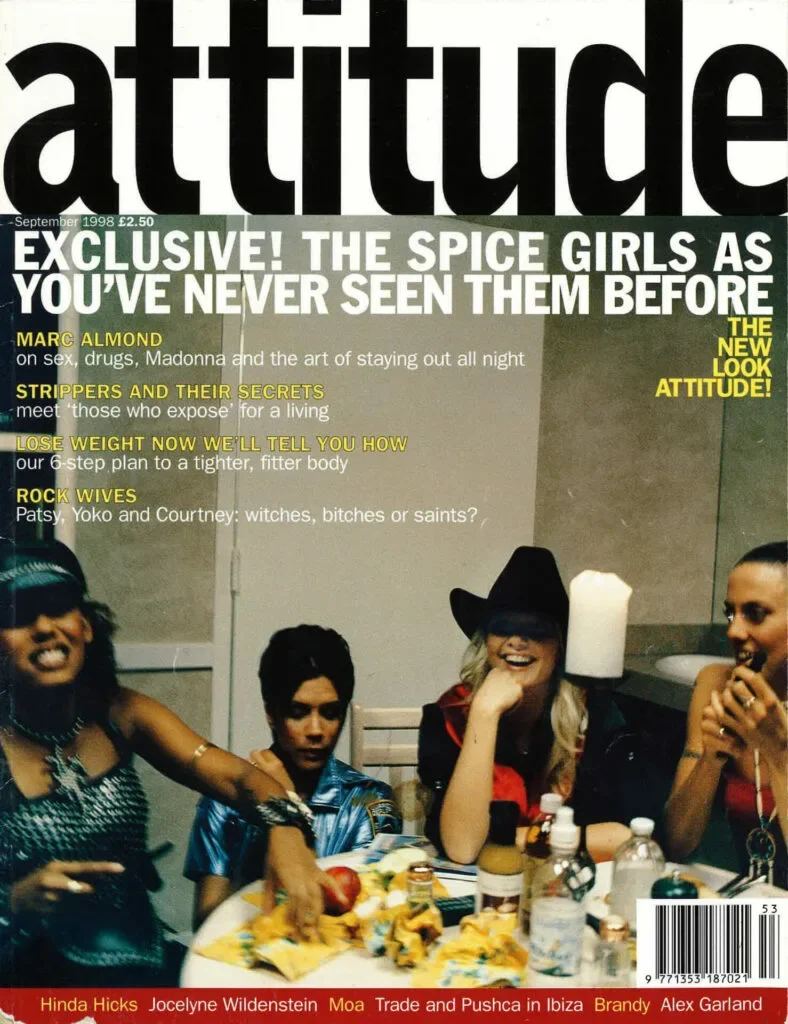
By contrast, the mid‑’90s Cool Britannia moment — Britpop bands, YBA art stars, fashion spreads, magazine covers, and Tony Blair’s flirtation with pop culture — felt like a parallel universe. Britain was presenting itself as young, creative, modern. Knowingly glossy. Occasionally cringe. The mood peaked in 1996, when the Spice Girls arrived with Wannabe, and the performance of national confidence became impossible to ignore.

London in the 1990s was a strange mix of old institutions and restless reinvention. Coming of age there meant feeling the city as a living thing — irreverent, anarchic and completely its own.

I turned fourteen in 1990. London then was at the top of its game: the beating heart of the world’s advertising industry, where glossy visuals and clever slogans shaped what people desired. Fleet Street, the old bastion of newspapers, was in transition as the press decentralized into Canary Wharf and Wapping, but journalism still felt like a viable career choice — especially for those who hadn’t come through the public school system.

Wallpaper magazine launched in 1996, bringing a global eye to design, fashion and interiors. Suddenly London wasn’t just a place for business — it was experimenting with itself, trying on different shapes and colors in a way that even our more established European cousins couldn’t manage with such ease. Ian Schrager’s Sanderson Hotel opened in April 2000, Philippe Starck’s design a marker that London had fully arrived on the world stage — sleek, confident and unapologetically global.

Before that came Pharmacy, a restaurant that became shorthand for raucous BritArt shenanigans. It opened in 1998 in Notting Hill, the brainchild of Damien Hirst and Matthew Freud. The concept wasn’t about the food — it was a performance you walked into, where the likes of Tara PT perched on Jasper Morrison furniture amid pillboxes and butterfly displays. It was a vibe.

It was also the most exciting place to come out. Attitude had launched in 1994, and Soho buzzed with pubs and bars. There were the big names — Popstars at the Scala in King’s Cross (launched in 1995) and dance clubs in Vauxhall — alongside dive bars in Shoreditch like the George & Dragon and the Joiners Arms. The city’s gay scene felt experimental, rough-edged, and unpolished in the best way. Many of those venues have since disappeared, swallowed by gentrification and rising rents. The energy has faded, but not the memory.

Growing up in the Eighties

richard bence March 27, 2026

Summers in England were always a vibe.

At the time, it didn’t feel like it. Friends flew off to Spain or Portugal, returning bronzed and worldly, while we stayed stubbornly, defiantly English: Devon, Dorset—villages that sounded, even then, as if they belonged in storybooks.

We would drive for hours to the West Country, windows wound down by hand, the warm air thick with the scent of cut grass. The lanes narrowed the further we went, hedgerows rising like green walls, brushing the car as if trying to turn us back. And then, just when you thought the countryside had swallowed you whole, the sea would appear—glinting, impossible, a sheet of light beyond the fields.

I have a very specific memory of standing up through the sunroof—Dad driving, of course—while I Should Be So Lucky blared from the speakers. We all listened to the same music back then—tapes clicked and rewound, passed between us. Dad loved Kylie Minogue. Watching Top of the Pops on a Thursday evening—with sherry and a bowl of nuts—was a family ritual.

We stayed in stone cottages with thatched roofs and flint walls, as though they’d been lifted straight out of Miss Marple. One, “Quack Cottage,” sat beside a babbling brook. Days unfolded simply: scrambling up crumbling castle towers, a family dog panting at our heels, and always a shingle beach, a melting 99 ice cream in hand.

Lunches were ploughman’s in pub gardens, tables sticky with spilt cider, wasps circling with quiet menace. Frazzles. Cream teas followed—clotted cream and jam in careful balance, also under siege from wasps. Supper, inevitably, was scampi.

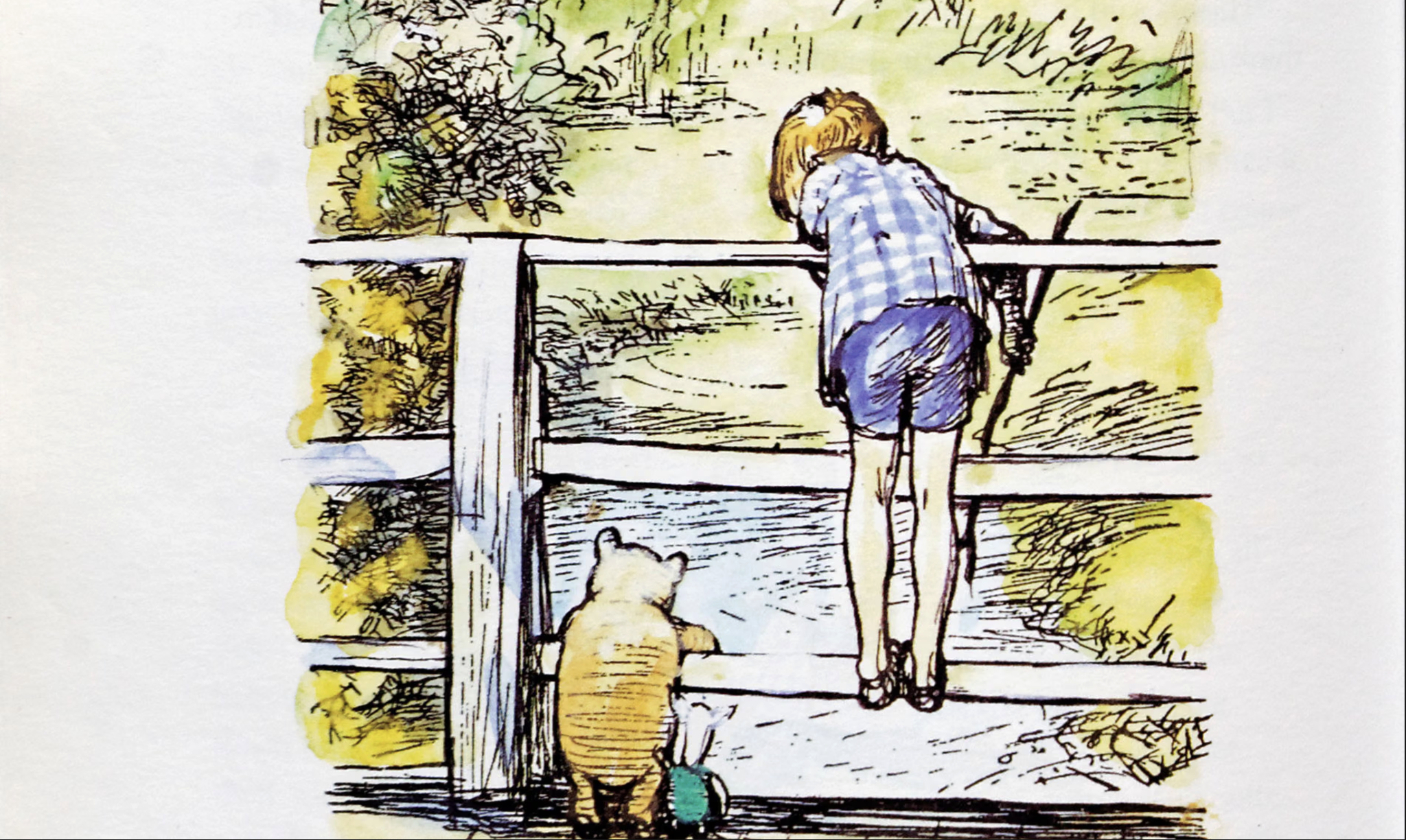
Back home, we spent lazy afternoons in Ashdown Forest—the landscape that inspired Winnie-the-Pooh. A.A. Milne lived on the edge of the forest and drew on walks with his young son, Christopher Robin. For us, it was simply another familiar corner of the countryside where we grew up.

Going out still felt affordable then. There was the Spotted Dog, or a Friday-night treat from the Golden Palace—prawn crackers and crispy duck after the cinema. And for special occasions, Beefeater, where sophistication meant a chilled glass of Asti Spumante.

But more often, we stayed in. An Indian takeaway and Viennetta. We’d sit together watching The Two Ronnies or The Dame Edna Experience, plates piled high with chicken biryani and poppadoms, the room hazy with Dad’s pipe smoke, laughing at the same jokes. Outside, blackbirds filled the air with song while the lawn lay immaculately mown, striped in straight lines by Dad.

Postcard from Baja California

richard bence February 12, 2026

Todos Santos wasn’t built as a beach town. It began in 1733, when Jesuit missionaries founded Misión Santa Rosa de las Palmas beside rare freshwater springs in an otherwise arid peninsula. Water meant survival. The mission grew crops — especially sugarcane — and for a time in the 19th century, this small oasis became surprisingly prosperous: mills turning, mango groves flourishing, trade moving quietly through the region.

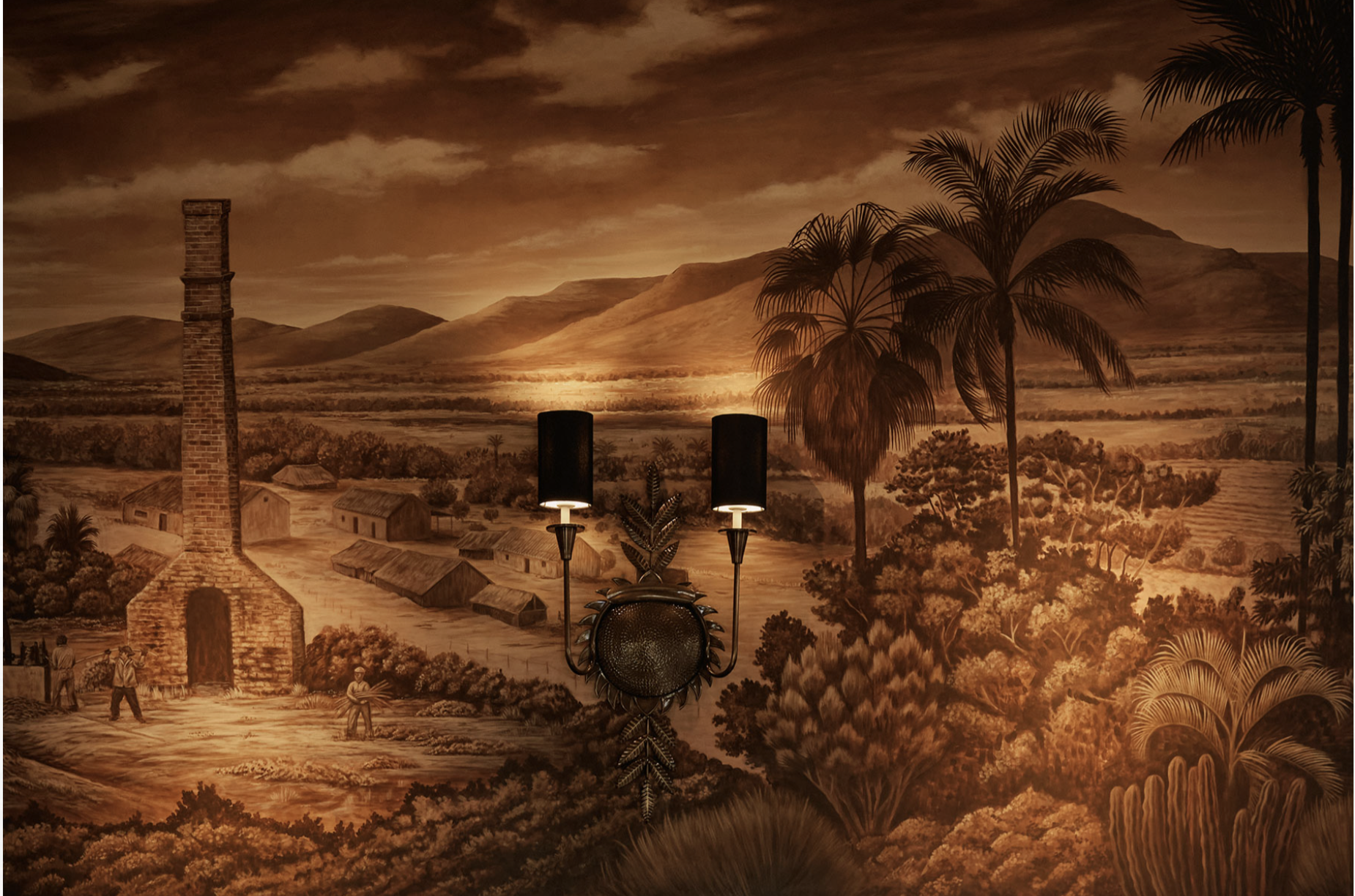
The hacienda where I’m staying — now the Todos Santos Boutique Hotel — was built for a sugar baron. High ceilings, thick masonry walls, cool tile floors. You can feel that it was built to last. In the bar, vivid murals bloom across the plaster — desert saints, palms, and wild horses running along the shoreline at Las Palmas. And if you look closely, there are bullet holes still visible in the walls — remnants believed to date back to the Mexican Revolution. History, quietly embedded in the stone.

The town itself sits a few miles inland, not for romance, but for water. The mission was built around those precious springs, which had sustained Pericú communities for generations. The Pacific beaches were working shoreline; the heart of the community was agricultural and spiritual. Today, that separation means you get both — a grounded, historic town center, and then vast, wind-brushed stretches of sand just beyond.

Here, the beaches are wild in a way that commands respect — surf that crashes, currents that pull, and horizons stretching to infinity. This is not the turquoise, float-all-day water of Cancun; this is water that roars, asserting its power with every wave. Occasionally, plumes from gentle giants rise along the horizon — migrating whales tracing ancient routes — while turtles, guided by the moon, return to nest on the same sands their ancestors knew.

There is something quietly profound, too, about its position along the Tropic of Cancer — an invisible astronomical boundary between temperate and tropical. A celestial line befitting a primordial place where the Sonoran Desert meets the ocean.

Early Spanish cartographers depicted the Baja peninsula as an island — an understandable mistake. Today, it still feels otherworldly. Here, it’s just pelicans, salt air, and peace — a land shaped by time and tide.

hoteltodossantos.com

Topanga Canyon — “The Alps of Southern California”

richard bence January 18, 2026

Every place tells stories about itself. Some are whispered. Others are sold.

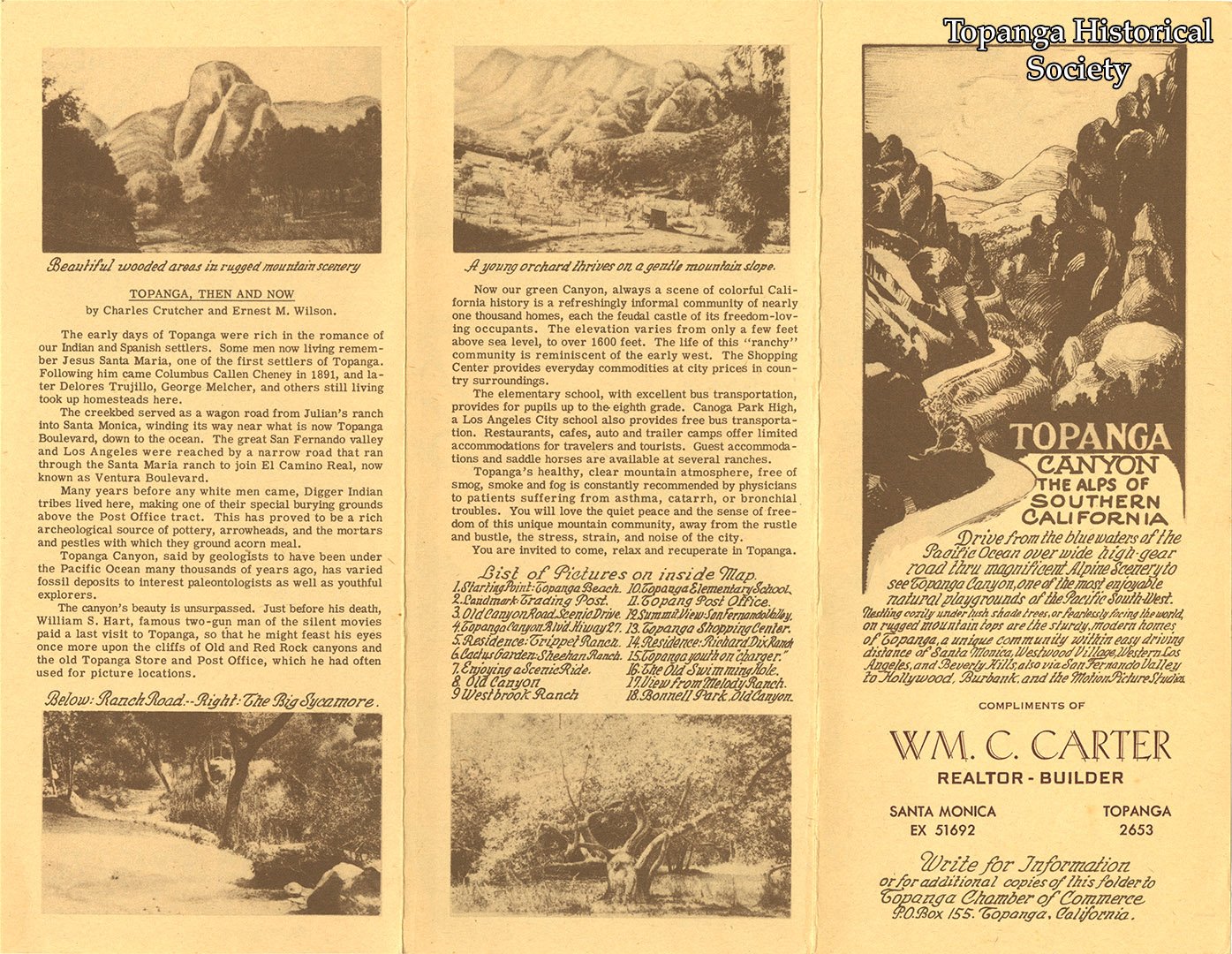
Tucked away in archives and yellowing pamphlets is a body of early 20th-century writing that reveals how Topanga Canyon once wanted to be seen—not just as a place to live, but as an idea. What survives today reads like a blend of travel brochure, civic pride, frontier romance and Hollywood reverie.

One such text opens grandly:

“The early days of Topanga were rich in the romance of our Indian and Spanish settlers…”

From the start, the tone is unmistakable. This is not neutral history; it is booster prose, written to enchant, reassure and elevate. Native life, Spanish settlement, Anglo homesteading, geology, archaeology and movie stardom are woven together into a single, flowing narrative—one that positions Topanga as timeless, storied and quietly exceptional.

The text names early settlers—Jesús Santa Maria, Columbus Calen Cini, Dolores Trujillo, George Melcher—not merely as facts, but as proof of continuity and legitimacy. It situates wagon roads in creek beds, ties the canyon to El Camino Real, and places Topanga neatly between the Pacific and the San Fernando Valley, connected yet removed.

Even the geology is romanticized:

“Topanga Canyon, said by geologists to have been under the Pacific Ocean many thousands of years ago…”

Fossils become not data, but treasure—objects of wonder for “youthful explorers.” Indigenous burial grounds are described with the detached curiosity typical of the era, framed as archaeological richness rather than living heritage. The language is dated, sometimes uncomfortable by modern standards, but historically revealing. It tells us less about ancient Topanga than about how early 20th-century Southern California wanted to imagine itself.

Then comes Hollywood.

Just before his death, the silent-film star William S. Hart is said to have returned to Topanga to feast his eyes once more on its cliffs and red rock canyons. This is not incidental. Hart’s presence functions as a cultural stamp of approval: Topanga is not just scenic—it is cinematic. Worthy of myth.

A second piece of copy, clearly meant for motorists and weekend escapees, shifts the tone from nostalgia to invitation:

“Drive from the blue waters of the Pacific Ocean over wide, high-gear road through magnificent alpine scenery to see Topanga Canyon, one of the most enjoyable natural playgrounds of the Pacific Southwest.”

Here, Topanga is sold as accessibility without compromise. Alpine scenery within reach of Santa Monica. Rugged mountaintops and shade trees. “Sturdy modern homes” that are both fearless and civilized. The canyon becomes a paradox on purpose: wild, but safe; remote, yet close to Beverly Hills, Westwood, Hollywood, Burbank and the motion picture studios.

This is where the famous phrase emerges, sometimes explicitly, sometimes implied:

Topanga Canyon — The Alps of Southern California.

It’s an audacious comparison, and that’s the point. Early Southern California marketing thrived on metaphor. If Europe had mountains, California would have better ones—warmer, closer, freer. Topanga wasn’t just a canyon; it was a lifestyle upgrade before the term existed.

What makes this writing so compelling today is that Topanga never fully abandoned this self-image. Unlike places that urbanized beyond recognition, Topanga absorbed the myth and carried it forward. The ranching era faded. The booster pamphlets disappeared. But the idea remained: a place just outside the city where beauty, individuality and history quietly persist.

These texts are not objective history. They are acts of invention. They show us Topanga not as it was, but as it wanted to be remembered—and perhaps, in subtle ways, as it still is.

In that sense, they aren’t relics at all.
They’re mirrors.

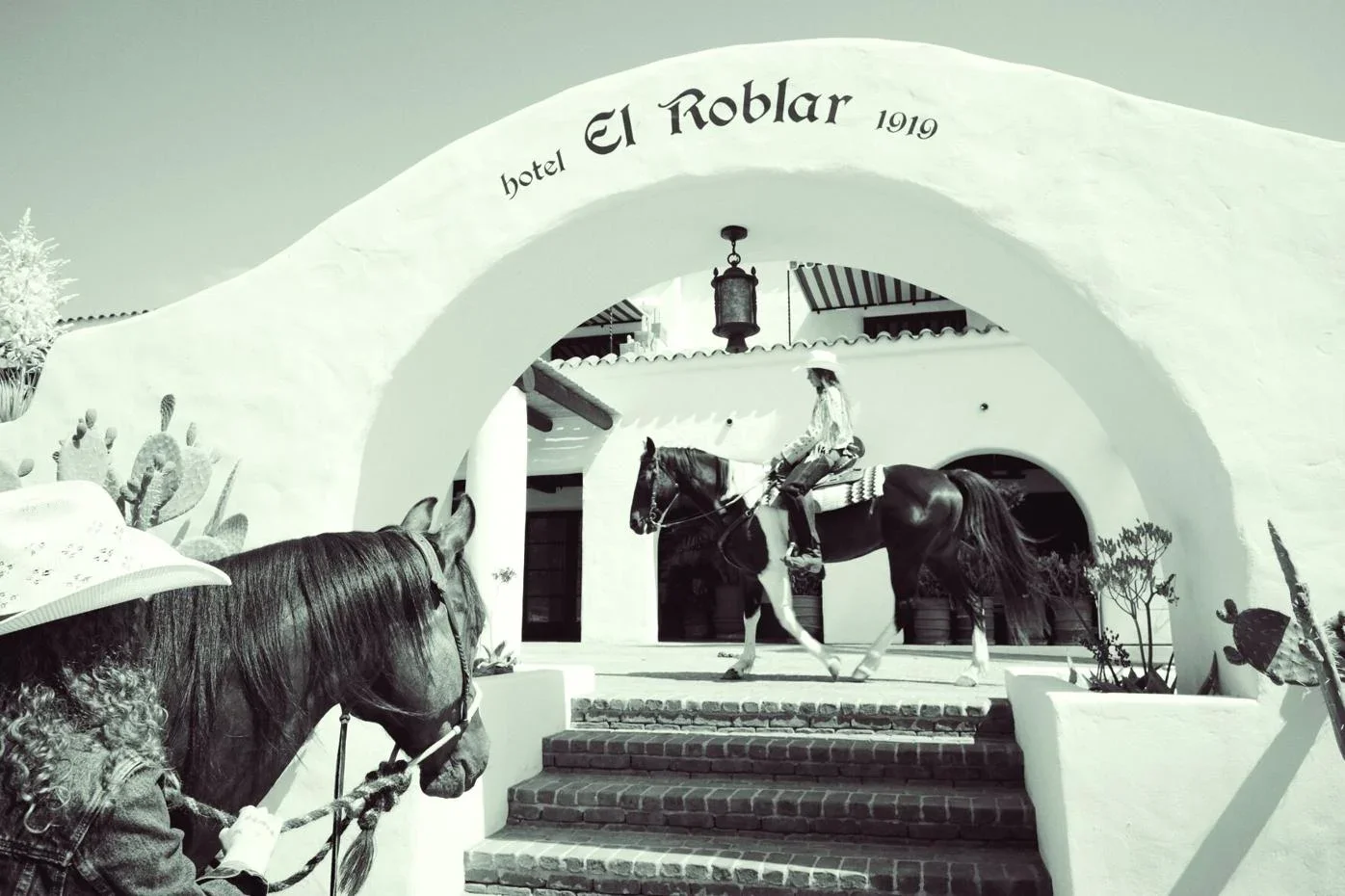
Postcard from Hotel El Roblar

richard bence December 29, 2025

A sense of place announces itself immediately. In the Old West–style lobby, worn leather sofas sit by a rough stone fireplace, setting the tone for a hotel grounded in Ojai’s past. The Spanish Revival property comprises 31 rooms and 11 bungalows and is conceived as an homage to the town itself, long known for its pink-hued sunsets and surrounding avocado and citrus groves. Archival photographs line the hallway near reception; custom Pendleton blankets, woven with “Hotel El Roblar. Ojai, California 1919”, rest at the foot of every bed.

Opened 105 years ago, El Roblar is Ojai’s oldest hotel and once served as the town’s natural meeting point. That role faded during its later life as The Oaks at Ojai, a private, long-stay spa largely closed to the public. Today, the hotel has been carefully restored and returned to its original name by a group that includes producer Jeremy McBride, designer Ramin Shamshiri, filmmaker and impresario Eric Goode and restaurateur Warner Ebbink. Drawing on extensive archival research, the team reinstated original architectural details with the aim of continuity rather than reinvention.

References to the natural world are woven throughout, most notably the California condor, once widespread across North America and later reduced to just 22 birds surviving in the nearby Sespe Wilderness. “As the species’ last refuge, it felt important to honour the condor here,” says Goode.

Ojai’s artistic DNA is equally present. Guest rooms feature vintage Ojai Music Festival posters, works by local artists and pieces sourced from estate sales. A wraparound lobby mural nods to the town’s cultural past, depicting figures including developer Edward Libbey, ceramicist Beatrice Wood and philosopher Jiddu Krishnamurti.

Hotel El Roblar is a dog-friendly property. A non-refundable pet fee of $250 per stay will be applied to your bill.

theroblar.com

Postcard from Joshua Tree

richard bence December 27, 2025

Sometimes the best escapes are in the most unexpected places—and within a four-hour drive of Los Angeles, there are plenty. For me, that place is the 29 Palms Inn, tucked into the high desert, a world apart from the city. Joshua Tree is practically on your doorstep here, with its iconic Yuccas and ancient boulders that hark back to a prehistoric era.

Founded in the 1930s as a desert retreat, the Inn has long attracted artists, musicians, and writers seeking the quiet inspiration of the high desert. Today, it’s celebrated for its warm LGBTQ-friendly welcome, embracing all travelers with openness and inclusivity. This spirit of acceptance, paired with the Inn’s distinctive architecture and desert landscaping, creates a rare sense of belonging in such a remote setting.

Step into the Apache Plume room, and the appeal is immediate. A walled gravel courtyard offers a contained space where my pup can bask in the sun without wandering into the untamed desert beyond, where coyotes roam. Low, sprawling California junipers and desert brush frame the view, adding texture and grounding the space, while bushy oasis palms punctuate the compound’s 30-acre preserve, lending just a whisper of lushness amid the arid landscape.

From the window, the brush and junipers stretch against the cobalt desert sky, perfectly framed, as if painted. The effect is instantaneous: a deep sense of peace and calm, where nature feels close yet never overwhelming.

The town of 29 Palms itself stands in stark contrast to the polished glamour of Palm Springs. Streets are rugged, buildings simple, locals drive trucks, and small businesses hum with life. It’s raw, honest, and grounding—a desert community that feels authentic rather than staged.

29palmsinn.com

The Rock House

richard bence October 25, 2025

Tucked into a canyon deep within the rugged Santa Monica Mountains lies a landmark steeped in both history and counter-culture: the building once known as the “Rock House,” today popularly recognized as the Rock Store — a destination for adventurous souls on wheels and on foot alike.

According to local lore, the building dates back to around 1909, in the hamlet of Cornell, California, and served as a stagecoach stop on the once-treacherous route between Calabasas and Camarillo on the long journey north toward San Francisco. Its sturdy stone construction made it a rare sanctuary for travelers braving the steep canyons and unpaved roads of the era — one of the last outposts from the age of horse and wagon just as the automobile was beginning to change California forever.

Half a century later, that same structure stood like a relic from another world. When Ed and Veronica “Vern” Savko arrived from Pittsburgh in 1961, the Santa Monica Mountains still felt remote — an untamed patchwork of oak groves, ranches and winding backroads that had yet to be touched by the sprawl of Los Angeles. Land was cheap, the pace was slow, and the old stone building must have seemed both out of time and full of promise. For a couple from Pennsylvania to simply arrive and purchase a store in what would one day be among the most idyllic and expensive corners of the world is almost unimaginable today. The Savkos bought it, opened a small grocery store and gradually transformed it into something far more distinctive: a gathering place for motorcyclists, locals and Hollywood wanderers drawn to its unpretentious charm.

Over the decades, the Rock Store evolved into one of the world’s most iconic motorcycle pit-stops — a living monument to freedom, community and the California dream. Its fame grew thanks to its dramatic setting, its easy camaraderie and a parade of riders, celebrities and gearheads who made the Sunday pilgrimage up the canyon roads.

Its location is dramatic — perched along Mulholland Highway, where the ride itself is as much part of the experience as the destination. Its weathered rock façade gives it a tangible sense of continuity with the past. (You may even recognize it from Friday the 13th Part V: A New Beginning.)

The Rock House / Rock Store stands as a bridge between eras — a place where the echoes of stagecoaches and the roar of motorcycles somehow coexist. Built at the twilight of the horse-and-wagon age and reborn amid California’s postwar boom, it remains a time capsule in stone — proof that history, in the right hands, can keep on moving.

A Love Letter to Taylor Swift’s America

richard bence October 11, 2025

“Taylor knows how to make something feel eternal.” — Jack Antonoff

There are days when I think I came to America because of Red.

That album made me want to see this country — really see it — the way she saw it. I’d been to Miami and New York before, but those were postcards. Red made me want to travel through the heart of America — and eventually make it my home. To belong to the place where the autumn leaves fall “like pieces into place.”

I. Taylor’s America
Taylor Swift’s music is a living map of American mythmaking. Across Red, 1989, Folklore and The Life of a Showgirl, she charts the psychic geography of small-town and suburban life — plaid shirts, car rides, high school bleachers and dancing ’round the kitchen in the refrigerator light.

Her America isn’t just a backdrop; it’s a character in its own right — a muse for her storytelling. When she sings of Ferris wheels, kisses and lilacs, she isn’t just recalling a romance; she’s resurrecting a national mood. Her songs transform ordinary places into emotional landmarks, imbuing them with longing, memory and the ache of almost. Each domestic image becomes sacred Americana — ordinary yet mythic, intimate yet universal.

II. The Haunting of Memory
What makes her writing so piercing is the compression — how nostalgia and regret coexist inside just a few words. “Ferris wheels, kisses, and lilacs” feels like a Super 8 reel discovered in an attic: flickering, fragile, too beautiful to be real.

When she repeats beautiful, it isn’t vanity — it’s preservation, as if she’s trying to hold on to something already dissolving. And when she sings, “Things I said were dumb / ’Cause I thought I’d never find that beautiful, beautiful life,” you feel the ache of hindsight — that quiet regret of not realizing you were in the good days until they were gone.

Her melodies mirror that ache: minor sevenths, suspended chords, phrases that reach for resolution and never quite find it. It’s the sound of yearning made harmonic — her unique brand of narcotic melancholy.

III. Suburban Mythology
Few artists have transformed suburbia into such potent mythology — or blurred its edges so tenderly with small-town memory. The “basketball hoop in the front yard” is her shorthand for the dream of belonging.

She turns the ordinary into sacred Americana: a backseat becomes a chapel of first love, a cul-de-sac becomes a cradle of destiny. Her nostalgia isn’t regressive; it’s radical. She insists that small, tender memories matter — that emotional truth can be epic. “This is the golden age of something good and right and real” — even when it happens on a Wednesday in a café.

You can hear this mythmaking instinct even in her deep cuts. Ruin the Friendship plays like a Polaroid of adolescent longing — its imagery so vivid you can smell the September rain:

Glistening grass from September rain
Grey overpass full of neon names
Gallatin Road and the lakeside beach
Watching the game from your brother’s Jeep

Every detail — the grass, the overpass, the Jeep — feels local, even holy. This is Swift’s secret language: small-town memories elevated into something cinematic, places you’ve never been but somehow recognize. It’s not nostalgia for a real America — it’s nostalgia for the idea of one.

IV. Red and the American Autumn
For me, Red is still the defining work — the one that changed how I saw this country and, in a way, myself.

When she wrote, “autumn leaves falling down like pieces into place,” she wasn’t just describing a season. She was inventing an emotional geography. Her America — beautiful, vanishing and full of promise — became the dream I chased when I finally moved here.

In her songs, the country itself feels like a character: the backroads and streetlights, the small towns and city corners, the fading glow of headlights on a long drive home. Each image feels lived-in, half-remembered — eternal for a moment, then gone.

Even for those of us who weren’t born here, her imagery feels like home. Through her words, we inherit a memory that might never have been ours — the sense of getting lost upstate, both literally and spiritually, and finding ourselves somewhere in that golden in-between.

V. Bigger Than the Whole Sky
Some songs you understand instantly. Others you feel in your bones before you can name them. “Bigger Than the Whole Sky” belongs to the latter.

It’s grief suspended in air — the ache of something unfinished. Jack Antonoff’s production is at its most delicate here: synths that shimmer but never settle, a melody that climbs and falls like a sob caught mid-breath. You can hear her inhale between lines — that fragile hum of someone holding back tears.

“Did some bird flap its wings over in Asia? / Did some force take you because I didn’t pray?”

It’s not just about loss — it’s about a life that never had the chance to begin. The story that ended before the first line was written. “What could’ve been, would’ve been, what should’ve been you” — that refrain hits like a ghost of possibility.

There’s a strange serenity in it, too — the way she gives shape to the unspeakable. No melodrama, just the quiet devastation of love’s echo.

That’s what she does better than anyone: she makes sorrow sound sacred.

VI. Eldest Daughter
“Eldest Daughter” feels like the sequel to all of this — a song that carries the weight of memory, responsibility and sadness all at once. It’s the sound of someone who has spent her life documenting the world’s emotions and is now looking back, tenderly, at her own.

We lie back
A beautiful, beautiful time lapse
Ferris wheels, kisses and lilacs
And things I said were dumb
'Cause I thought that I'd never find that beautiful, beautiful life that
Shimmers that innocent light back
Like when we were young— Eldest Daughter (2025)

Taylor’s genius lies in that shimmer — the light of innocence refracted through experience. The girl at prom, the woman at the piano, the mythic songwriter — they all exist in the same frame.

So yes, Taylor — have fun, it’s prom. You’ve already written the anthem for everyone who ever longed for a person — or a place — to call home.

← NewerOlder →